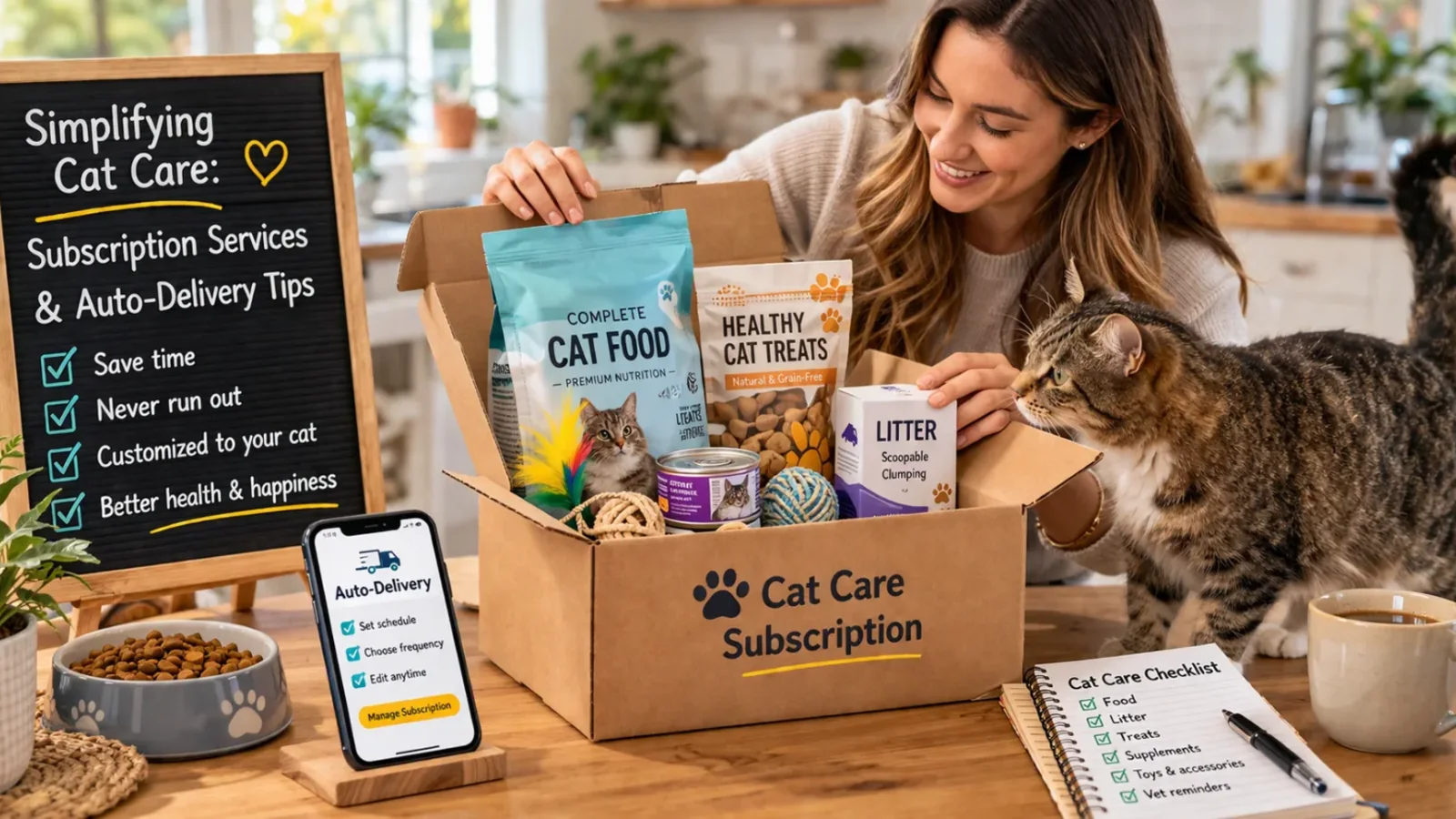
Cat care is built on consumables. The American Pet Products Association (APPA) reports the U.S. pet industry hit $158 billion in 2025, with food and supplies as the single largest category — and the bulk of that spending is items every cat owner has to buy again, on a predictable schedule. Auto-delivery exists to make that schedule do the work for you.
But "auto-delivery" only saves money and time if you set it up the way veterinarians and seasoned cat parents do — picking the right items, the right cadence, and the right service. This guide walks through exactly that.
Why Use Auto-Delivery for Cat Supplies?
The case for cat auto-delivery is mostly economic and behavioral. Pet parents who run out of litter or food at 9 p.m. on a Tuesday end up at the nearest convenience store paying premium prices for a brand their cat may not even like — which then creates a different problem (litter aversion, food refusal, GI upset).
| Benefit | Typical Annual Value (1 cat) | Source |
|---|---|---|
| Subscription discount | $60–$140 saved | Chewy Autoship 5% recurring; Amazon S&S 5–15% |
| Free shipping (orders $35–$49+) | $40–$80 saved | Avoids per-trip shipping or store fuel cost |
| First-order promo | $15–$50 saved (one-time) | Chewy 35% off first Autoship |
| No emergency store runs | $30–$60 saved | Convenience store mark-ups + impulse buys |
| Time saved | ~10–15 hours/year | Avg. shop-and-haul time per cat household |
What Cat Supplies Should You Put on Auto-Delivery?
The rule of thumb: auto-deliver consumables your cat already accepts. If a product is a daily-use item, has predictable usage, and your cat tolerates it, it is a strong autoship candidate. If your cat's preference might shift — or the product is a discretionary treat — keep it on manual reorder.
Strong Autoship Candidates
- Cat litter — The #1 autoship item; 10–14 lbs of clumping litter per cat per month per veterinary norms.
- Dry cat food — Only the exact brand and flavor your cat eats today.
- Wet food multipacks — High predictability, long shelf life unopened.
- Flea & tick prevention — Strict monthly schedule; perfect autoship use case.
- Prescription medications — Auto-refill via Chewy Pharmacy after vet authorization.
- VOHC-accepted dental treats — Daily-use items benefit most.
- Litter box liners & deodorizer — Easy to forget; consumed predictably.
Avoid Auto-Shipping
- New flavors or novel proteins — Cats may reject them; you'll have a stockpile of refused food.
- Toys — Preferences are unpredictable and rotation is better than accumulation.
- Catnip — Loses potency in storage; buy small, fresh batches.
- Anything you're trialing — Confirm 4+ weeks of acceptance before subscribing.
Which Cat Auto-Delivery Service Is Best?
The three serious options for U.S. cat parents in 2026 are Chewy Autoship, Amazon Subscribe & Save, and brand-direct subscriptions from companies like Smalls, Cat Person, or Open Farm. Each has a different best-fit use case.
| Service | Recurring Discount | Best For | Watch-Outs |
|---|---|---|---|
| Chewy Autoship | 35% first order, 5% recurring (10% with Chewy+) | Litter, food, prescription meds, broadest pet catalog | Free shipping over $49; 24/7 vet chat with Chewy+ |
| Amazon Subscribe & Save | 5% standard, 15% with 5+ subscriptions/month | Households consolidating pet + grocery + household | Pet inventory shifts; verify same SKU each month |
| Brand-direct (Smalls, Cat Person, Open Farm) | 10–25% intro, 5–15% recurring | Fresh/human-grade food and exclusive recipes | Higher price point; requires freezer space |
| Walmart Pet Rx / Petco Vital Care | Varies; bundled with vet services | Prescription refills + in-store pickup | Smaller catalog than Chewy |
| KitNipBox / Meowbox (enrichment boxes) | N/A (curated novelty) | Toy and treat enrichment, not essentials | $20–$35/month; not a replacement for staples |
📎 Comparing total ownership cost? See our Lifetime Cost of Pet Ownership guide and the Wet vs. Dry Cat Food breakdown.
How Do You Set the Right Auto-Delivery Schedule?
The most common autoship mistake is guessing the cadence. The fix is one month of measurement, then math.
Step 1 — Track One Month of Real Usage
Weigh your litter bag the day you open it and again 30 days later. Mark the open-date on your dry food bag. Count wet food cans/pouches over a week and multiply by 4.3.
Step 2 — Use Veterinary Baselines as a Sanity Check
| Item | Typical Use Per Cat / Month | Suggested Delivery Interval |
|---|---|---|
| Clumping clay litter | 10–14 lbs (one 14-lb bag) | Every 4 weeks |
| Dry food (10-lb cat) | ~2.5–3 lbs | Match bag size to 4–6 wk window |
| Wet food (3 oz cans, 1/day) | ~30 cans | Every 4 weeks (24–32 ct case) |
| Flea & tick prevention | 1 dose | Every 3 months (3-pack) |
| Dental treats | ~30 treats | Every 4–8 weeks (bag size dependent) |
Step 3 — Time Delivery 3–5 Days Before You Run Out
Carriers slip. A cat parent with a 4-week litter cadence should set the next ship date so it lands on day 26, not day 30. Always keep one emergency backup bag of litter and one extra week of food on hand for the cat's preferred SKU.
How Should You Store Auto-Delivered Cat Food Safely?
Auto-delivery only works if the food stays fresh. The U.S. Food and Drug Administration (FDA) publishes specific storage rules for pet food in its "Proper Storage of Pet Food & Treats" guidance:
- Keep kibble in its original bag. The bag's interior coating is engineered to slow oxidation of fats — pouring kibble loose into a plastic bin removes that protection.
- Place the original bag inside an airtight container (food-grade plastic or metal). Best of both worlds.
- Store in a cool, dry place below 80°F. Garages and laundry rooms with heat or humidity swings can spoil kibble in weeks.
- Finish opened dry food within ~6 weeks. Match auto-delivery bag size to your cat's monthly intake to stay inside that window.
- Refrigerate opened canned food 5–7 days max. Cover with a tight lid; bring to room temperature before serving.
- Save the lot number and best-by date from each bag in case of an FDA recall. Take a photo when the bag arrives.
What Are the Most Common Auto-Delivery Mistakes?
| Mistake | Why It Backfires | Fix |
|---|---|---|
| Subscribing before tracking usage | Pile-ups or shortages | Measure 30 days first |
| Auto-shipping a new flavor | Cat refuses; food goes to waste | Confirm 4+ weeks of acceptance first |
| Pouring kibble into a bin | Strips the bag's oxygen barrier | Keep kibble in original bag inside the bin |
| Ignoring shipment emails | Ships when you have 2 weeks of supply | Skip with one click in the email |
| Cancelling after first order | Loses recurring discount permanently | Keep at least 2 deliveries to lock the rate |
Related Guides
- Complete New Cat Checklist
- Wet vs. Dry Cat Food
- Cat Flea & Tick Prevention
- Pet Prescription Medications: Refills & Auto-Delivery
- Lifetime Cost of Pet Ownership
References
- U.S. Food and Drug Administration — Proper Storage of Pet Food & Treats
- American Pet Products Association — 2025 State of the Industry Report
- Chewy Autoship — Program details and discount terms
- Amazon Subscribe & Save — Discount tiers and eligibility
- Veterinary Oral Health Council (VOHC) — Accepted dental products