The first 16 weeks of a puppy's life represent the most critical learning period in canine development, according to the American Veterinary Society of Animal Behavior (AVSAB). Puppies trained during this socialization window are 74% less likely to develop behavioral problems that lead to shelter surrender — the #1 cause of death for dogs under 3. This guide covers every stage from day one through adolescence, using only the positive reinforcement methods endorsed by the AVSAB, AVMA, and American College of Veterinary Behaviorists (DACVB).
Related Reading
When Should You Start Training a Puppy?
Training begins the moment your puppy enters your home. The AVSAB recommends starting socialization and basic training as early as 7–8 weeks of age — not waiting until vaccinations are complete. The risk of behavioral problems from inadequate socialization far outweighs the minimal disease risk in controlled environments.
A landmark 2018 study in the Journal of Veterinary Behavior confirmed that puppies enrolled in socialization classes before 14 weeks showed significantly fewer fear and aggression responses as adults. The AVMA supports this position, noting that behavioral issues — not infectious disease — remain the leading cause of death in dogs under 3 years old.
| Age | Training Focus | Key Activities | Session Length |
|---|---|---|---|
| 8–10 weeks | Name recognition & socialization | Positive exposure to people, surfaces, sounds | 3–5 min, 5×/day |
| 10–12 weeks | Basic commands | Sit, come, crate introduction, handling | 5–8 min, 3–4×/day |
| 12–16 weeks | Impulse control & leash skills | Leave it, wait, loose-leash walking | 8–10 min, 3×/day |
| 4–6 months | Proofing & reliability | Commands in distracting environments, potty training reinforcement | 10–15 min, 2–3×/day |
| 6–12 months | Adolescent management | Recall reinforcement, boundary training, off-leash socialization | 15 min, 2×/day |
The Socialization Window: Why It Matters More Than Commands
The socialization window (3–14 weeks) is a neurological phenomenon — not just a training concept. During this period, the puppy's brain is actively forming pathways that determine how they perceive the world. Experiences during this window shape lifelong responses to stimuli. After 14 weeks, novel stimuli are more likely to trigger a fear response rather than curiosity.
Research published in the Journal of Veterinary Behavior found that puppies who attended socialization classes before 14 weeks were significantly less likely to show fear or aggression toward strangers and other dogs as adults. The goal isn't to overwhelm — it's to create positive associations with a wide variety of stimuli while keeping your puppy under threshold.
Socialization Checklist (Before 16 Weeks)
If you notice your puppy showing fear signs — whale eye, tucked tail, lip licking, freezing — increase distance from the stimulus immediately. Forcing interaction creates sensitization, not socialization. For puppies showing persistent fear responses, consult a CPDT-KA or DACVB professional.
The 5 Foundation Commands Every Puppy Should Learn First
These aren't party tricks — they're safety behaviors. A reliable "come" can save your dog's life near a road. A solid "leave it" prevents poisoning. Train these in order, as each builds on the previous skill:
- 1. Name Recognition
Say your puppy's name in a cheerful tone. The instant they look at you, mark ("yes!") and reward. Repeat 20 times per day for 3 days. Do NOT use their name to scold — it should always predict something positive.
- 2. Sit
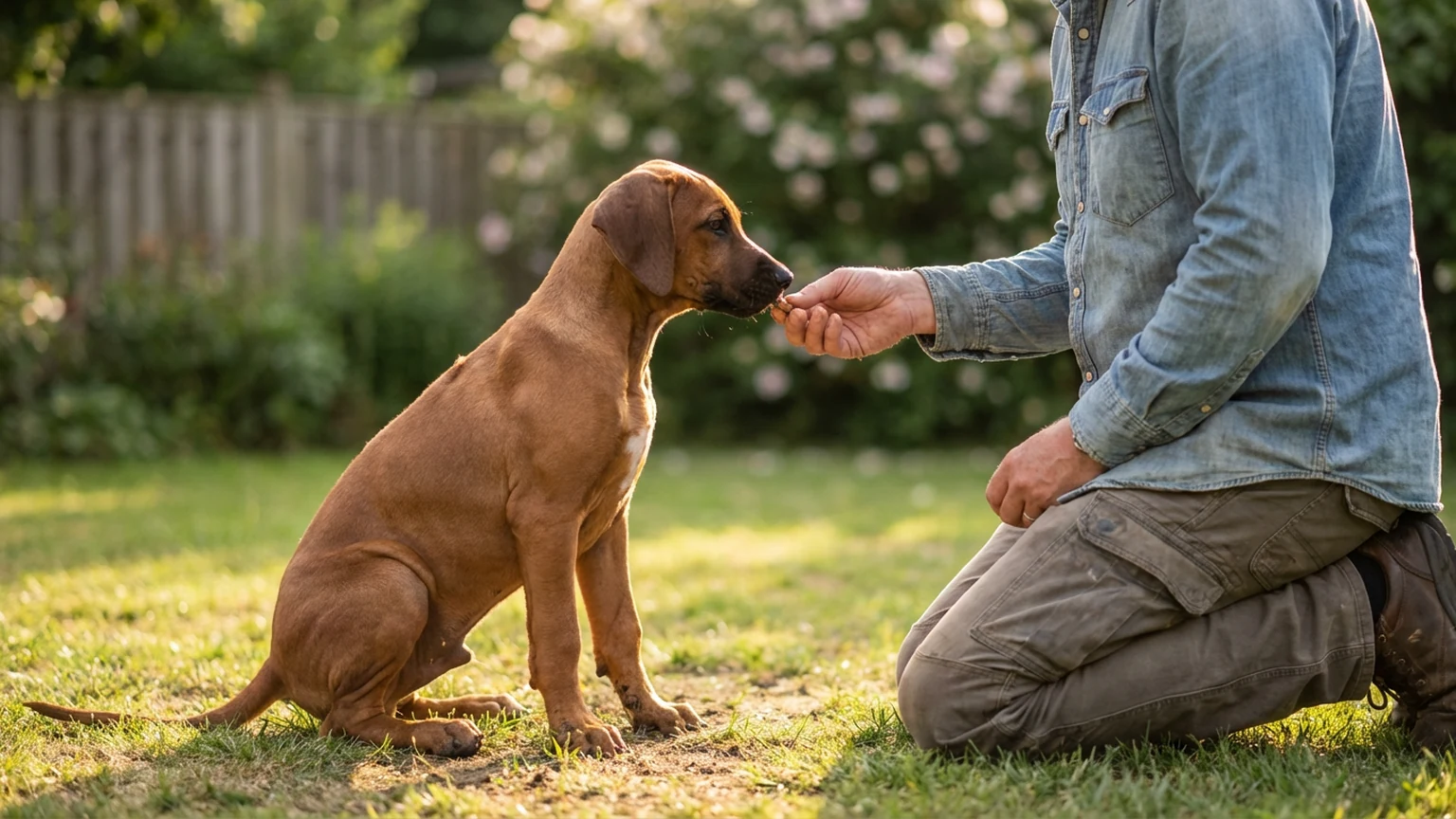
Hold a treat at your puppy's nose and slowly move it back over their head. As their nose follows up, their bottom drops. Mark the instant they sit. Most puppies learn this in 1–2 sessions. Fade the lure after 10 successful repetitions.
- 3. Come (Recall)
Start indoors in a low-distraction environment. Say "come!" in an enthusiastic, high-pitched tone while moving backward. Reward generously every single time. Never call your puppy to punish them — this poisons the recall cue permanently. Use a long line outdoors until recall is 90%+ reliable.
- 4. Leave It
Cover a treat with your hand on the floor. When your puppy stops trying to get it (even briefly), mark and reward from your other hand. This teaches impulse control and generalizes to "don't touch that" in real-world scenarios.
- 5. Down
From a sit, lure a treat from the puppy's nose straight down to the floor, then slowly outward. Mark when their elbows touch the ground. "Down" is a calming position — useful for settle training, restaurant visits, and managing excitement at the door.
For detailed training protocols for each command, see our Training Essentials guide.
How to Crate Train a Puppy
A crate should be your puppy's safe den — never a punishment. The AKC-recommended crate training protocol builds positive associations gradually over 1–2 weeks:
| Phase | Duration | What to Do |
|---|---|---|
| Introduction | Days 1–3 | Door open, treats tossed inside, meals in crate |
| Door Closing | Days 4–7 | Close door briefly while puppy eats, increase duration |
| Short Absences | Week 2 | Leave room for 5–15 min, return calmly |
| Overnight | Week 2–3 | Crate near bedroom, expect 1–2 potty breaks for young puppies |
Maximum crate times by age: 8–10 weeks = 1 hour; 11–14 weeks = 1–3 hours; 15–16 weeks = 3–4 hours; 17+ weeks = 4–5 hours. No puppy should be crated for more than their age in months plus one hour, and never more than 6 hours for any dog.
Potty Training Fundamentals
Housetraining success depends on management, consistency, and patience — not punishment. The "age + 1" rule (a puppy can hold it for their age in months plus one hour) is a maximum estimate, not a biological guarantee. Our comprehensive Potty Training Puppies guide covers every scenario in detail.
Potty Training Quick Protocol
- Take puppy outside immediately after waking, eating, drinking, playing, and napping
- Use the same door and same spot every time — consistency builds the habit
- Mark and reward within 2 seconds of elimination outside — treat at the spot, not at the door
- Clean indoor accidents with enzymatic cleaner (not ammonia-based) to remove scent markers
- Never punish accidents — the ASPCA and AKC confirm this creates hiding behavior, not learning
Why Positive Reinforcement Is the Only Method Vets Recommend
The AVSAB, AVMA, and American College of Veterinary Behaviorists (DACVB) all endorse reward-based training exclusively. Their 2021 position statement explicitly warns against punishment-based methods (leash corrections, shock collars, alpha rolls, dominance theory), citing research showing these techniques increase fear, stress, and aggression while damaging the human-animal bond.
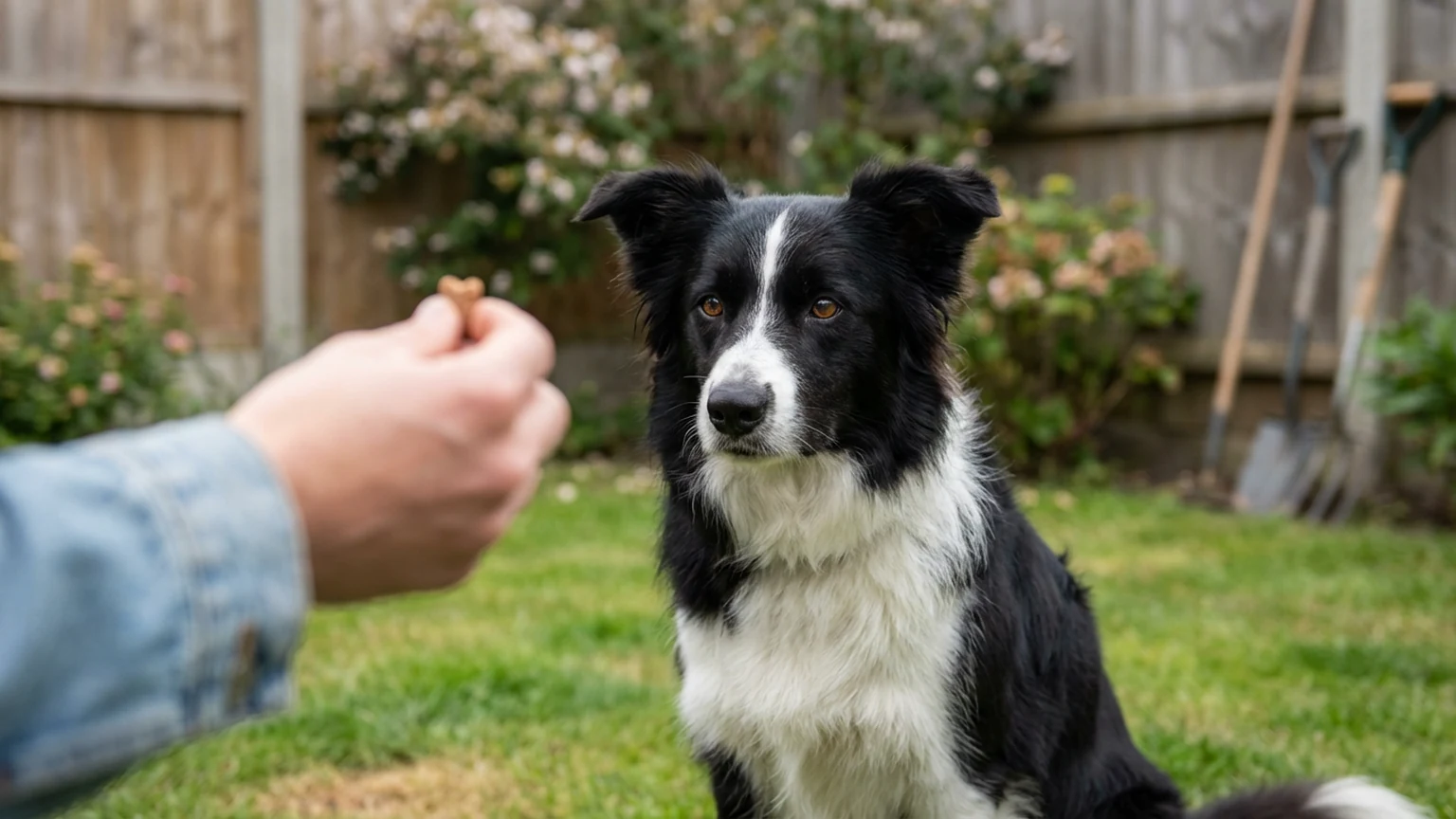
Positive reinforcement works by marking the desired behavior the instant it occurs (with a clicker or marker word like "yes!") and following with a reward within 1–2 seconds. The timing of the marker — not the size of the treat — is what creates a clear association for your puppy.
| Reward Type | When to Use | Examples |
|---|---|---|
| Food (Primary) | Teaching new behaviors | Small, soft, high-value treats (cheese, hot dog, chicken) |
| Verbal Praise | Maintaining learned behaviors | "Good boy/girl!" in an enthusiastic tone |
| Life Rewards | Real-world reinforcement | Going outside, greeting people, playing fetch |
| Play | High-energy puppies | Tug, fetch, chase games as reward |
How to Teach Bite Inhibition
Puppy nipping is normal developmental behavior, not aggression. Between 3–6 months, puppies explore the world with their mouths and are also teething. The goal isn't to eliminate mouthing overnight — it's to teach your puppy that human skin is fragile through a graduated process:
- 1. When puppy bites hard → yelp briefly, withdraw all attention for 10–15 seconds
- 2. When puppy bites moderately → same response (gradually raise the threshold)
- 3. Redirect to appropriate chew toys every time
- 4. Praise gentle mouthing, then gradually phase that out too
Critical: Never use physical corrections for mouthing. Slapping a puppy's nose or holding their mouth shut increases fear and can escalate to defensive biting. If nipping persists beyond 6 months or involves stiffening, growling, or guarding, consult a CPDT-KA.
Navigating Adolescence (6–18 Months)
Between 6–18 months, your well-trained puppy may suddenly seem to forget everything. This is normal — canine adolescence involves neurological reorganization similar to human teenagers. The prefrontal cortex (impulse control center) is still developing, which means:
- Recall may temporarily deteriorate — increase reinforcement value and use a long line for safety
- New fear periods may emerge — don't force exposure; follow your puppy's comfort level
- Boundary testing increases — stay consistent with rules, don't escalate to punishment
- Energy levels peak — increase exercise appropriate for their breed and add mental enrichment
This phase tests patience, but it's temporary. Dogs who had a strong foundation of positive training during puppyhood emerge from adolescence as reliable, well-adjusted adults. For breed-specific considerations, see our Breed Health Assessor.
Preventing Separation Anxiety From Day One
Separation anxiety is one of the most common behavioral disorders in dogs, affecting an estimated 20–40% of the pet dog population. Prevention starts during puppyhood with structured alone-time practice:
- Practice brief departures (30 seconds → 1 minute → 5 minutes) from the first week home
- Make departures and arrivals boring — no dramatic goodbyes or excited greetings
- Provide a crate or safe space with a long-lasting chew (frozen Kong) during absences
- Avoid constant togetherness — teach your puppy to settle independently even when you're home
For dogs already showing signs of distress when left alone, see our comprehensive Separation Anxiety guide.
Common Puppy Training Mistakes to Avoid
- Waiting too long to start — The socialization window closes at 14 weeks. Waiting for "all vaccinations" means missing the most critical learning period. The AVSAB says the risk of behavioral euthanasia from poor socialization is far greater than the risk of disease from controlled exposure.
- Training sessions too long — Puppies learn in 5-minute bursts. Multiple short sessions beat one marathon. End every session on a success — even if you have to simplify the task to guarantee it.
- Inconsistent household rules — If jumping gets attention sometimes, it's reinforced. Create a written list of rules and ensure every family member follows them identically.
- Punishing accidents — Rubbing a puppy's nose in waste creates fear, not understanding. The ASPCA confirms puppies cannot connect punishment to a past event. Clean up and adjust your supervision strategy.
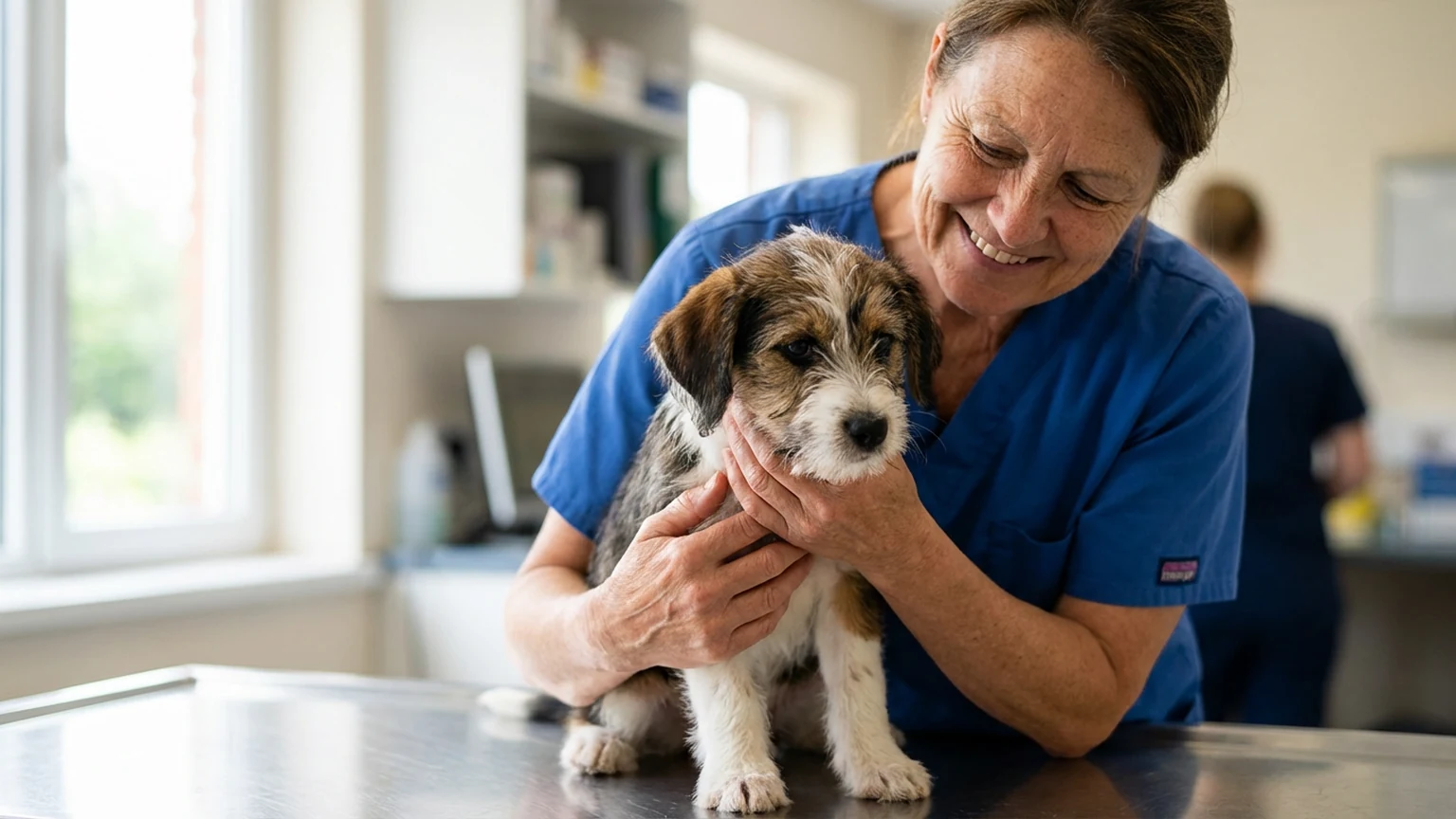
- Skipping veterinary socialization — "Happy visits" to the vet (treats, no procedures) during puppyhood prevent lifelong veterinary anxiety. See our First Vet Visit guide.
- Over-relying on puppy pads — Pads teach puppies it's acceptable to eliminate indoors, creating surface confusion. Use them only when outdoor access is genuinely impossible.
Week-by-Week Puppy Training Planner
Use this structured 12-week planner as a roadmap. Adjust pacing based on your puppy's individual progress — some breeds mature faster than others. For breed-specific exercise and training guidance, see our Exercise by Breed guide.
| Week | Priority Goals | Daily Routine |
|---|---|---|
| 1–2 | Name recognition, crate introduction, potty schedule | Potty trips every 1–2 hrs, 5 min training, handling exercises |
| 3–4 | Sit, come, socialization outings | 3 short training sessions, 2+ new experiences, vet happy visit |
| 5–6 | Down, leave it, bite inhibition | Puppy class enrollment, crate for 1–2 hr stretches |
| 7–8 | Loose-leash walking, stay introduction | Short walks with appropriate gear, impulse control games |
| 9–10 | Proofing commands with distractions | Training in new locations, longer alone-time practice |
| 11–12 | Off-leash recall, greeting manners | Controlled socialization with other dogs, real-world practice |
Don't Forget: Health Foundations
Training and health go hand in hand. While you're building behavioral foundations, make sure you're also covering:
Important Notice
This article is for informational purposes only and is not a substitute for professional veterinary or behavioral advice. Consult a certified professional dog trainer (CPDT-KA) or veterinary behaviorist (DACVB) for personalized guidance. For behavioral emergencies — aggression, severe fear, or self-harm — contact your veterinarian immediately.
References
- American Veterinary Society of Animal Behavior (AVSAB). Position Statement on Puppy Socialization. 2008, updated 2021. avsab.org
- AVSAB. Position Statement on Humane Dog Training. 2021. avsab.org
- American Kennel Club (AKC). Puppy Training Timeline: Teaching Good Behavior Before It's Too Late. 2024. akc.org
- ASPCA. Puppy Socialization: Why, When, and How to Do It Right. 2023. aspca.org
- Duxbury, M.M., et al. "Evaluation of association between retention in the home and attendance at puppy socialization classes." Journal of the AVMA 223(1): 61–66. 2003.
- Casey, R.A., et al. "Human directed aggression in domestic dogs: Occurrence in different contexts and risk factors." Applied Animal Behaviour Science 152: 52–63. 2014.
- Howell, T.J., et al. "Puppy parties and beyond: The role of early age socialization practices on adult dog behavior." Veterinary Medicine: Research and Reports 6: 143–153. 2015.