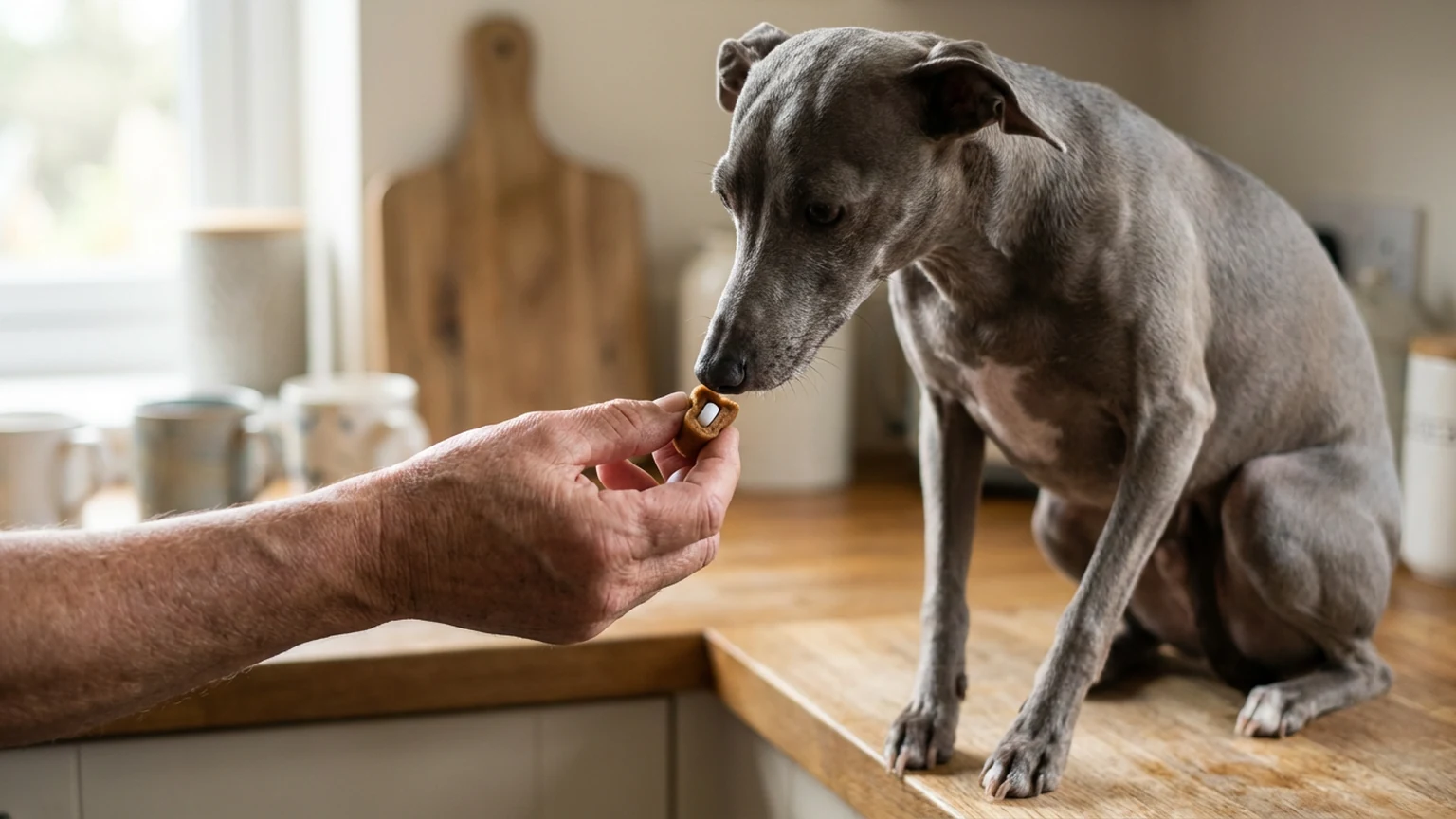

Excessive barking is the #1 noise complaint in residential areas and a leading cause of shelter surrender. Dogs bark for six distinct reasons — alert, territorial, demand, anxiety, boredom, and play — and each requires a different training approach. The AVSAB advises against all aversive bark-control devices. This guide covers identification, positive reinforcement protocols, and when to consult a veterinary behaviorist (DACVB) — backed by the American Kennel Club, AVSAB, and ASPCA.
What Are the 6 Types of Dog Barking?
Effective bark reduction starts with accurate identification. Each bark type has a distinct sound profile, trigger, and evidence-based solution:
| Bark Type | Sound Profile | Common Trigger | Recommended Approach |
|---|---|---|---|
| Alert | Sharp, 1–2 barks | Doorbell, stranger approaching | Acknowledge → redirect → reward quiet |
| Territorial | Rapid, continuous, deep tone | People/dogs near property boundary | Block visual triggers, desensitization |
| Demand | Single, repeated, directed at owner | Wants food, play, or attention | Ignore completely; reward only quiet |
| Anxiety | High-pitched, often with whining | Separation, fear, loud noises | Desensitization protocol; vet consult |
| Boredom | Monotone, repetitive, rhythmic | Insufficient stimulation or exercise | Enrichment, exercise, puzzle toys |
| Play | Higher pitch, with body wiggles | Excitement during interaction | Generally normal; redirect if excessive |
Identifying the correct bark type is critical because the wrong intervention can worsen the behavior. For example, punishing anxiety-driven barking increases the dog's stress, which increases barking (ASPCA).
How Does the "Thank You" Method Work for Alert Barking?
The "Thank You" method is recommended by certified professional dog trainers (CPDT-KA) for dogs who bark at every doorbell, delivery truck, or pedestrian. It works by acknowledging the dog's alert without reinforcing continued barking:
- Step 1: Acknowledge — When your dog barks at a trigger, calmly walk to the source (door or window)
- Step 2: Mark — Say "thank you" in a calm, neutral tone to signal you've received the alert
- Step 3: Redirect — Gently guide your dog away from the trigger and ask for an incompatible behavior ("sit" or "place")
- Step 4: Reward — Immediately reward the quiet sit with a high-value treat (cheese, chicken, freeze-dried liver)
This communicates: "I heard you, I checked it out, we're safe." Most dogs learn within 1–2 weeks that a single alert bark is sufficient (Association of Professional Dog Trainers).
Why Does Yelling "Quiet!" Make Barking Worse?
When you yell at a barking dog, they perceive it as you joining in. Your raised voice is reinforcing, not correcting — the dog interprets shouting as confirmation that there's something worth barking about.
Research from the University of Porto (2020) found that dogs trained with aversive methods showed significantly elevated cortisol levels and more stress behaviors than dogs trained with positive reinforcement — with no improvement in obedience outcomes. The AVSAB position statement on humane training specifically warns against:
- Yelling or shouting — Reinforces barking by matching the dog's arousal level
- Shock collars — Suppress symptoms without addressing cause; increase anxiety and aggression (AVSAB)
- Citronella spray collars — Dogs habituate quickly; associated with increased stress behaviors
- Debarking surgery (ventriculocordectomy) — Considered inhumane by most veterinary organizations; banned in several countries. Does not address the underlying motivation
What Are Evidence-Based Solutions for Each Bark Type?
Matching the intervention to the bark type produces the fastest, most lasting results:
| Bark Type | Protocol | Expected Timeline |
|---|---|---|
| Alert | "Thank You" method + place training | 1–2 weeks |
| Territorial | Window film + counter-conditioning + management | 2–4 weeks |
| Demand | Planned ignoring (extinction) + rewarding quiet | 1–3 weeks (expect extinction burst) |
| Anxiety | Gradual desensitization + possible medication | 4–8 weeks (DACVB referral recommended) |
| Boredom | Increased exercise + enrichment + puzzle feeders | Days (once needs are met) |
| Play | Interrupt → redirect → resume play when quiet | 1–2 weeks |
Important: Demand barking will temporarily get worse before it gets better — this is called an extinction burst. If you give in during the burst, you teach the dog that louder, longer barking works. Consistency across all family members is essential (ASPCA).
How Can You Reduce Barking When You're Not Home?
Dogs who bark excessively when left alone may have separation anxiety, boredom, or environmental triggers. Management strategies include:
- White noise or calming music — Masks external triggers. Studies show classical music reduces shelter dog barking by up to 50% (University of Glasgow)
- Window management — Frosted film or closed blinds prevent visual triggers like passing pedestrians and delivery trucks
- Enrichment before departure — A frozen Kong or snuffle mat engages your dog for 20–40 minutes during the critical separation window
- Exercise before leaving — A tired dog barks less. A 30-minute walk or play session before departure reduces arousal. See our exercise by breed guide for activity recommendations
- Camera monitoring — Pet cameras help identify specific triggers and timing of barking episodes
If barking continues despite management, separation anxiety may be the cause. Learn more in our separation anxiety guide.
When Should You See a Vet About Barking?
Not all excessive barking is behavioral. Medical causes account for a significant percentage of sudden-onset barking changes:
| Red Flag | Possible Medical Cause | Action |
|---|---|---|
| Sudden onset in older dog | Cognitive dysfunction syndrome (CDS) | Vet exam + cognitive assessment |
| Barking at nothing, pacing | Pain, hearing loss, vision changes | Full physical + neurological exam |
| With house soiling, appetite changes | Thyroid disorder, UTI, GI issues | Blood panel + urinalysis |
| Panic-level distress when alone | Separation anxiety (clinical) | DACVB referral + behavior medication |
A veterinary behaviorist (DACVB) is the gold standard for anxiety-driven, compulsive, or fear-based barking that doesn't respond to standard training within 4–6 weeks. Medication such as fluoxetine or trazodone can be used alongside behavior modification protocols. See our senior pet care guide for more on cognitive decline in aging dogs.
Important Notice
This article is for informational purposes only. Dogs with anxiety-driven or compulsive barking may need veterinary intervention including behavioral medication. Never use aversive devices without professional guidance. Consult a veterinary behaviorist (DACVB) or certified professional dog trainer (CPDT-KA) for severe or unresponsive cases.
Related Reading
References
- American Veterinary Society of Animal Behavior (AVSAB). Position Statement on Humane Dog Training. avsab.org
- American Kennel Club (AKC). How to Stop a Dog from Barking. akc.org
- ASPCA. Barking: Why Dogs Bark and How to Stop It. aspca.org
- Vieira de Castro, A.C. et al. (2020). Does training method matter? Evidence for the negative impact of aversive-based methods on companion dog welfare. PLOS ONE, 15(12). plosone.org
- Bowman, A. et al. (2017). The effect of different genres of music on the stress levels of kennelled dogs. Physiology & Behavior, 171, 207–215. sciencedirect.com
- Association of Professional Dog Trainers (APDT). Position Statement on Training Methods. apdt.com