Front-clip harnesses reduce pulling by up to 60% and eliminate tracheal pressure that causes preventable injuries in small breeds. The American Veterinary Society of Animal Behavior (AVSAB) recommends harnesses over collars for all dogs, while the AVMA discourages retractable leashes due to documented amputation and laceration risks. This guide compares every leash, collar, and harness type — with evidence-based recommendations by size, breed, and walking behavior.
What Are the Main Types of Dog Walking Gear?
Dog walking equipment falls into three categories: leashes (the line you hold), collars (worn around the neck), and harnesses (worn around the chest and torso). Each serves a different purpose, and choosing the wrong type can cause injury or reinforce unwanted behavior.
The American Kennel Club recommends that every dog have both a flat collar (for ID tags and licensing) and an appropriately fitted harness or leash for walks.
Which Harness Type Is Best for Your Dog?
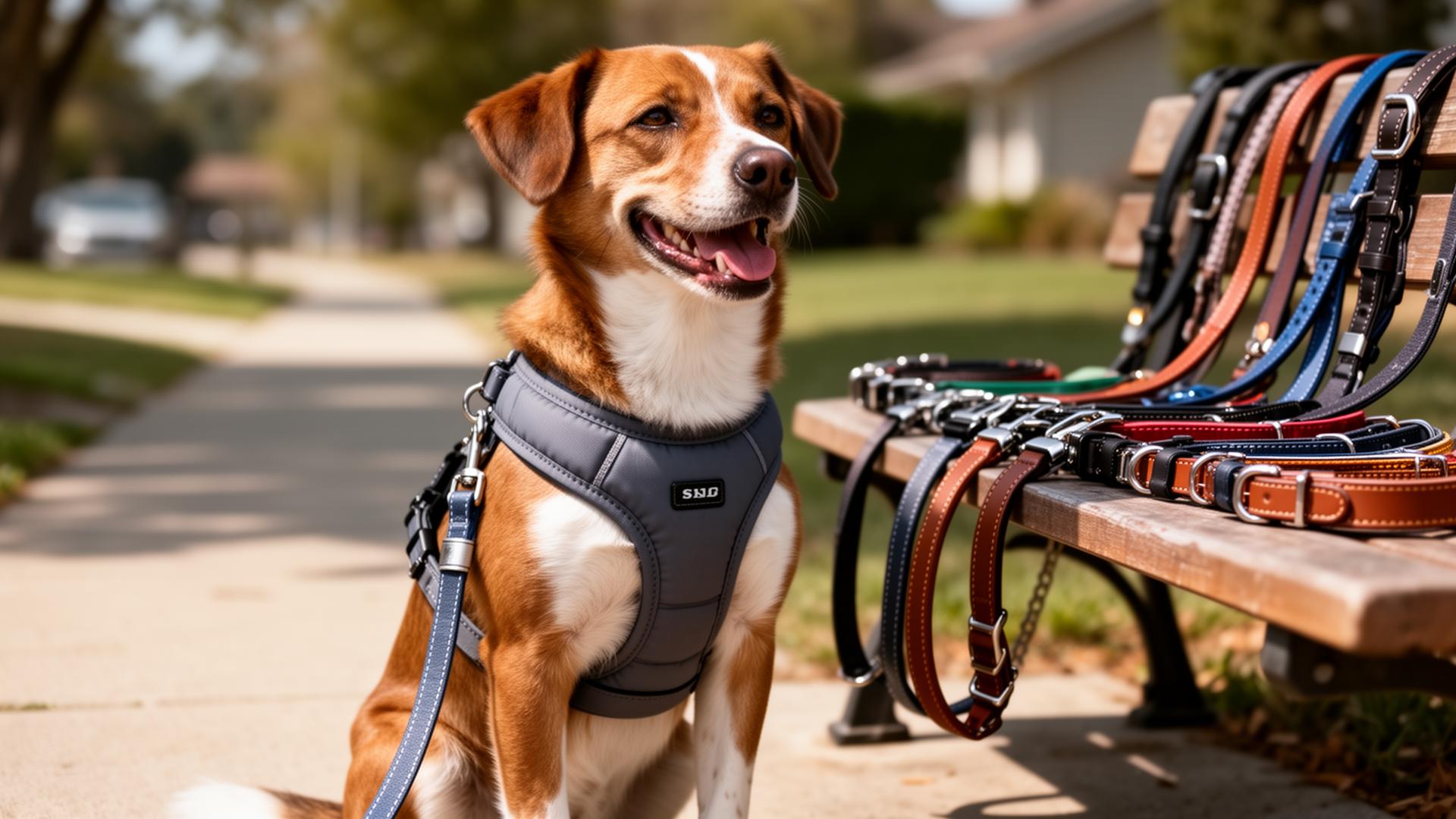
Harness design directly affects pulling behavior, comfort, and safety. Here's how the four main types compare:
| Type | Best For | Pull Reduction | Safety Notes |
|---|---|---|---|
| Front-Clip Harness | Pullers, training | High (redirects momentum) | No tracheal pressure; AVSAB-recommended |
| Back-Clip Harness | Small dogs, non-pullers | Low | Can encourage pulling in larger dogs |
| Dual-Clip Harness | Training transition | Moderate–High | Versatile; front + back attachment points |
| Head Halter | Strong pullers, reactivity | Very High (head control) | Requires desensitization; not a muzzle |
Front-clip harnesses are the gold standard for most dogs. A 2020 study in the Journal of Veterinary Behavior found that front-attachment harnesses significantly reduced pulling force compared to back-clip designs without causing pain or stress responses.
What Collar Type Should You Use?
Collars remain essential for identification, licensing, and quick-grab situations. However, collars should not be the primary attachment point for leash walking in most dogs.
| Collar Type | Use Case | Safety Rating |
|---|---|---|
| Flat Buckle Collar | ID tags, non-pullers | Safe |
| Martingale Collar | Greyhounds, narrow-headed breeds | Safe (limited tightening) |
| Choke Chain | Not recommended | Unsafe — AVSAB opposes |
| Prong/Pinch Collar | Not recommended | Unsafe — injury risk |
The two-finger rule applies universally: you should be able to fit two fingers between the collar and your dog's neck. Check fit weekly for growing puppies (American Kennel Club).
What Walking Gear Should You Avoid?
Some widely sold equipment poses documented safety risks. The evidence is clear on what to avoid:
- Retractable leashes — The AVMA and most professional trainers discourage them. Associated with finger amputations, rope burns, broken bones, and loss of control near traffic. The thin cord can cause deep lacerations when wrapped around legs
- Choke chains & prong collars — The AVSAB advises against all aversive equipment. These are associated with tracheal damage, cervical injuries, increased intraocular pressure, and increased aggression in peer-reviewed studies
- Shock/e-collars for walking — Multiple studies show they increase stress behaviors and can damage the human–animal bond. Banned in several countries including the UK, Germany, and parts of Australia
How to Choose the Right Leash
Leash material and length affect control, comfort, and safety. Here's what works best for different scenarios:
| Leash Type | Length | Best For |
|---|---|---|
| Standard Nylon/Leather | 6 feet | Daily walks, training, vet visits |
| Traffic/Short Lead | 2–3 feet | Crowded areas, heel training |
| Long Line | 15–30 feet | Recall training, open fields |
| Hands-Free / Waist Belt | 4–6 feet | Running, hiking with non-pullers |
The Association of Professional Dog Trainers (APDT) recommends a standard 6-foot leash as the default for all training and walking scenarios. Leather leashes are more durable and comfortable in hand; nylon leashes are affordable and easy to clean.
How to Fit a Harness Properly
A poorly fitted harness can cause chafing, restrict movement, or allow escape. Follow these steps for a proper fit:
- Two-finger rule — Slide two fingers under every strap. If you can't, it's too tight; if you can fit a fist, it's too loose
- Chest strap position — Should sit across the sternum, not pressing into the armpits or throat
- Range of motion — Your dog should be able to move shoulders freely. Restricted shoulder movement causes gait changes over time
- Escape test — Gently pull backward. If your dog can back out, tighten the girth strap or consider a different design
Measure your dog's girth (widest part of the ribcage) and neck circumference before purchasing. Most manufacturers provide sizing charts by weight range and breed group.
Breed-Specific Gear Recommendations
Different breeds have unique anatomical considerations that affect gear selection:
| Breed Group | Recommended Gear | Reason |
|---|---|---|
| Brachycephalic (Pugs, Bulldogs) | Back-clip harness only | Compromised airways; zero neck pressure |
| Small breeds (Chihuahuas, Yorkies) | Y-shaped harness | Tracheal collapse risk with collars |
| Large pullers (Huskies, Malamutes) | Front-clip or dual-clip harness | Redirects momentum; prevents injury |
| Sighthounds (Greyhounds, Whippets) | Martingale collar + harness | Narrow heads; can slip flat collars |
| Deep-chested (Dobermans, Boxers) | Padded Y-harness | Proper weight distribution across chest |
Learn more about breed-specific activity needs in our exercise by breed guide.
Important Notice
This article is for informational purposes only. Consult a certified professional dog trainer (CPDT-KA) for personalized equipment recommendations based on your dog's specific needs, walking behavior, and any medical conditions. Dogs with tracheal, spinal, or orthopedic conditions should have gear approved by their veterinarian.
Related Reading
References
- American Veterinary Society of Animal Behavior (AVSAB). Position Statement on Humane Dog Training. avsab.org
- American Veterinary Medical Association (AVMA). Retractable Leash Safety. avma.org
- American Kennel Club (AKC). How to Choose the Right Collar, Harness, and Leash. akc.org
- Grainger, J. et al. (2016). The effect of harness type on pulling behavior in dogs. Journal of Veterinary Behavior, 14, 37–43. journalvetbehavior.com
- Association of Professional Dog Trainers (APDT). Equipment Position Statement. apdt.com
- Pauli, A.M. et al. (2006). Effects of the application of neck pressure by a collar or harness on intraocular pressure in dogs. Journal of the American Animal Hospital Association, 42(3), 207–211. aaha.org