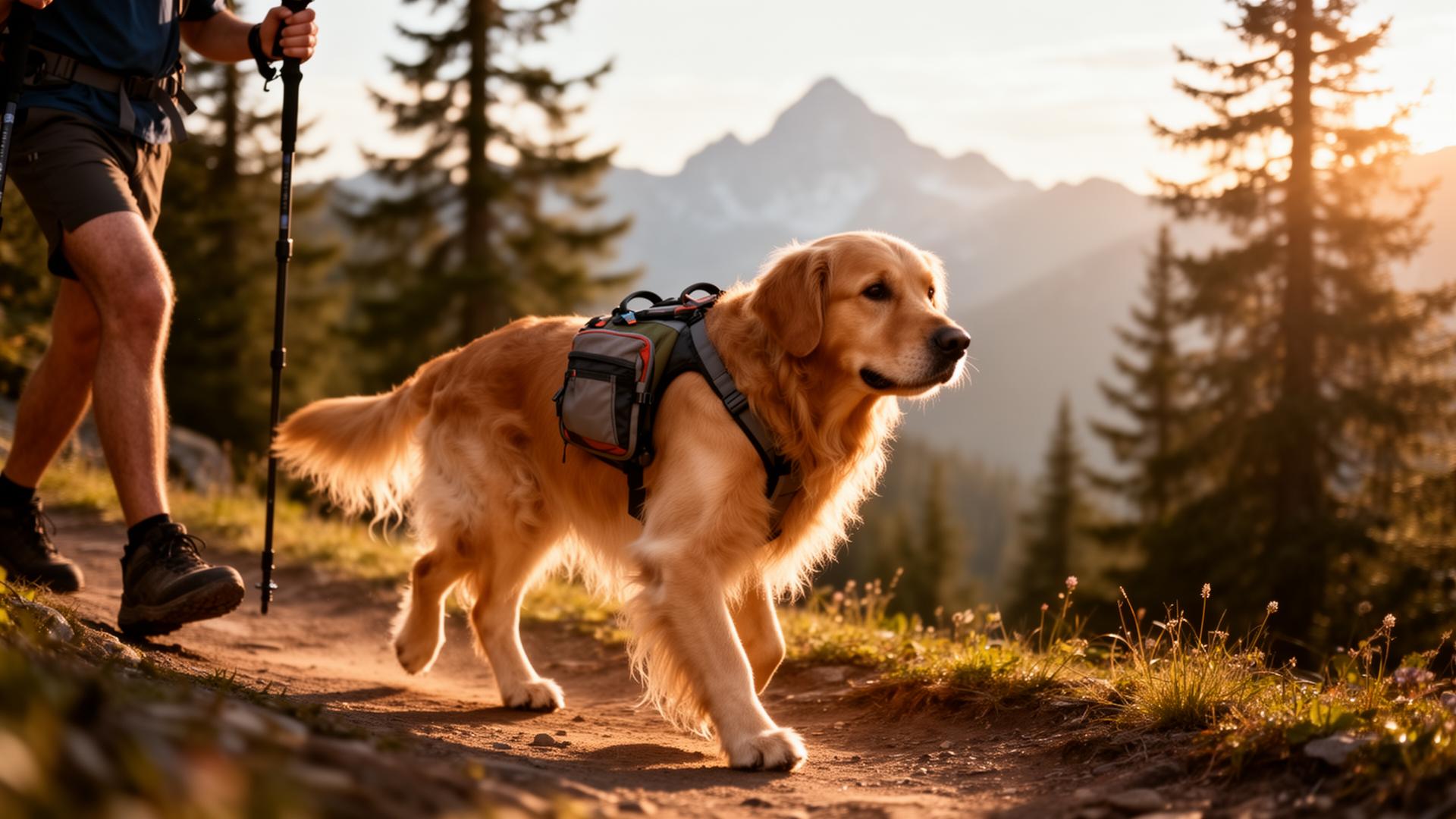
Over 44% of dog owners take their dogs on outdoor adventures, but most aren't prepared for trail-specific hazards like leptospirosis, foxtail injuries, heat stroke, and wildlife encounters. Safe outdoor recreation requires proper gear, current vaccinations, paw protection, and knowledge of Leave No Trace principles. This guide covers everything from essential hiking gear to campsite safety and emergency protocols — backed by the AVMA, AKC, and American Hiking Society.
What Hiking Gear Does Your Dog Need?
Trail-specific gear prevents the most common outdoor injuries. The American Kennel Club recommends building a dog-specific adventure kit separate from your personal gear:
| Item | Purpose | Key Detail |
|---|---|---|
| Collapsible water bowl + water | Hydration | 1 oz per lb body weight per hour of activity |
| Dog first aid kit | Emergency treatment | Styptic powder, gauze, vet wrap, tick remover, antihistamine |
| Paw protection | Terrain safety | Dog boots or paw wax for hot/rocky/icy surfaces |
| Reflective/GPS collar | Visibility & tracking | Essential for dawn/dusk hikes and off-trail areas |
| 6-foot leash (non-retractable) | Control & regulation | Required on most trails; see our gear guide |
| Waste bags | Leave No Trace compliance | Pack out all waste — even in wilderness areas |
What Trail Hazards Should Dog Owners Watch For?
Trail environments expose dogs to hazards that don't exist in urban settings. Knowing the risks before you go prevents most emergencies:
| Hazard | Risk | Prevention |
|---|---|---|
| Standing water / puddles | Leptospirosis, giardia | Bring your own water; lepto vaccine recommended (AVMA) |
| Blue-green algae | Rapid organ failure (often fatal) | Avoid all stagnant water with visible algae blooms |
| Foxtail grass | Seeds embed in ears, paws, nose, eyes | Avoid dry grasslands; full-body check after every hike |
| Venomous snakes | Envenomation, tissue necrosis | Stay on trail, keep leashed. Snake avoidance training available |
| Toxic plants | Ingestion poisoning | Reliable "leave it" command; check ASPCA poison database |
| Ticks | Lyme disease, ehrlichiosis, anaplasmosis | Year-round prevention; full-body tick check after hikes. See our tick prevention guide |
How Do You Keep Your Dog Safe in Heat and Cold?
Temperature-related emergencies are the leading cause of preventable trail deaths in dogs. Know the limits:
| Condition | Threshold | Action |
|---|---|---|
| Heat stroke risk | Air temp > 85°F (29°C) | Shorten hikes, carry extra water, rest in shade every 15 min |
| Paw burn risk | Surface > 120°F (49°C) | Use 5-second palm test; dog boots or paw wax required |
| Cold weather caution | Below 45°F (7°C) | Small/short-coated breeds need jackets; limit exposure |
| Hypothermia risk | Below 20°F (−7°C) | All dogs at risk; minimize outdoor time, watch for shivering |
Brachycephalic breeds (Pugs, Bulldogs, French Bulldogs) are at significantly higher heat stroke risk due to compromised airways and should avoid strenuous hiking above 75°F. Learn more in our heat and summer safety guide.
What Are the Rules for Camping with Dogs?
Campsite safety requires additional preparation beyond day hiking. Follow these evidence-based protocols:
- Leash at all times — Most campgrounds require dogs to be leashed or tethered. A 10-foot tether line with a corkscrew stake works for camp setups
- Food storage — Store dog food in bear-proof containers alongside human food. Kibble attracts wildlife including bears, raccoons, and coyotes
- Sleeping arrangement — Dogs should sleep inside your tent. This protects from wildlife encounters, temperature drops, and prevents nighttime wandering
- Campfire safety — Keep dogs at least 6 feet from fire rings. Ember burns on paws and singed fur are common campsite injuries
- Noise management — Excessive barking violates quiet hours at most campgrounds. Bring familiar items (bed, toy) to reduce anxiety in new environments
What Is Proper Trail Etiquette with Dogs?
Responsible trail behavior protects your dog, wildlife, and other hikers. The Leave No Trace Center for Outdoor Ethics and American Hiking Society recommend these standards:
- Leash compliance — Keep your dog on a 6-foot leash unless the trail explicitly allows off-leash with voice control
- Right-of-way — Yield to horses and hikers without dogs. Step off trail, have your dog sit, and maintain control until they pass
- Waste removal — Pack out all waste, even in wilderness areas. This is Leave No Trace Principle #3: Dispose of Waste Properly
- Wildlife distance — Keep dogs at least 200 feet from wildlife. Dogs trigger predator–prey responses that stress animals and can provoke defensive attacks
- Stay on trail — Off-trail exploration damages fragile ecosystems and increases exposure to ticks, snakes, and toxic plants
How Do You Prepare Your Dog for Hiking?
Like humans, dogs need conditioning before tackling strenuous trails. An unprepared dog is at higher risk for muscle strains, joint injuries, and heat exhaustion:
- Build endurance gradually — Start with 30-minute walks and increase distance by 10–15% per week over 4–6 weeks
- Vet clearance — Dogs with hip dysplasia, heart conditions, or brachycephalic anatomy need veterinary approval before trail activities. See our hip joint health guide
- Update vaccinations — Ensure rabies, leptospirosis, and Lyme disease vaccines are current before outdoor exposure
- Age considerations — Puppies under 12 months and senior dogs over 8 years need shorter, easier trails with frequent rest stops. Learn more in our senior pet care guide
- Recall training — A reliable recall command is non-negotiable for any off-leash trail access
Important Notice
This article is for informational purposes only. Always check trail regulations for dog access before heading out — some national parks prohibit dogs on trails entirely. Consult your veterinarian about vaccinations, parasite prevention, and fitness clearance before outdoor adventures with your dog.
Related Reading
References
- American Kennel Club (AKC). Hiking with Dogs: Tips and Safety. akc.org
- American Veterinary Medical Association (AVMA). Leptospirosis and Outdoor Safety. avma.org
- Leave No Trace Center for Outdoor Ethics. Seven Principles of Leave No Trace. lnt.org
- American Hiking Society. Hiking with Dogs Guidelines. americanhiking.org
- ASPCA Animal Poison Control Center. Toxic and Non-Toxic Plant Database. aspca.org
- National Park Service. Pets in Parks. nps.gov