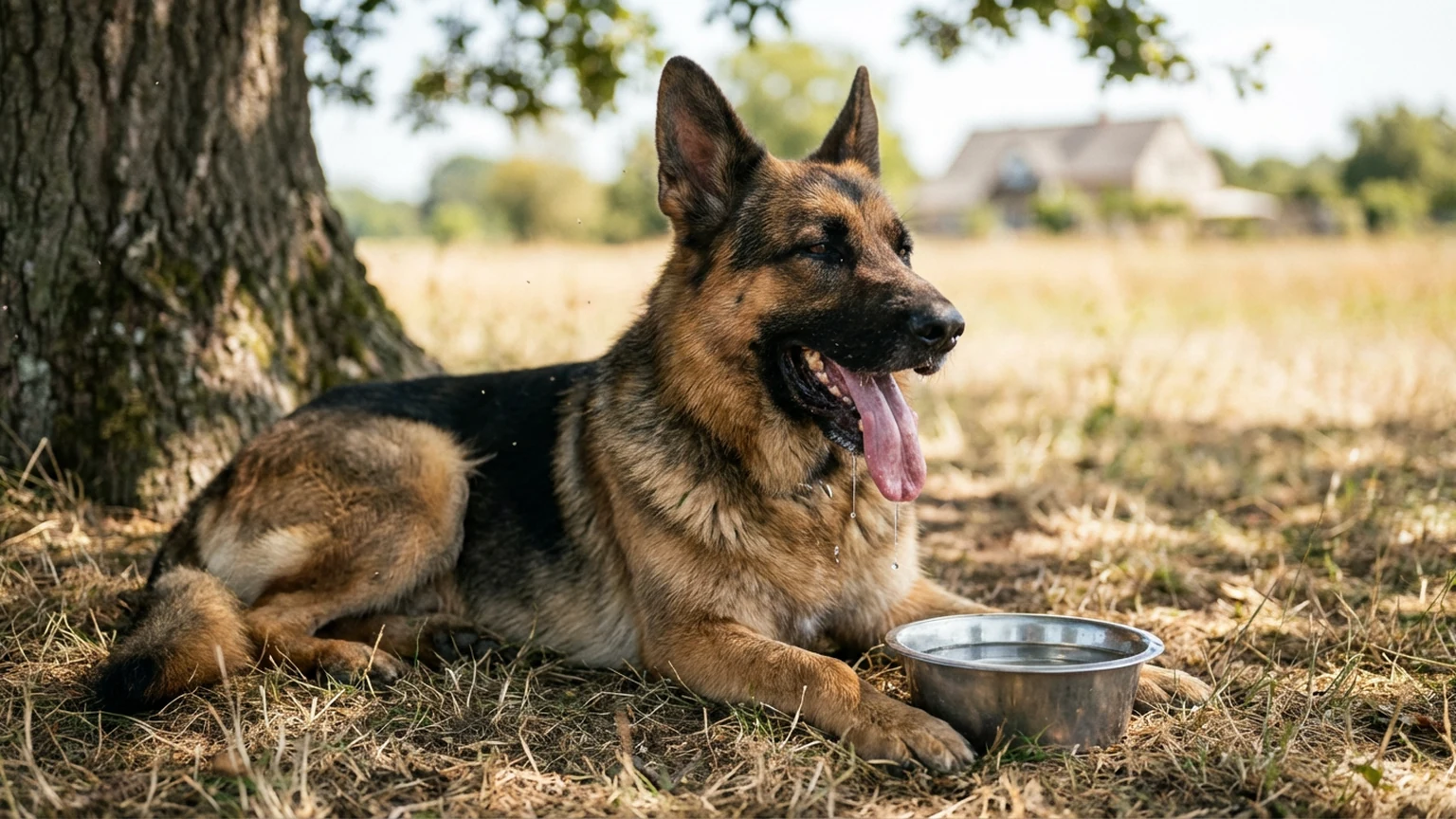

The Association for Pet Obesity Prevention (APOP) reports that 59% of dogs in the U.S. are overweight or obese, making canine obesity the most common preventable disease in veterinary medicine. Excess weight reduces a dog's lifespan by an average of 2.5 years (Purina Life Span Study), increases osteoarthritis risk by 3.5×, and dramatically elevates the likelihood of diabetes, heart disease, respiratory compromise, and certain cancers. The good news: a structured weight loss plan combining BCS monitoring, precise calorie calculation, and gradual exercise can safely reverse obesity in 3–6 months under veterinary supervision.
What Is a Body Condition Score and How Do You Check It?
The Body Condition Score (BCS) is the gold-standard clinical tool for assessing canine body fat, endorsed by the WSAVA and the AAHA. Unlike weight alone, BCS accounts for breed variation, frame size, and muscle mass. It uses a 9-point scale where 1 is emaciated and 9 is morbidly obese.
| BCS Range | Classification | Physical Signs | Recommended Action |
|---|---|---|---|
| 1–3 / 9 | Underweight | Ribs, spine, hip bones visible; no palpable fat | Increase calories 20–30%; rule out parasites, dental disease, or systemic illness |
| 4–5 / 9 | Ideal | Ribs easily felt with light pressure; visible waist from above; abdominal tuck from side | Maintain current plan; biannual BCS checks |
| 6–7 / 9 | Overweight | Ribs palpable only with firm pressure; waist barely visible; minimal tummy tuck | Reduce calories 10–20%; increase exercise 15–30 min/day |
| 8–9 / 9 | Obese | Ribs not palpable; fat deposits on neck, limbs; no waist; pendulous belly | Veterinary weight loss plan required; metabolic screening recommended |
Source: WSAVA Global Nutrition Guidelines; AAHA 2021 Nutrition & Weight Management Guidelines
How Do You Calculate Your Dog's Daily Calorie Needs?
The Resting Energy Requirement (RER) formula — RER = 70 × (ideal body weight in kg)0.75 — is the veterinary standard for calculating canine calorie needs. This formula, published by the National Research Council (NRC), provides the baseline energy requirement at rest. You then multiply RER by a lifestyle factor:
| Life Stage / Goal | RER Multiplier | Example (30 lb / 13.6 kg dog) |
|---|---|---|
| Weight loss | × 1.0 (feed for ideal weight) | ~400 kcal/day |
| Neutered adult (typical) | × 1.4–1.6 | ~560–640 kcal/day |
| Intact adult | × 1.8 | ~720 kcal/day |
| Active / working dog | × 2.0–5.0 | ~800–2,000 kcal/day |
| Puppy (under 4 months) | × 3.0 | ~1,200 kcal/day |
| Puppy (4–12 months) | × 2.0 | ~800 kcal/day |
Measuring Tip
Standard measuring cups can be off by 20–30%, adding 50+ hidden calories per day. The Tufts Clinical Nutrition Service recommends weighing every meal on a digital kitchen scale for accuracy.
Which Dog Breeds Are Most Prone to Obesity?
Genetics play a measurable role in canine obesity. A landmark Cambridge University study identified a POMC gene deletion in Labrador Retrievers that disrupts appetite signaling, causing chronic hunger. The following breeds are considered high-risk by the AKC and veterinary obesity research:
- Labrador Retriever — POMC gene mutation; highest breed-specific obesity rate
- Beagle — Food-driven temperament; prone to overeating if free-fed
- Cocker Spaniel — Low energy needs relative to body size
- Dachshund — Obesity compounds intervertebral disc disease (IVDD) risk
- Golden Retriever — High treat motivation; prone to hypothyroidism
- Pug & Bulldog — Brachycephalic breeds; exercise intolerance limits calorie burn
What Health Problems Does Obesity Cause in Dogs?
The AVMA classifies canine obesity as a disease — not a cosmetic issue — with cascading medical consequences across every organ system.
| Condition | Obesity Impact | Source |
|---|---|---|
| Osteoarthritis | Overweight dogs are 3.5× more likely to develop joint disease | AAHA / Banfield Pet Hospital |
| Type 2 Diabetes | Excess body fat creates chronic insulin resistance | AVMA |
| Respiratory Compromise | Thoracic fat deposits restrict lung expansion by up to 30% | Tufts Veterinary Nutrition |
| Cranial Cruciate Ligament (CCL) Tears | Overweight dogs have 2× higher CCL rupture rate | ACVS |
| Certain Cancers | Chronic inflammation from adipose tissue linked to bladder and mammary cancers | Veterinary Cancer Society |
| Reduced Lifespan | Lean dogs live 1.8–2.5 years longer than overweight littermates | Purina Life Span Study |
What Should You Feed an Overweight Dog?
The AAHA recommends veterinary-formulated weight management diets over simply feeding less of a regular food, because calorie restriction with standard food risks nutrient deficiencies. Weight management formulas are engineered with:
- Higher protein (25–35%) — Preserves lean muscle mass during calorie restriction
- Increased fiber (5–10%) — Promotes satiety without adding calories
- Reduced fat (8–12%) — Fat has 2.25× more calories per gram than protein or carbs
- L-carnitine supplementation — Supports fat metabolism; included in Hill's Metabolic and Royal Canin Satiety
Low-Calorie Treat Alternatives
| Treat | Calories | Notes |
|---|---|---|
| Baby carrot | 4 kcal | Crunchy, dogs love them |
| Green beans (10 beans) | 7 kcal | Plain, no salt; frozen = chew enrichment |
| Apple slice (no seeds) | 5 kcal | Remove seeds and core — seeds contain amygdalin |
| Watermelon cube | 3 kcal | Seedless; hydrating on hot days |
| Blueberries (5 berries) | 4 kcal | Antioxidant-rich; excellent training treat |
How Much Exercise Does an Overweight Dog Need?
The AAHA recommends starting overweight dogs with 15–20 minutes of leash walking twice daily, increasing by 5 minutes per week until reaching 30–60 minutes of moderate activity daily. Exercise alone accounts for only 30–40% of weight loss success (Tufts Veterinary Nutrition), but it preserves muscle mass, improves cardiovascular health, and supports mental wellbeing.
- Walking — Low-impact; ideal starting point for obese dogs
- Swimming — Zero-impact; excellent for dogs with arthritis or joint issues
- Puzzle feeders — Slows eating and adds 10–15 minutes of mental stimulation per meal
- Controlled fetch — Short sessions (5–10 min) to avoid joint stress in overweight dogs
When Should You See a Vet About Your Dog's Weight?
Not all weight gain is dietary — hypothyroidism, Cushing's disease, and certain medications (corticosteroids, phenobarbital) can cause obesity independent of calorie intake. The AVMA recommends a veterinary evaluation when:
- Your dog's BCS is 7/9 or higher
- Weight gain occurred rapidly without dietary changes
- Your dog shows signs of lethargy, increased thirst, or hair loss (hypothyroidism indicators)
- A calorie-restricted plan shows no progress after 8 weeks
- Your dog has a pre-existing condition (diabetes, arthritis, heart disease)
Free Tools for Managing Your Dog's Weight
Weight Monitor Tool
Track your dog's weight over time with visual progress charts and BCS logging.
Daily Exercise Calculator
Get breed-specific exercise recommendations based on age, weight, and activity level.
Nutrition Guide
Learn how to read dog food labels, compare ingredients, and match diets to life stages.
Lifetime Cost Calculator
Estimate the full cost of pet ownership — including food, vet care, and obesity-related expenses.
Important Notice
This article is for informational purposes only and does not constitute veterinary advice. Always consult a licensed veterinarian before starting any weight management program, especially if your dog has underlying health conditions such as diabetes, hypothyroidism, or arthritis.