
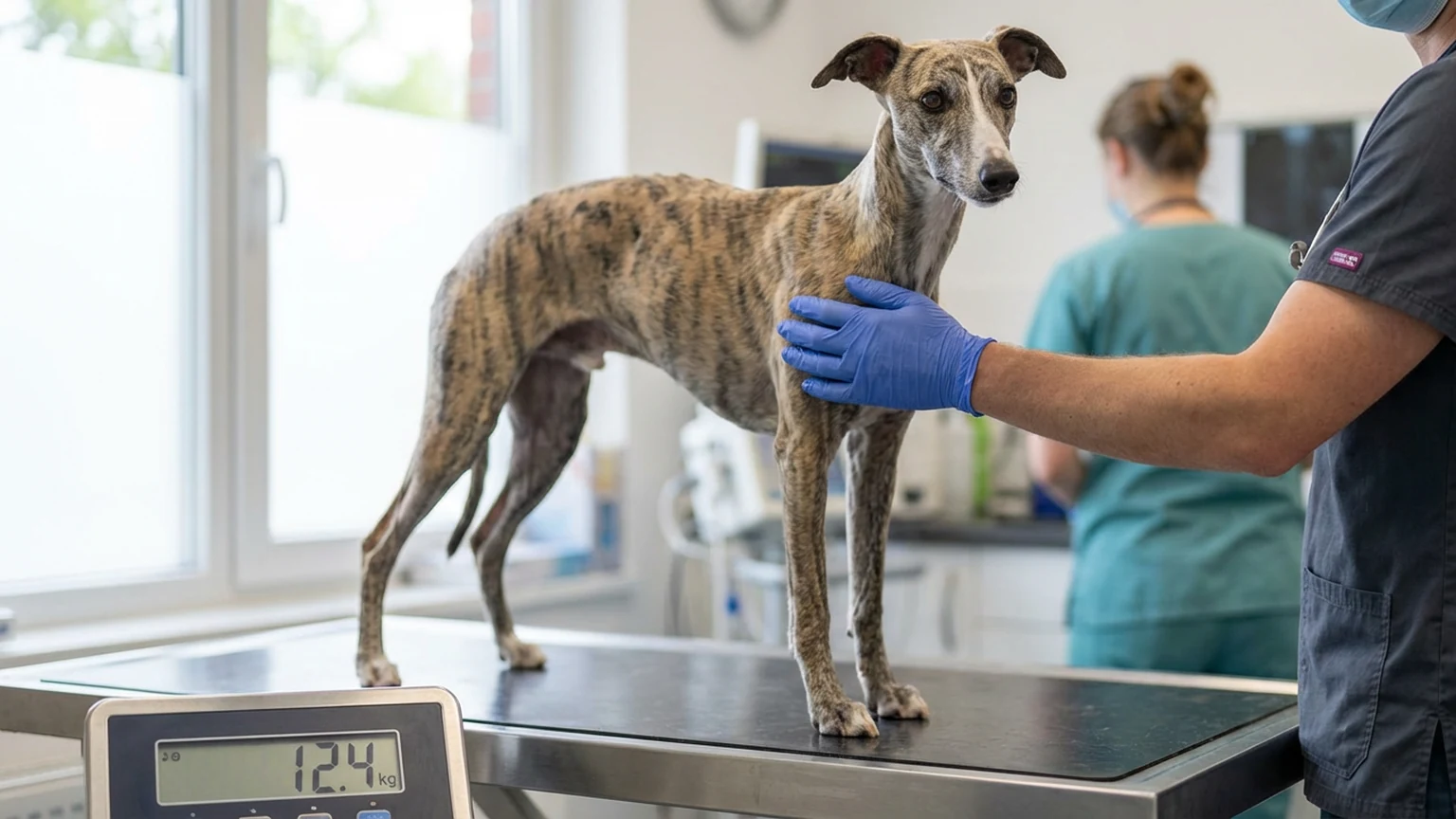
Nearly 59% of dogs and 61% of cats in the U.S. are classified as overweight or obese according to the Association for Pet Obesity Prevention (APOP) 2025 survey. Body Condition Scoring (BCS) on a 1–9 scale is the veterinary gold standard for assessing weight status, where 4–5 is ideal. This guide covers BCS assessment, daily calorie calculation using the RER formula, safe weight loss protocols, and ongoing monitoring — backed by the AAHA, WSAVA, AAFCO, and AVMA.
How Do You Know If Your Pet Is Overweight?
Visual and hands-on assessment is the first step. The AVMA and WSAVA recommend checking three key areas at home before scheduling a veterinary weight consultation:
- Rib check — You should feel ribs easily with light pressure but not see them prominently. If you can't feel ribs, your pet is likely overweight
- Waist view (from above) — A healthy pet has a visible tuck behind the ribs. A straight or bulging silhouette indicates excess weight
- Abdominal tuck (side view) — The belly should slope upward from the ribcage to the hind legs. A sagging or level belly is a warning sign
- Energy and mobility — Overweight pets tire more quickly, may resist stairs, and often show reluctance to play or exercise
What Is a Body Condition Score and How Do You Use It?
Body Condition Scoring (BCS) is a standardized system used by veterinarians worldwide. The most common scale runs 1–9, developed by Nestlé Purina and endorsed by WSAVA:
| BCS | Classification | Physical Signs |
|---|---|---|
| 1–3 | Underweight | Ribs, spine, hip bones clearly visible. Minimal body fat. Muscle wasting may be present. |
| 4–5 | Ideal | Ribs easily felt with slight fat cover. Visible waist from above. Abdominal tuck present. |
| 6–7 | Overweight | Ribs difficult to feel. Waist barely visible. Fat deposits over spine and tail base. |
| 8–9 | Obese | Ribs not palpable under heavy fat. No waist. Pendulous belly. Mobility impaired. |
Key Takeaway
Each BCS point above 5 represents approximately 10–15% excess body weight. A dog scoring 7/9 is roughly 20–30% overweight — equivalent to a 150-pound person carrying an extra 30–45 pounds.
How Many Calories Does Your Pet Actually Need?
Calorie needs are calculated using Resting Energy Requirements (RER) multiplied by a lifestyle factor. The formula endorsed by the AAHA:
RER = 70 × (body weight in kg)0.75
Multiply RER by the appropriate factor: 1.6 (intact adult), 1.4 (neutered adult), 1.0 (weight loss), 2.0–3.0 (puppy/kitten)
| Pet Size | Weight Range | Daily Calories (Maintenance) | Weight Loss Target |
|---|---|---|---|
| Small Dog | 10–20 lbs | 275–450 kcal | 200–320 kcal |
| Medium Dog | 20–50 lbs | 450–900 kcal | 320–640 kcal |
| Large Dog | 50–90 lbs | 900–1,400 kcal | 640–1,000 kcal |
| Giant Breed | 90+ lbs | 1,400–2,200 kcal | 1,000–1,570 kcal |
| Average Cat | 8–12 lbs | 180–270 kcal | 130–190 kcal |
For a detailed calorie calculation walkthrough, see our dog weight management guide and cat weight management guide.
What Does a Safe Weight Loss Protocol Look Like?
Crash diets are dangerous for pets — especially cats, where rapid weight loss triggers hepatic lipidosis (fatty liver disease), a potentially fatal condition. The AAHA recommends a structured, veterinarian-supervised approach:
| Step | Action | Why It Matters |
|---|---|---|
| 1 | Veterinary exam + BCS assessment | Rules out hypothyroidism, Cushing's, and other metabolic causes |
| 2 | Set target weight with vet | Based on BCS, breed frame, and muscle mass — not breed charts |
| 3 | Calculate calories at RER × 1.0 | Uses ideal (target) body weight, not current weight |
| 4 | Measure food with a kitchen scale | Scoop measuring overestimates by 20–50% |
| 5 | Cap treats at 10% of daily calories | Most owners exceed this by 200–300% without realizing |
| 6 | Biweekly weigh-ins + monthly BCS | Target: 1–2% loss/week (dogs), 0.5–1% (cats) |
What Health Risks Does Pet Obesity Cause?
Obesity isn't cosmetic — it's a chronic inflammatory disease that reduces both lifespan and healthspan. The Purina Lifespan Study demonstrated that lean dogs lived 1.8 years longer than their overweight littermates. Obesity-linked conditions include:
| Condition | Risk Increase | Species |
|---|---|---|
| Osteoarthritis | 2–3× higher risk | Dogs & cats |
| Type 2 diabetes | 4× higher risk | Cats (primarily) |
| Cranial cruciate ligament (CCL) tears | 2× higher risk | Dogs |
| Respiratory compromise | Significant (esp. brachycephalic) | Dogs & cats |
| Hepatic lipidosis | Higher risk during rapid weight loss | Cats |
| Reduced lifespan | Up to 2.5 years shorter | Dogs & cats |
Learn more about the lifespan–healthspan connection in our healthspan protocols guide.
Monitor Your Pet's Weight Over Time
Consistent weight tracking is the most reliable way to catch trends before they become problems. Use the tool below to log your pet's weight and visualize changes over time:
Weight Monitor
Monitor your pet's weight trends over time.
47.2 lbs
+0.7 lbs
+1.5%
Weight History
When Should You See a Vet About Your Pet's Weight?
Not all weight issues are caused by overfeeding. Medical conditions account for a significant percentage of weight problems:
- Sudden weight gain — Could indicate hypothyroidism, Cushing's disease, or fluid retention
- Unexplained weight loss — May signal diabetes, hyperthyroidism (cats), cancer, or kidney disease
- Weight gain despite reduced portions — Metabolic conditions require bloodwork to diagnose
- BCS 8–9 — Severe obesity requires veterinary-supervised weight loss with prescription diets and regular monitoring
Important Notice
This article is for informational purposes only and does not replace veterinary advice. Weight management plans should be developed in consultation with your veterinarian, who can rule out underlying medical conditions and set a safe calorie target based on your pet's individual needs.
Frequently Asked Questions
Related Reading
References
- Association for Pet Obesity Prevention (APOP). 2025 U.S. Pet Obesity Prevalence Survey. petobesityprevention.org
- World Small Animal Veterinary Association (WSAVA). Body Condition Score Charts. wsava.org
- Kealy, R.D. et al. (2002). Effects of diet restriction on life span and age-related changes in dogs. Journal of the American Veterinary Medical Association, 220(9), 1315–1320. PubMed
- American Animal Hospital Association (AAHA). 2021 AAHA Nutrition and Weight Management Guidelines. aaha.org
- American Veterinary Medical Association (AVMA). Your Pet's Healthy Weight. avma.org
- Association of American Feed Control Officials (AAFCO). Pet Food Labeling Guidelines. aafco.org