Joint problems — including arthritis, hip dysplasia, and cruciate ligament tears — affect up to 25% of all dogs. Large and giant breeds are disproportionately affected, but any dog can develop age-related joint disease. Early detection through behavioral observation and veterinary screening, combined with weight management and appropriate exercise, can delay surgical intervention by years. This guide covers the major joint conditions, breed-specific risk factors, supplement comparisons, and the surgical vs. non-surgical decision framework — backed by AKC, ACVS, and Merck Veterinary Manual.
📚 Part of our Dog Health Issues collection · See also: Common Dog Health Problems overview
What Are the Major Joint Problems in Dogs?
Osteoarthritis (Degenerative Joint Disease)
The most common cause of chronic pain in dogs, affecting up to 25% of all dogs and up to 80% of senior dogs (age 8+). Cartilage gradually breaks down, causing inflammation, pain, and reduced mobility. There is no cure — management focuses on slowing progression and controlling pain (Merck Veterinary Manual).
Hip Dysplasia
A genetic condition where the hip joint develops abnormally, affecting up to 50% of large breeds. The ball and socket don't fit properly, causing grinding, inflammation, and eventual arthritis. Breeds most affected: German Shepherds, Labrador Retrievers, Golden Retrievers, Rottweilers, and Great Danes (AKC). See our in-depth hip joint health guide.
Cranial Cruciate Ligament (CCL) Tears
The canine equivalent of an ACL tear. One of the most common orthopedic injuries, especially in medium to large breeds. CCL tears usually require surgical repair (TPLO or TTA), and 40–60% of dogs that tear one CCL will eventually tear the other (ACVS).
Luxating Patella
The kneecap slides out of its normal position. Most common in small breeds (Chihuahuas, Pomeranians, Yorkshire Terriers). Graded 1–4 based on severity. Grades 1–2 are often managed conservatively; Grades 3–4 typically require surgical correction (AKC).
Which Breeds Are Most at Risk?
| Condition | High-Risk Breeds | Typical Onset |
|---|---|---|
| Hip Dysplasia | German Shepherd, Lab, Golden, Rottweiler, Great Dane | 6–18 months |
| Elbow Dysplasia | Lab, Golden, Rottweiler, Bernese Mountain Dog | 4–12 months |
| CCL Tear | Lab, Rottweiler, Newfoundland, Staffordshire Terrier | 2–8 years |
| Luxating Patella | Chihuahua, Pomeranian, Yorkie, Toy/Mini Poodle | Any age |
| Arthritis (age-related) | All breeds (large breeds earlier) | 5–8+ years |
Get a personalized risk report for your breed with our Breed Health Assessor.
How to Spot Silent Joint Pain in Dogs
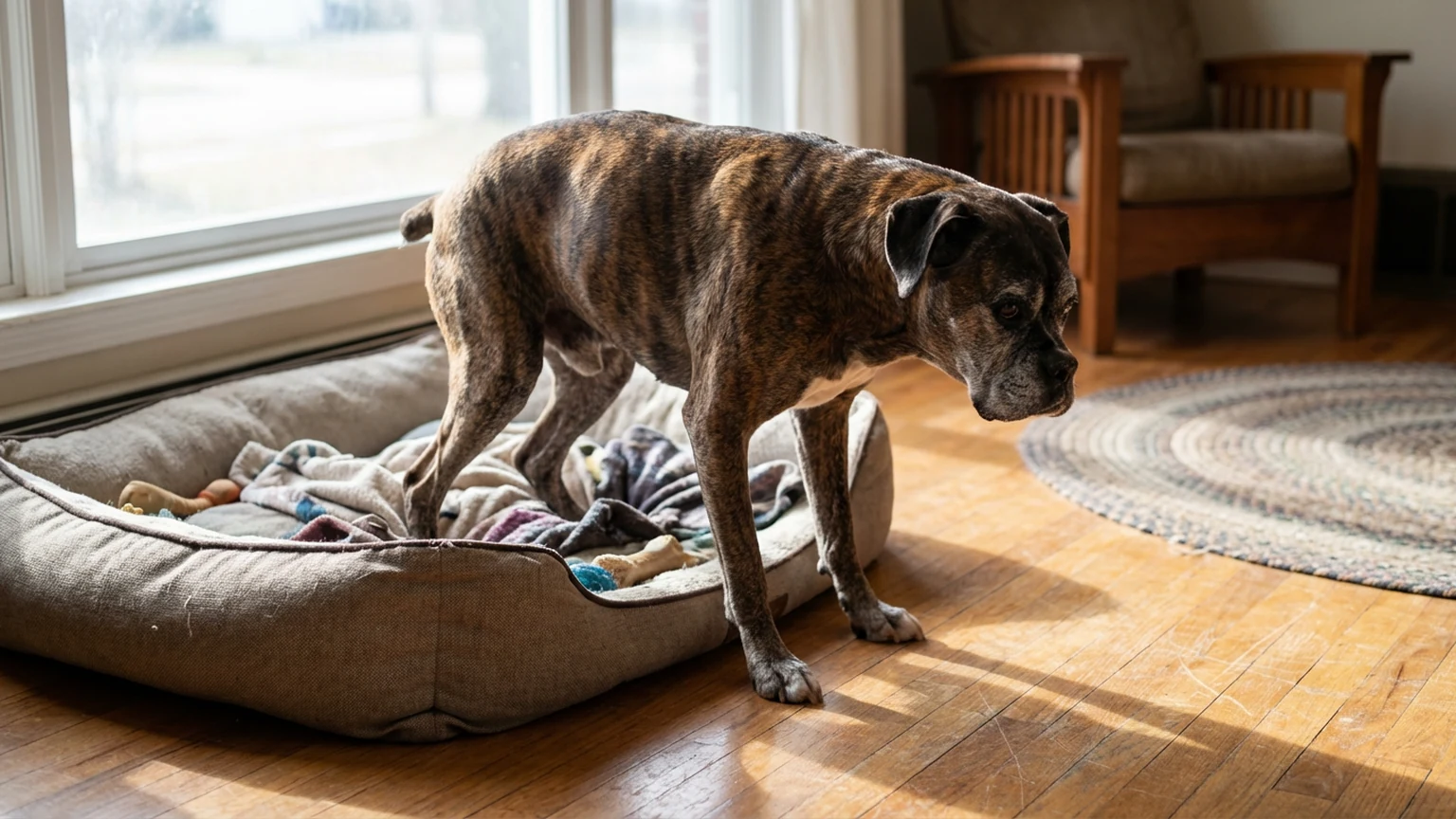
Dogs instinctively hide pain — a survival instinct from their wolf ancestors. By the time you notice obvious limping, the condition is often advanced. Watch for these subtle behavioral changes:
- Slower to get up from lying down, especially after rest
- Avoids stairs, jumping onto furniture, or getting in the car
- Decreased interest in play or walks
- Licking or chewing at a specific joint
- Muscle loss (atrophy) in one or both hind legs
- Behavioral changes: irritability, restlessness, or withdrawal
Our Silent Arthritis Pain Markers guide covers the 12 subtle behavioral changes that indicate chronic joint pain. Track your dog's vitals with the RRR Tracker.
Joint Supplement Comparison
| Supplement | Evidence | How It Works | Est. Cost/Mo |
|---|---|---|---|
| Omega-3 (EPA/DHA) | Strong | Reduces inflammatory mediators | $15–$40 |
| Glucosamine + Chondroitin | Moderate | Supports cartilage repair | $20–$50 |
| Green-Lipped Mussel | Moderate | Contains unique ETA omega-3 | $15–$35 |
| Adequan (Rx injectable) | Strong | Inhibits cartilage destruction | $50–$100 |
| CBD oil | Emerging | Anti-inflammatory, pain modulation | $30–$80 |
| Arthritis (acupuncture) | $104 |
| Arthritis (joint supplements) | $42/mo |
| Arthritis (NSAID medication) | $21/mo |
| CCL surgery | $2,299 |
For illustrative purposes — actual costs vary by region, clinic, and pet. Source: CareCredit (2024).
Surgical vs. Non-Surgical: Decision Framework
When Non-Surgical Management Works
- Mild to moderate arthritis without severe instability
- Grade 1–2 luxating patella without lameness
- Dogs under 15 lbs with partial CCL tears
- Senior dogs where anesthesia risk is high
When Surgery Is Recommended
- Complete CCL tear in dogs over 15 lbs
- Severe hip dysplasia not responding to conservative treatment
- Grade 3–4 luxating patella causing persistent lameness
- Young dogs where quality of life is significantly affected
Home Modifications for Dogs with Joint Problems
- Orthopedic bed — memory foam reduces pressure on joints
- Ramps for furniture and vehicles
- Non-slip mats on hard floors (tile, hardwood)
- Elevated food/water bowls to reduce neck strain
- Warm environment — cold worsens stiffness
More environmental modifications in our Mobility in Older Pets guide.
Important Notice
This article is for informational purposes only. Joint conditions require professional veterinary diagnosis — imaging (X-rays, CT) is typically needed for accurate assessment. Supplements should be used under veterinary guidance, especially alongside prescription medications. Never start or stop medications without consulting your vet.
Related Reading
References
- American Kennel Club (AKC). Hip Dysplasia in Dogs. akc.org
- American College of Veterinary Surgeons (ACVS). Cranial Cruciate Ligament Disease. acvs.org
- Merck Veterinary Manual. Osteoarthritis in Dogs. merckvetmanual.com
- Veterinary Partner (VIN). Joint Supplements for Dogs. veterinarypartner.vin.com