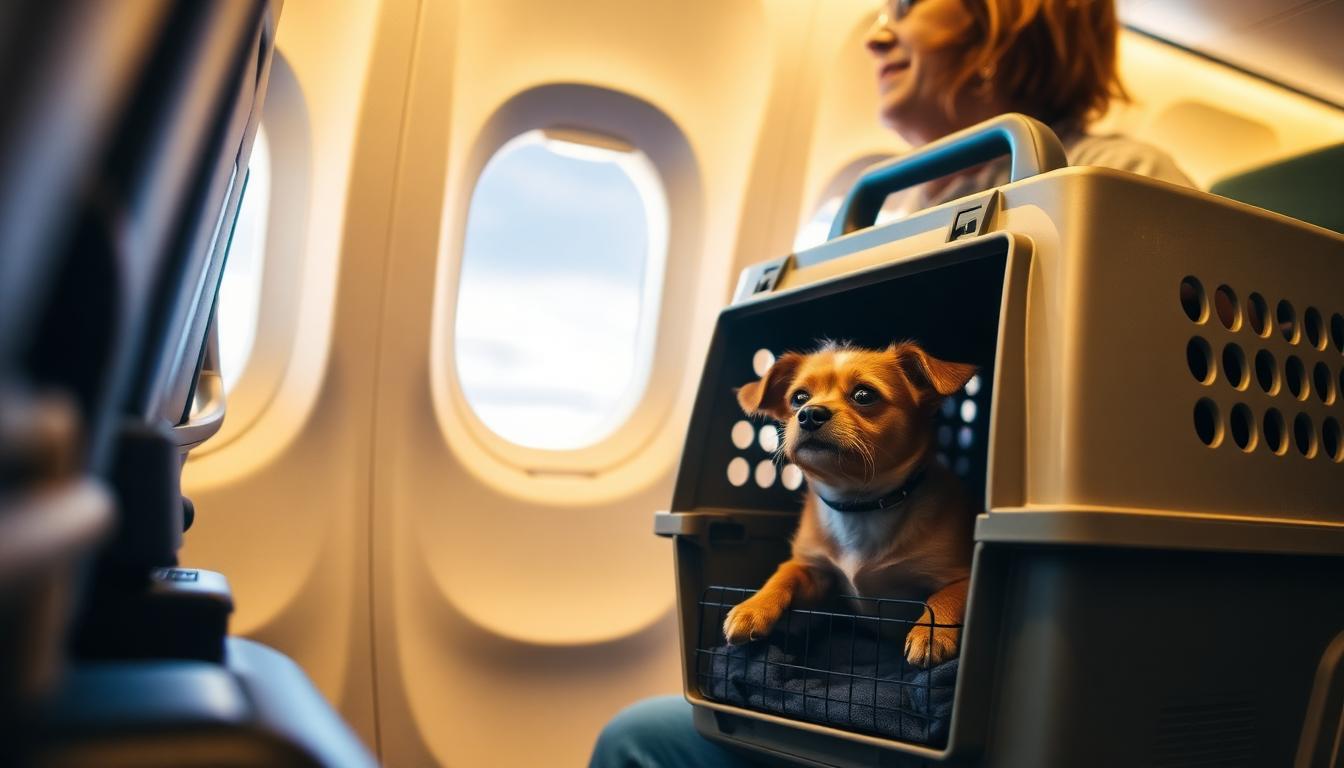
Yes, most U.S. airlines allow small dogs and cats to fly in the cabin in an airline-approved carrier that fits under the seat. Pets must weigh under 20 lbs (including carrier), remain in the carrier for the entire flight, and have current health documentation. Fees range from $95–$200 each way. The AVMA recommends in-cabin over cargo for all eligible pets, and advises against sedation during air travel due to respiratory risks at altitude.
Which Airlines Allow Pets in the Cabin in 2026?
Most major U.S. airlines allow in-cabin pets, but policies differ on fees, carrier dimensions, number of pets allowed per flight, and breed restrictions.
| Airline | Fee (Each Way) | Carrier Max Size | Key Rules |
|---|---|---|---|
| Delta | $150 | 18" × 11" × 11" | 2 pets/carrier OK; no snub-nosed in cargo |
| United | $150 | 17.5" × 12" × 7.5" | PetSafe cargo program available |
| American | $150 | 19" × 13" × 9" | Only cats and dogs; 1 pet per passenger |
| Southwest | $125 | 18.5" × 8.5" × 13.5" | Small cats and dogs only; no cargo option |
| JetBlue | $150 | 17" × 12.5" × 8.5" | JetPaws program with perks |
| Frontier | $99 | 18" × 14" × 8" | Carrier counts as personal item |
What Are the Carrier Requirements?
Choosing the right carrier is the most critical decision for in-cabin pet travel. The carrier must be airline-approved, properly ventilated, and comfortable for your pet.
- Soft-sided carriers are preferred — They compress slightly to fit under seats; hard-sided carriers may not fit
- Proper ventilation on 3+ sides — Mesh panels required for airflow during flight
- Pet must fit comfortably — Able to stand, turn around, and lie down naturally
- Leak-proof bottom — Line with absorbent pads in case of accidents
- Secure closures — Zippers should lock; frightened pets can escape poorly secured carriers
⚠️ Carrier Acclimation Is Non-Negotiable
Start carrier training 2–4 weeks before your flight. Leave the carrier open at home with treats and familiar bedding. Feed meals inside it. Take short car rides. A pet's first time in a carrier should never be at the airport — this dramatically increases stress, vocalization, and risk of panic-related escape.
Which Breeds Cannot Fly?
Brachycephalic (short-nosed) breeds face significantly higher risks during air travel due to their compromised respiratory systems. Most airlines restrict these breeds from cargo, and some restrict them from cabin travel as well.
| Dogs | Cats |
|---|---|
| English/French Bulldog, Pug, Boston Terrier | Persian, Himalayan, Exotic Shorthair |
| Pekingese, Shih Tzu, Lhasa Apso | Burmese, Scottish Fold (flat-faced) |
| Cavalier King Charles, Boxer, Mastiff | British Shorthair (some airlines) |
What Is the Step-by-Step Booking Process?
- Step 1: Check airline pet policy — Verify carrier size, weight limit, breed restrictions, and number of pets per flight
- Step 2: Book early and call the airline — Most airlines limit pets per flight (2–6); online booking doesn't always reserve pet spots
- Step 3: Get a health certificate — Visit your vet within 10 days of departure for a travel health certificate
- Step 4: Choose direct flights — Connections increase stress, temperature exposure, and the risk of missed connections
- Step 5: Arrive early — Allow extra time for pet check-in; find the pet relief area in the terminal before boarding
How Do You Keep Your Pet Calm During the Flight?
- Withhold food 4–6 hours before flight — Prevents motion sickness; offer water up to 2 hours before
- Exercise before the airport — A tired pet is a calmer pet; long walk or play session before departure
- Use pheromone sprays — Adaptil (dogs) or Feliway (cats) sprayed on carrier bedding 30 minutes before travel
- No sedation — The AVMA advises against sedating pets for air travel; discuss veterinary-approved calming alternatives
📚 Related Reading
Frequently Asked Questions
References
- U.S. Department of Transportation — Air Travel Consumer Report: Animal Incidents (2025)
- AVMA — Guidelines for Transporting Pets by Air (2025)
- Airlines for America — Domestic Pet Travel Statistics (2026)
- Center for Pet Safety — Carrier Crash Test Results (2025)