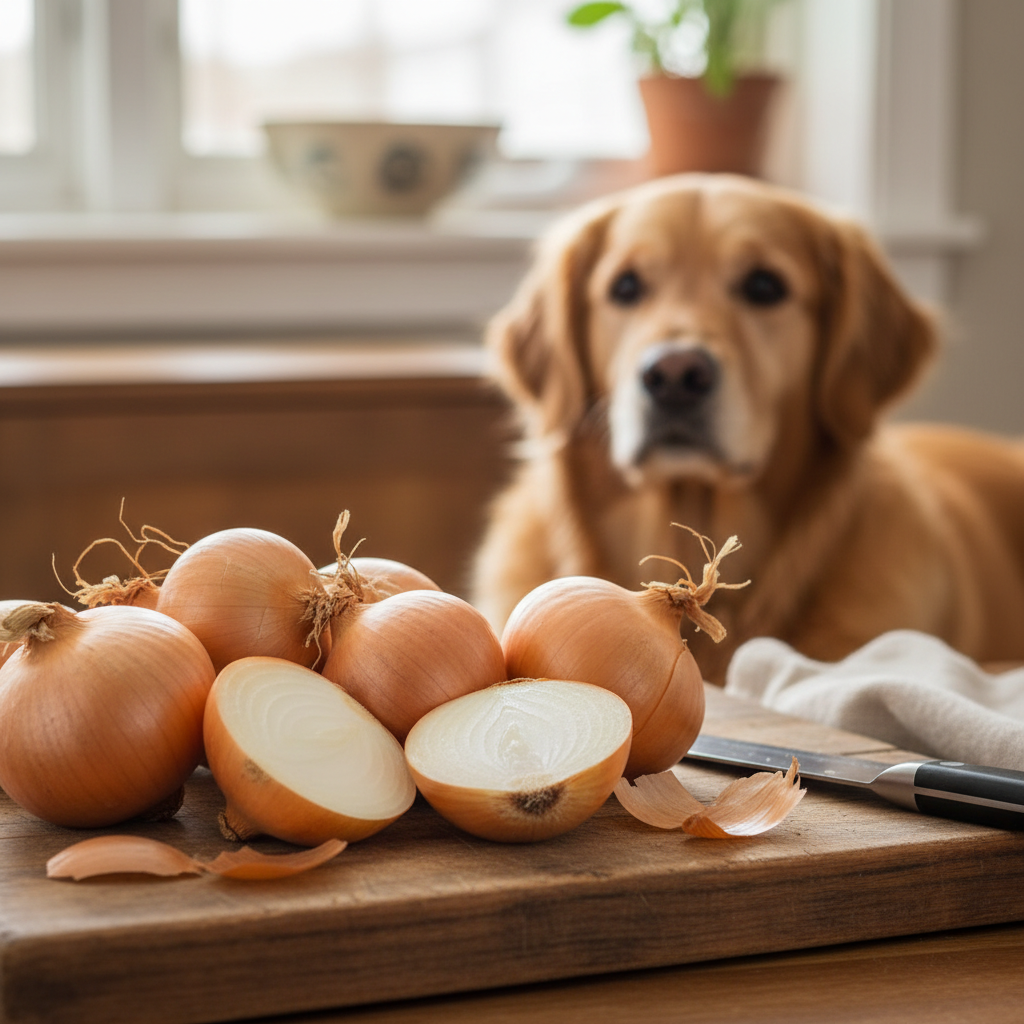
No — every member of the Allium family (onion, garlic, leek, chive, shallot) is toxic to dogs. They contain N-propyl disulfide, which damages red blood cells and causes hemolytic anemia. Signs may take 1–3 days to appear. Call ASPCA Animal Poison Control (888-426-4435) immediately.
Why Is Onions & Garlic Toxic for Dogs?
All Allium-family vegetables contain N-propyl disulfide and related organosulfur compounds. Per the Merck Veterinary Manual, these compounds bind to canine red blood cells and cause oxidative damage that leads to Heinz body hemolytic anemia — a destruction of red blood cells that can develop over several days.
Cooking, drying, or powdering does not destroy the toxin. In fact, garlic powder and onion powder are roughly 5–7 times more concentrated than fresh, which is why baby food with onion powder, gravies, soup mixes, and pizza crusts are common sources of poisoning. Japanese breeds (Akita, Shiba Inu) are genetically more susceptible.
What Symptoms Should You Watch for After Ingestion?
Per the ASPCA Animal Poison Control Center and Pet Poison Helpline, signs typically appear within the windows below. Severity scales with dose and your dog's body weight.
| Symptom | Onset | Severity |
|---|---|---|
| Vomiting & drooling | 0–24 hours | Moderate |
| Lethargy & weakness | 1–3 days | Moderate |
| Pale or yellow gums (jaundice) | 1–5 days | Severe |
| Red or brown urine | 2–5 days | Severe |
| Rapid breathing & heart rate | 2–5 days | Severe |
| Collapse, organ failure | 3–7 days | Fatal |
How Much Onions & Garlic Is Toxic to a Dog?
The toxic dose depends on body weight, the form of onion or garlic, and individual sensitivity. Use the table as a triage reference — not a green light to feed any amount.
| Dose | Likely effect | Severity |
|---|---|---|
| Onion: 0.5% body weight (e.g. 0.5 oz for a 20 lb dog) | Onset of red blood cell damage | Moderate |
| Garlic: ~1 g per 5 lb body weight (~1 clove for 25 lb dog) | Heinz body anemia possible | Severe |
| Garlic powder: even pinch quantities | Highly concentrated — risk of severe anemia | Severe |
What Should You Do If Your Dog Ate Onions & Garlic?
- 1Stop access immediately. Remove your dog from the area and pick up any remaining onion or garlic. Note the approximate amount eaten, the form, and the time of ingestion.
- 2Estimate dose by body weight. Knowing your dog's weight in pounds and the estimated amount consumed lets the poison line or vet decide whether observation or decontamination is needed.
- 3Call a poison control line first. Call ASPCA Animal Poison Control (888-426-4435) or the Pet Poison Helpline (855-764-7661). Both charge a consultation fee but give a written case number your vet can reference.
- 4Do NOT induce vomiting on your own. Hydrogen peroxide can cause severe esophageal ulceration if used incorrectly or with the wrong toxin. Only induce vomiting under direct veterinary instruction.
- 5Go to the ER vet if symptoms appear. Seek emergency care immediately for vomiting, tremors, weakness, collapse, seizures, or labored breathing — or proactively for any ingestion of grapes, xylitol, or large doses of a known toxin.
- 6Bring the packaging or sample. Bring the wrapper, ingredient list, or a photo of the food. This helps the veterinary team confirm the toxin and choose the right antidote or supportive plan.
When Should You Call Poison Control vs. the ER Vet?
Call Poison Control first if…
Your dog ate a small or unclear amount and is still acting normally. Have the wrapper, label, or a photo of the food ready.
- ASPCA APCC: 888-426-4435 (consultation fee)
- Pet Poison Helpline: 855-764-7661 (consultation fee)
Go directly to the ER vet if…
- Vomiting that won't stop, bloody diarrhea, or collapse
- Tremors, seizures, or unsteady gait
- Pale, blue-tinged, or muddy gums
- Known ingestion of xylitol, grapes, raisins, or large chocolate doses
- Difficulty breathing or extreme weakness
What Are Safer Alternatives?
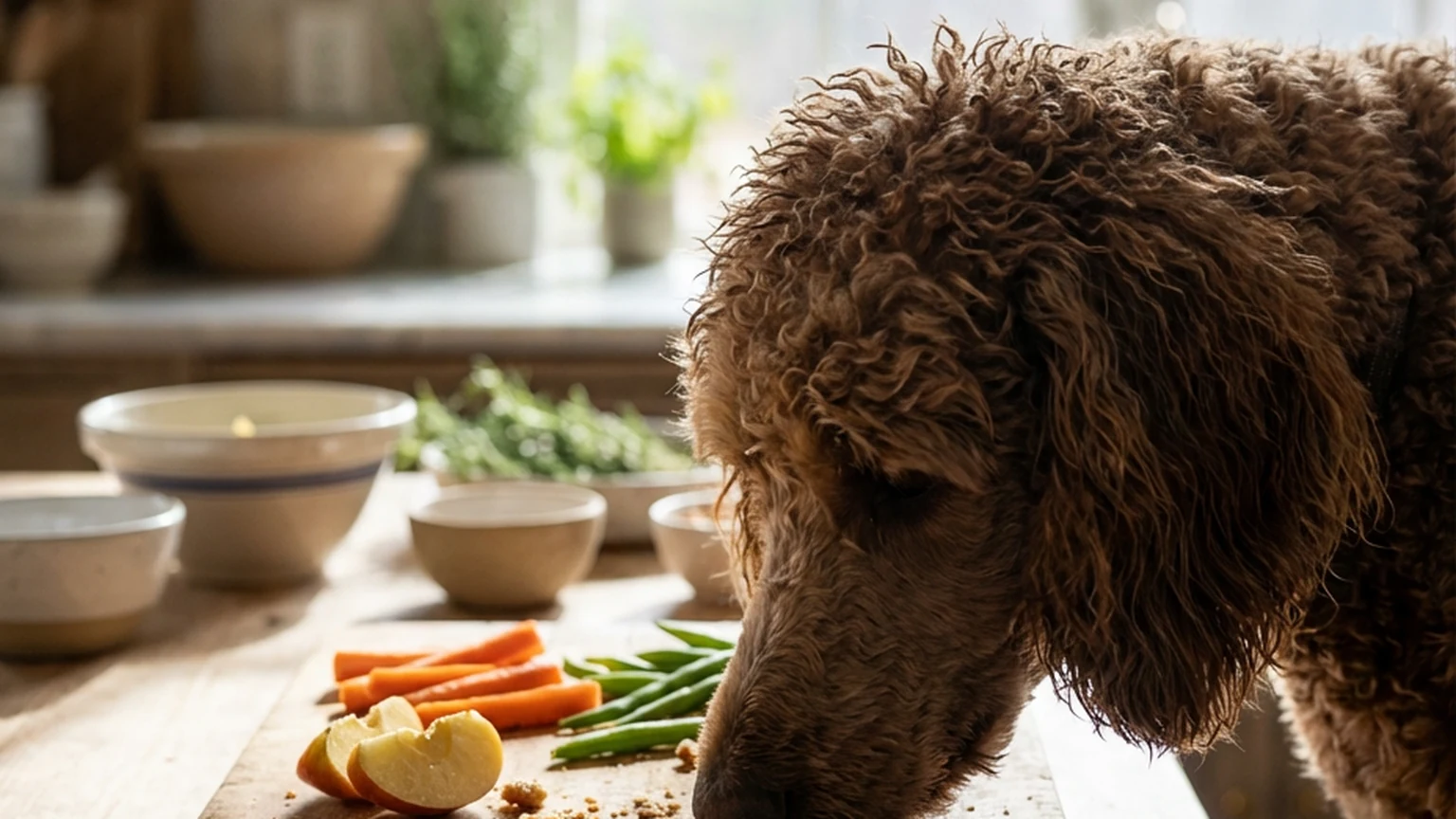
- Plain cooked carrots or green beans for crunch and flavor.
- Bone broth (no onion or garlic) as a food topper.
- Pumpkin puree for a savory, fiber-rich addition.
- Commercial dog-safe gravies labeled onion- and garlic-free.
Related Dog Food Safety Guides
- Browse the full Can Dogs Eat? food-safety hub
- Can Dogs Eat Chocolate?
- Can Dogs Eat Cheese?
- Dog Digestive Problems Guide
- Ask our AI vet assistant a follow-up question
Frequently Asked Questions
References
- ASPCA Animal Poison Control Center (APCC). Allium Toxicity in Dogs and Cats. aspca.org
- Merck Veterinary Manual. Onions, Garlic, Chives, and Leeks (Allium spp.) Toxicosis. merckvetmanual.com
- Pet Poison Helpline. Garlic Is Toxic to Dogs. petpoisonhelpline.com
- Cope R.B. (2005). Allium species poisoning in dogs and cats. Veterinary Medicine 100(8): 562–566.
- American Veterinary Medical Association (AVMA). Common Pet Toxins. avma.org