Puppy-proofing means removing toxic plants, securing electrical cords, locking up chemicals and medications, blocking stairs and off-limits rooms with baby gates, and setting up a crate or confinement area. Work room-by-room and outdoors before arrival, and keep emergency numbers — the ASPCA Animal Poison Control Center (888-426-4435) and Pet Poison Helpline (855-764-7661) — saved in your phone.
The ASPCA Animal Poison Control Center (APCC) receives more than 450,000 calls each year, and puppies under 12 months account for a disproportionate share of toxin exposure, foreign-body ingestion, and trauma cases. Most incidents are preventable with a few hours of preparation. This guide walks through every room, the yard, and a 48-hour pre-arrival checklist so your puppy's first weeks at home are safe and uneventful.
What Are the Biggest Dangers to Puppies at Home?
According to data from the ASPCA APCC and the Pet Poison Helpline, a small number of hazard categories account for the majority of puppy emergencies. Knowing these in advance lets you focus your puppy-proofing where it matters most.
| Hazard category | Why it matters | Severity |
|---|---|---|
| Plant & food toxins | Sago palm, grapes, chocolate, onions, xylitol | Often fatal |
| Foreign-body ingestion | Socks, toys, corn cobs, rocks, batteries | Surgical |
| Electrical injury | Cord chewing → burns, cardiac arrest | High |
| Household chemicals | Antifreeze, rodenticides, slug bait | Often fatal |
| Human medications | Ibuprofen, acetaminophen, ADHD meds | Often fatal |
| Falls & trauma | Stairs, balconies, slick floors | High |
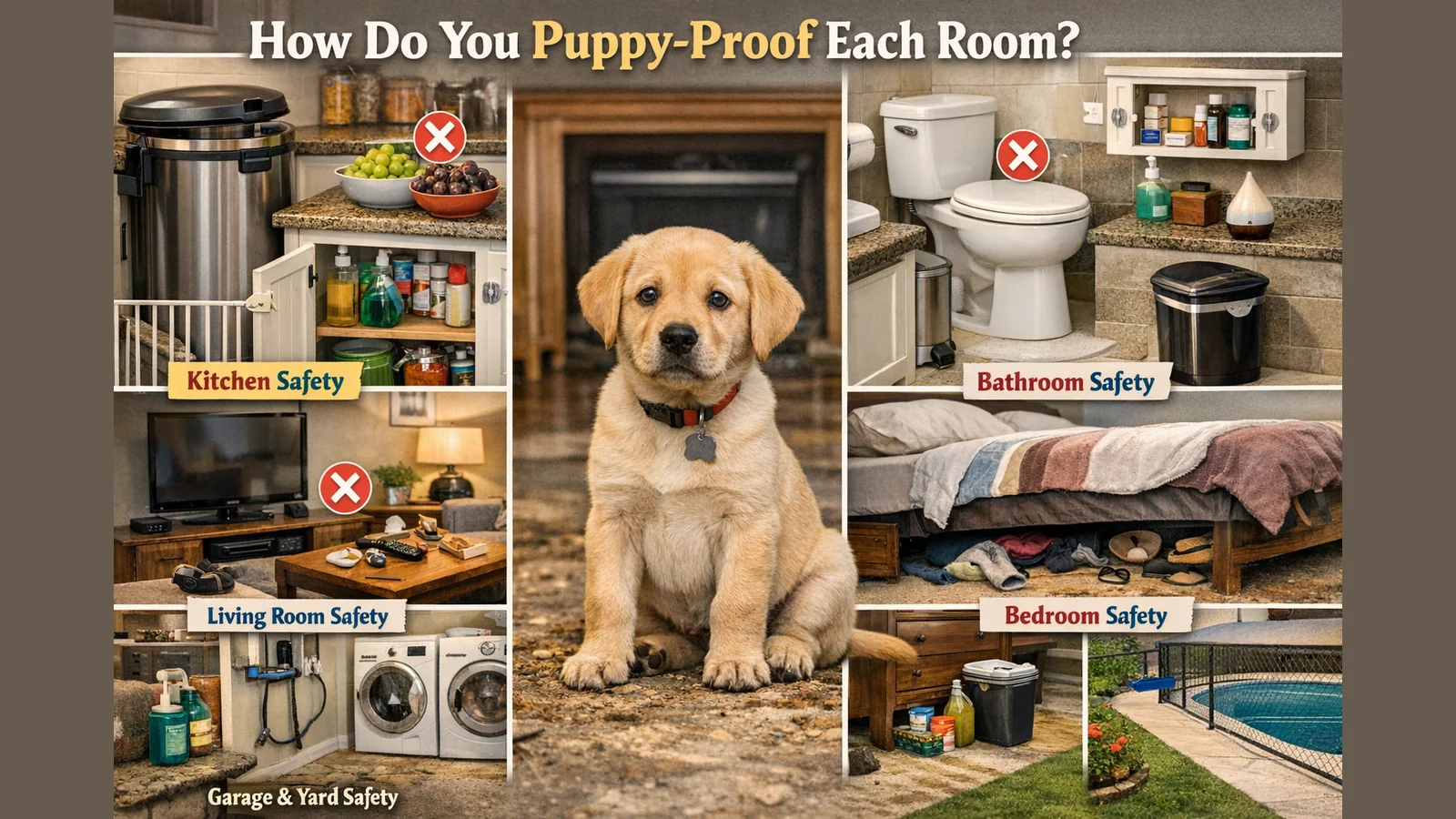
How Do You Puppy-Proof Each Room?
The American Veterinary Medical Association (AVMA) recommends a systematic, room-by-room walk-through at puppy eye level. Crawl through each space and look up, down, and behind everything.
Kitchen — what's the highest priority?
- Use trash cans with locking, weighted lids; puppies raid bones, foil, and food wrappers.
- Store all cleaning products in locked lower cabinets — child locks work for puppies too.
- Never leave dough, raw meat, sugar-free gum (xylitol), grapes, or chocolate on counters.
- Block gaps behind the refrigerator, dishwasher, and stove where a puppy could wedge in.
- Add a baby gate at the kitchen entrance during cooking and meal prep.
Living Room — what should be secured first?
- Cover every electrical cord with spiral wrap or chew-proof tubing.
- Anchor TVs, bookshelves, and floor lamps to the wall.
- Put away remote controls, shoes, kids' toys, coins, and rubber bands.
- Roll up tasseled rugs and tie back blind cords (strangulation risk).
- Keep an X-pen or playpen ready for short, supervised free-roam sessions.
Bathroom — what's the drowning and chemical risk?
- Always close toilet lids; in-tank cleaning tablets are toxic.
- Store medications, razors, cotton swabs, and dental floss in closed cabinets.
- Keep trash cans with sanitary products covered or out of reach.
- Avoid plug-in essential oil diffusers — many oils are toxic to dogs.
- Drain bathtubs and sinks completely after use.
Bedroom — what hides under the bed?
- Sweep under the bed and dressers for socks, hair ties, and small objects.
- Store jewelry, headphones, eyeglasses, and chargers in closed drawers.
- Keep laundry in lidded hampers — socks and underwear are top GI obstruction culprits.
- Always confirm closet and dresser doors are fully closed.
Garage, laundry & yard — what's often forgotten?
- Keep antifreeze locked away — even a teaspoon is fatal to a small puppy.
- Always check the washer and dryer drum and door before starting a cycle.
- Store rodenticides, slug bait, fertilizer, and lawn chemicals out of reach.
- Walk the fence line for gaps, loose boards, and dig-out spots.
- Remove cocoa-bean mulch (theobromine) and check for mushrooms after rain.
- Cover or fence off swimming pools, hot tubs, and ponds.
Which Plants Must Be Removed Before a Puppy Arrives?
The ASPCA Animal Poison Control Center maintains a database of 400+ plants toxic to dogs. The most dangerous, most commonly found in homes and yards, are listed below.
| Plant | Toxic component | Severity |
|---|---|---|
| Sago palm | Cycasin | Fatal — liver failure |
| Azalea / rhododendron | Grayanotoxins | Cardiac, fatal |
| Oleander | Cardiac glycosides | Often fatal |
| Foxglove | Digitalis glycosides | Cardiac arrest |
| Yew | Taxine alkaloids | Sudden death |
| Tulip & daffodil bulbs | Tulipalin / lycorine | Severe GI |
| Autumn crocus | Colchicine | Multi-organ failure |
Dog-safe alternatives include spider plants, Boston ferns, areca palm, calathea, African violet, and rosemary or basil in a raised herb planter.
Which Foods Are Toxic to Puppies?
Per the ASPCA APCC, never let a puppy access: chocolate (theobromine), grapes & raisins (acute kidney failure), onions/garlic/chives (hemolytic anemia), xylitol (sugar-free gum, peanut butter, baked goods), macadamia nuts, raw bread dough (alcohol + GI rupture), cooked bones, alcohol, caffeine, and avocado pits.
When Should You Call Poison Control vs. an ER Vet?
Call Poison Control first if…
Your puppy ate something you suspect is toxic but is still acting normal. Have the product, plant, or wrapper ready.
- ASPCA APCC: 888-426-4435 (consultation fee)
- Pet Poison Helpline: 855-764-7661 (consultation fee)
Go directly to the ER vet if…
- Seizures, collapse, or unconsciousness
- Ingestion of grapes, xylitol, antifreeze, or rodenticide
- Difficulty breathing or pale/blue gums
- Visible string or thread protruding from mouth or rectum
- Trauma, falls from height, or electrical burn
- Bloated, hard abdomen with unproductive retching (GDV/bloat)
What's the 48-Hour Pre-Arrival Puppy-Proofing Checklist?
- 1Survey each room at puppy level. Get on your hands and knees in every room and scan for chewables, dangling cords, gaps under furniture, and reachable counter or table items. Puppies will mouth anything they find.
- 2Remove or relocate toxic plants. Cross-check every indoor and outdoor plant against the ASPCA toxic plant database. Remove dangerous species or fence off garden beds where the puppy will play.
- 3Cover and secure all electrical cords. Install spiral cord wrap, cable management channels, or chew-proof covers on every reachable cord. Apply bitter apple spray and unplug unused devices.
- 4Lock up chemicals, medications, and trash. Move cleaning products, medications, fertilizer, and pest control products into locked cabinets. Use lidded, weighted trash cans in the kitchen and bathroom.
- 5Set up gates, crate, and confinement zones. Install baby gates to block stairs and off-limits rooms. Place an appropriately sized crate in a quiet area and create a long-term confinement pen for unsupervised time.
- 6Puppy-proof the yard and outdoor spaces. Inspect fence lines for gaps, secure pool covers, remove cocoa mulch, and lock away lawn chemicals. Confirm gates latch and the yard has shade and water.
Related Dog Care Guides
- How to Train a New Puppy: The Complete 2026 Guide
- Crate Training: A Step-by-Step Plan
- Potty Training Puppies: Timing, Tools & Troubleshooting
- Flea & Tick Prevention for Dogs
- Ask our AI vet assistant a question
Frequently Asked Questions
References
- ASPCA Animal Poison Control Center (APCC). Toxic and Non-Toxic Plant List — Dogs. aspca.org/pet-care/animal-poison-control
- Pet Poison Helpline. Top 10 Dog Toxins. petpoisonhelpline.com
- American Veterinary Medical Association (AVMA). Household Hazards for Pets. avma.org
- American Veterinary Society of Animal Behavior (AVSAB). Position Statement on Crate Training. avsab.org
- Tufts Cummings School of Veterinary Medicine. Puppy Behavior & Welfare Resources. vet.tufts.edu
- Cornell Riney Canine Health Center. Bringing Home a New Puppy. vet.cornell.edu/departments-centers-and-institutes/riney-canine-health-center