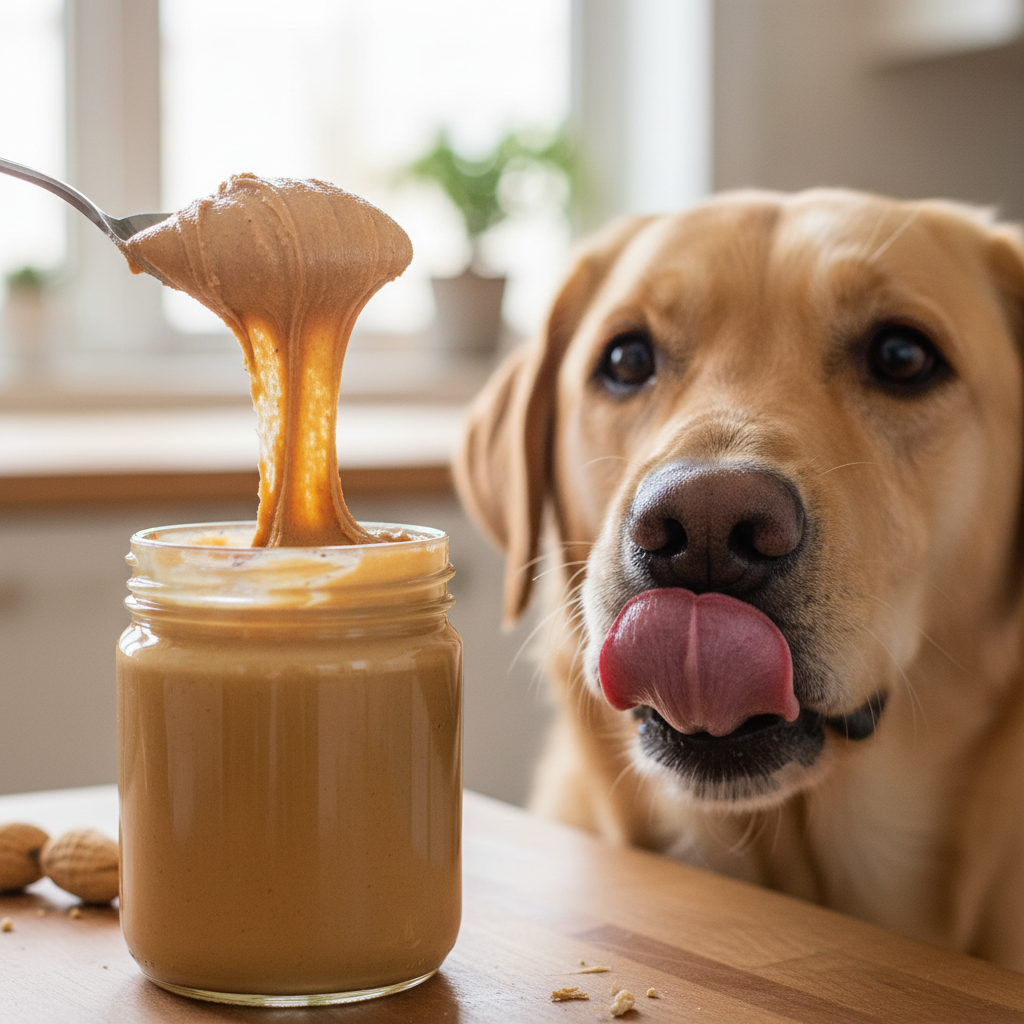
Yes — most plain peanut butter is safe for dogs in small amounts and is a popular reward, training tool, and Kong filler. CRITICAL: always check the label for xylitol (sometimes listed as 'birch sugar') — it is deadly to dogs. Choose unsalted, low-sugar, single-ingredient peanut butter.
Why Is Peanut Butter Generally Safe for Dogs?
Plain peanut butter is a good source of healthy fats, protein, vitamin E, and B vitamins. It's calorie-dense though — roughly 90 kcal per tablespoon — so it should be treated as an occasional reward, not a daily food. The American Kennel Club recommends keeping all treats to 10% or less of daily calories.
The single biggest risk is xylitol, a sugar substitute used in some "natural," "keto," or sugar-free peanut butter brands. Per the FDA Center for Veterinary Medicine, even small amounts of xylitol can cause life-threatening hypoglycemia and liver failure. Always read the ingredient list — every time, every jar.
What Symptoms Should You Watch for After Ingestion?
Per the ASPCA Animal Poison Control Center and Pet Poison Helpline, signs typically appear within the windows below. Severity scales with dose and your dog's body weight.
| Symptom | Onset | Severity |
|---|---|---|
| Mild vomiting (overfeeding) | 2–6 hours | Mild |
| Loose stool from too much fat | 6–24 hours | Mild |
| Pancreatitis (large dose, fatty PB) | 1–3 days | Severe |
| Hypoglycemia (xylitol-containing PB) | 10–60 minutes | Fatal |
What Should You Do If Your Dog Ate Peanut Butter?
- 1Stop access immediately. Remove your dog from the area and pick up any remaining peanut butter. Note the approximate amount eaten, the form, and the time of ingestion.
- 2Estimate dose by body weight. Knowing your dog's weight in pounds and the estimated amount consumed lets the poison line or vet decide whether observation or decontamination is needed.
- 3Call a poison control line first. Call ASPCA Animal Poison Control (888-426-4435) or the Pet Poison Helpline (855-764-7661). Both charge a consultation fee but give a written case number your vet can reference.
- 4Do NOT induce vomiting on your own. Hydrogen peroxide can cause severe esophageal ulceration if used incorrectly or with the wrong toxin. Only induce vomiting under direct veterinary instruction.
- 5Go to the ER vet if symptoms appear. Seek emergency care immediately for vomiting, tremors, weakness, collapse, seizures, or labored breathing — or proactively for any ingestion of grapes, xylitol, or large doses of a known toxin.
- 6Bring the packaging or sample. Bring the wrapper, ingredient list, or a photo of the food. This helps the veterinary team confirm the toxin and choose the right antidote or supportive plan.
When Should You Call Poison Control vs. the ER Vet?
Call Poison Control first if…
Your dog ate a small or unclear amount and is still acting normally. Have the wrapper, label, or a photo of the food ready.
- ASPCA APCC: 888-426-4435 (consultation fee)
- Pet Poison Helpline: 855-764-7661 (consultation fee)
Go directly to the ER vet if…
- Vomiting that won't stop, bloody diarrhea, or collapse
- Tremors, seizures, or unsteady gait
- Pale, blue-tinged, or muddy gums
- Known ingestion of xylitol, grapes, raisins, or large chocolate doses
- Difficulty breathing or extreme weakness
What Are Safer Alternatives?
- Plain unsweetened almond butter (xylitol-free).
- Pumpkin puree (no spice) as a Kong filler.
- Plain Greek yogurt for dogs that tolerate dairy.
- Mashed banana mixed into dog kibble for a sweet treat.
Related Dog Food Safety Guides
- Browse the full Can Dogs Eat? food-safety hub
- Can Dogs Eat Xylitol? (Critical Read)
- Can Dogs Eat Cheese?
- Dog Weight Management Guide
- Ask our AI vet assistant a follow-up question
Frequently Asked Questions
References
- FDA Center for Veterinary Medicine. Paws Off! Xylitol Is Toxic to Dogs. fda.gov/animal-veterinary
- Pet Poison Helpline. Xylitol Toxicity in Dogs. petpoisonhelpline.com
- American Kennel Club (AKC). Can Dogs Eat Peanut Butter? akc.org
- ASPCA Animal Poison Control Center (APCC). People Foods to Avoid Feeding Your Pets. aspca.org
- Merck Veterinary Manual. Nutritional Requirements of Dogs. merckvetmanual.com