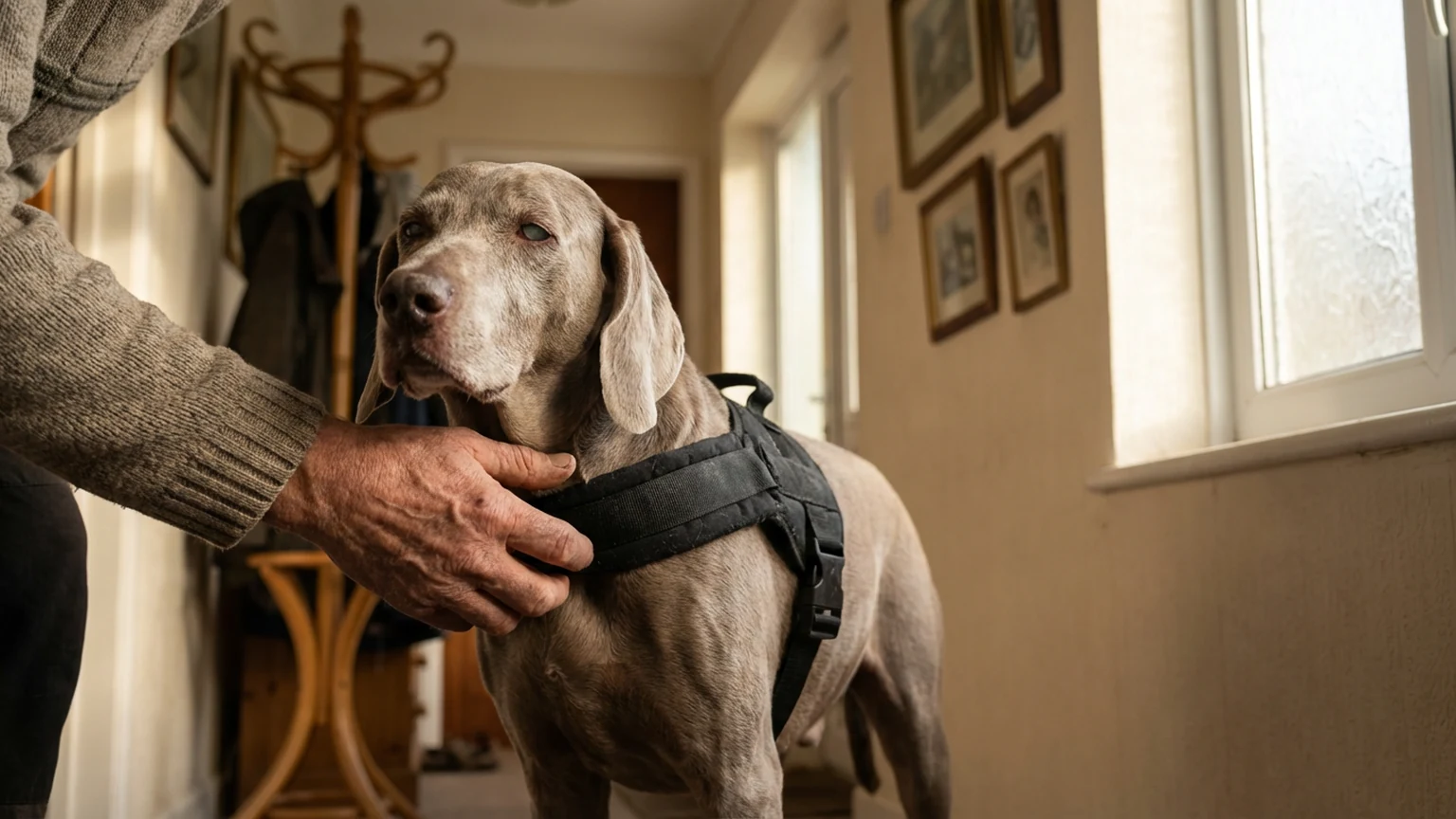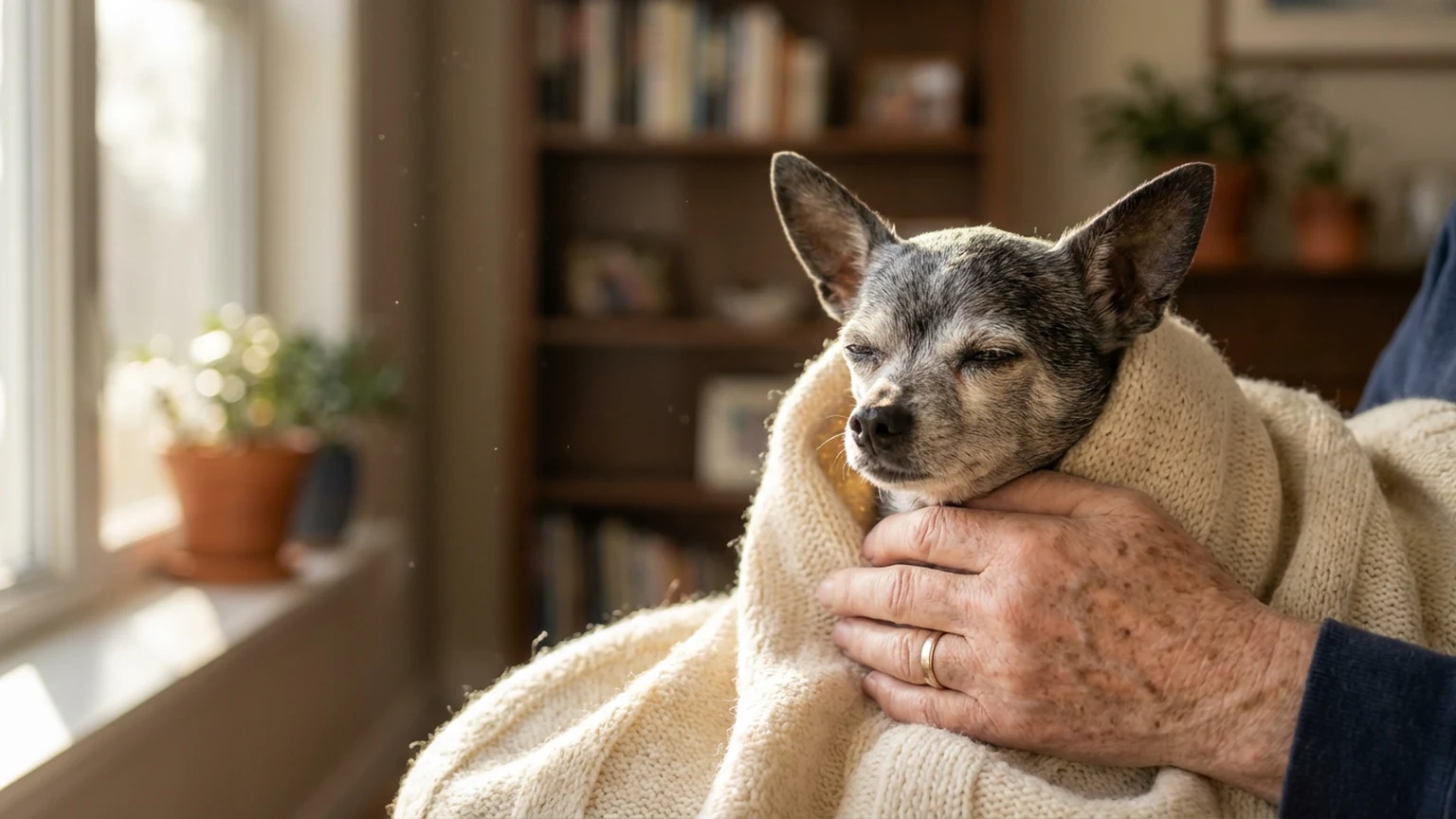
To navigate end-of-life care for your pet: 1) Use the HHHHHMM Quality of Life Scale to objectively assess your pet's daily experience. 2) Explore hospice and palliative care with your veterinarian. 3) Consider in-home euthanasia for a peaceful, familiar environment. 4) Prepare a grief support plan for yourself and your family. The AVMA's guidelines on euthanasia emphasize that ending suffering is the final act of love and responsibility in the human-animal bond.
How Do You Assess Quality of Life in a Senior Pet?
Dr. Alice Villalobos, a veterinary oncologist, developed the HHHHHMM Quality of Life Scale. Score each factor from 1 (very poor) to 10 (excellent):
| Factor | What to Evaluate | Score 1–10 |
|---|---|---|
| Hurt | Is pain managed? Can your pet rest comfortably? | 1 = constant unmanaged pain |
| Hunger | Is your pet eating enough to maintain weight? | 1 = refuses all food, needs feeding tube |
| Hydration | Is your pet drinking? Need subcutaneous fluids? | 1 = severe dehydration despite intervention |
| Hygiene | Can your pet stay clean? Pressure sores? | 1 = soiled constantly, open sores |
| Happiness | Does your pet express joy? Respond to family? | 1 = no response, no interest |
| Mobility | Can your pet move? Get up unassisted? | 1 = unable to move, needs carrying |
| More Good Days | Do good days outnumber bad? | 1 = mostly bad days |
Guidance
A total score above 35 generally indicates acceptable quality of life. Below 35, have a compassionate conversation with your veterinarian about next steps. This scale is a guide—not a verdict. You know your pet best.
What Is Pet Hospice and Palliative Care?
Pet hospice focuses on comfort rather than cure. It's appropriate when curative treatment is no longer effective or desired. The IAAHPC (International Association for Animal Hospice and Palliative Care) outlines these core components:
- ✓Pain management — multimodal approach: medications, supplements, and non-drug therapies.
- ✓Nutritional support — appetite stimulants, hand-feeding, or assisted feeding as needed.
- ✓Hydration management — subcutaneous fluids administered at home by trained owners.
- ✓Environmental comfort — temperature control, soft bedding, easy access to food/water/toileting.
- ✓Emotional support — maintaining bond through gentle touch, familiar routines, and presence.
- ✓Regular reassessment — weekly quality-of-life scoring to track trends over time.
What Are Your Euthanasia Options?
| Option | Pros | Cons | Cost (2026) |
|---|---|---|---|
| In-clinic | Immediate support staff, IV access | Stressful car ride, unfamiliar setting | $100–$300 |
| In-home | Peaceful, familiar environment | Higher cost, scheduling needed | $300–$600 |
| Hospice-assisted | Planned, family prepared | Requires hospice vet relationship | $400–$800 |
How Do You Cope with Pet Loss Grief?
Pet loss grief is real, valid, and can be as intense as losing a human family member. Research from the Human Animal Bond Research Institute (HABRI) shows:
- ✓Allow yourself to grieve — there's no timeline for healing. Pet loss grief is recognized by psychologists.
- ✓Create a memorial — a photo album, paw print, or planting a tree can provide tangible closure.
- ✓Seek support — pet loss hotlines (ASPCA: 877-474-3310) and online support groups help immensely.
- ✓Be honest with children — use age-appropriate language; avoid euphemisms like 'went to sleep.'
- ✓Consider professional help — if grief persists beyond 6 months or impacts daily functioning.
- ✓Don't rush getting another pet — grieve fully first, but know that a new pet doesn't replace the old one.
What Aftercare Options Are Available?
| Option | Description | Cost Range (2026) |
|---|---|---|
| Communal cremation | Cremated with other pets; ashes not returned | $50–$150 |
| Private cremation | Individual cremation; ashes returned in urn | $150–$400 |
| Home burial | Buried on your property (check local laws) | Minimal |
| Pet cemetery | Dedicated burial plot with marker | $500–$2,000+ |
| Aquamation | Water-based, eco-friendly alternative to cremation | $200–$500 |
| Memorial jewelry | Ashes incorporated into wearable keepsake | $50–$300 |