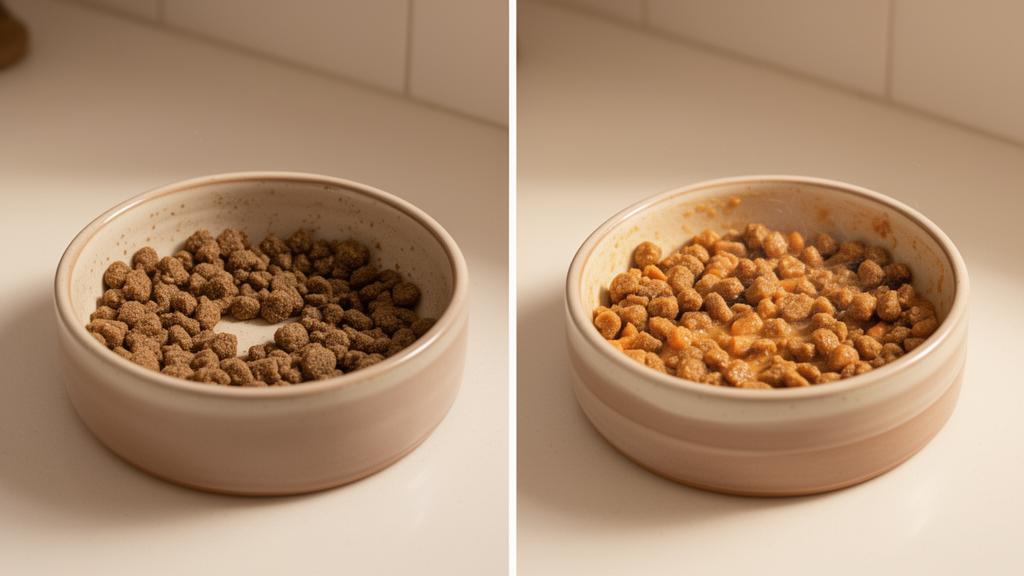
Veterinarians recommend a 7–10 day gradual transition when changing your cat's food, starting with 75% old food mixed with 25% new food and progressively adjusting the ratio. Cats have sensitive digestive systems, and abrupt changes disrupt the gut microbiome, leading to vomiting, diarrhea, and food aversion that can be difficult to reverse.
Why Can't You Switch Cat Food Overnight?
A cat's digestive tract maintains a specific balance of bacteria and enzymes adapted to their current diet. Sudden changes overwhelm this system. Additionally, cats are creatures of habit — they may refuse new food entirely if it appears without warning, potentially leading to dangerous hepatic lipidosis (fatty liver disease) if they stop eating for more than 48 hours.
What Is the Recommended Transition Schedule?
No primary veterinary source recommends a fixed 75% old food and 25% new food schedule for days 1–3 in cat food transitions. Authoritative guidance advises a more gradual, individualized approach for cats to prevent digestive issues or psychogenic anorexia: introduce small amounts of new food daily while limiting old food to energy requirements, increasing new food only after consistent acceptance over days, typically over a week or more (up to 4 weeks per guidelines). [1]
Transitioning from one food to another should always be done gradually and typically requires a week or more to ease the change. In cats, this is even more critical since they are more prone to food aversions. Typically, a small amount of the new food can be introduced while decreasing the amount of the old food. Every few days, the amount of new food is increased and the amount of the old food is decreased. [1]
No sources recommend feeding 100% new cat food from day 10 onwards; instead, they advise gradual transitions over 7–14 days using incremental mixing to prevent digestive issues or refusal. [2]
What If Your Cat Refuses the New Food?
- Warm the food slightly — Enhances aroma, making it more appealing
- Add a flavor topper — A small amount of tuna juice or nutritional yeast
- Slow down the transition — Extend to 14 days with smaller increments
- Never starve your cat — Hepatic lipidosis can develop in 48 hours without food
References
- PMC: Feline nutrition and food transition guidance (pmc.ncbi.nlm.nih.gov)
- VCA Hospitals: Switching your pet to adult wellness food (vcahospitals.com)