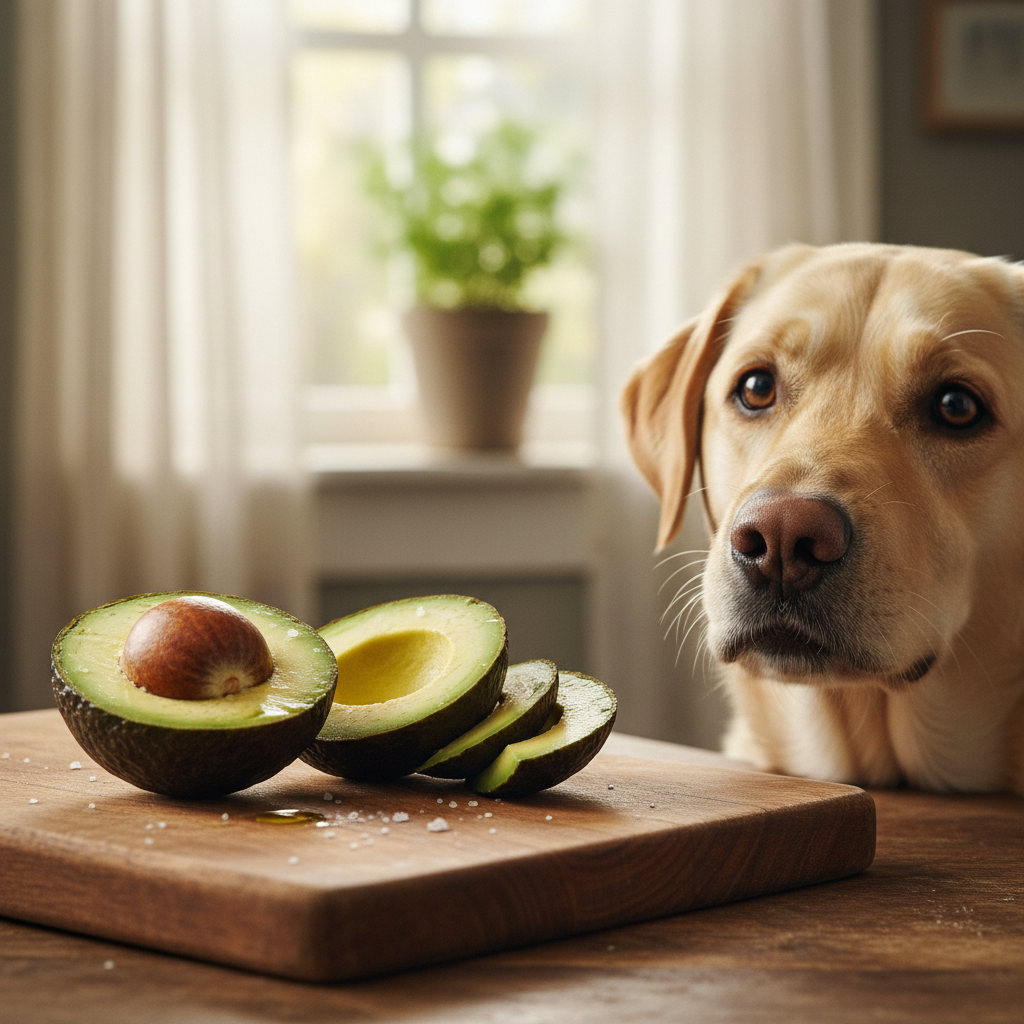
Caution — small amounts of plain ripe avocado flesh are not toxic to dogs, but the pit, skin, and leaves contain persin and pose a serious choking and intestinal obstruction risk. Avoid feeding avocado as a regular treat. If your dog swallowed a pit, contact your vet or ASPCA APCC (888-426-4435) immediately.
Why Is Avocado Risky for Dogs?
Avocados contain persin, a fungicidal toxin most concentrated in the pit, skin, and leaves. Per the ASPCA APCC, dogs are relatively resistant to persin compared to birds and large livestock — small amounts of ripe avocado flesh rarely cause more than mild GI upset.
The bigger danger is mechanical: the pit is large, slick, and the perfect size for esophageal or intestinal obstruction, often requiring surgical removal. Skin and leaves carry both persin and a higher choking risk. Guacamole is also dangerous because it usually contains onion, garlic, and salt — all of which are harmful.
What Symptoms Should You Watch for After Ingestion?
Per the ASPCA Animal Poison Control Center and Pet Poison Helpline, signs typically appear within the windows below. Severity scales with dose and your dog's body weight.
| Symptom | Onset | Severity |
|---|---|---|
| Vomiting & soft stool | 2–12 hours | Mild |
| Loss of appetite | 12–24 hours | Mild |
| Choking, gagging (pit lodged) | Immediate | Severe |
| Repeated vomiting (intestinal obstruction) | 1–4 days | Severe |
| Pancreatitis from high fat content | 1–3 days | Severe |
What Should You Do If Your Dog Ate Avocado?
- 1Stop access immediately. Remove your dog from the area and pick up any remaining avocado. Note the approximate amount eaten, the form, and the time of ingestion.
- 2Estimate dose by body weight. Knowing your dog's weight in pounds and the estimated amount consumed lets the poison line or vet decide whether observation or decontamination is needed.
- 3Call a poison control line first. Call ASPCA Animal Poison Control (888-426-4435) or the Pet Poison Helpline (855-764-7661). Both charge a consultation fee but give a written case number your vet can reference.
- 4Do NOT induce vomiting on your own. Hydrogen peroxide can cause severe esophageal ulceration if used incorrectly or with the wrong toxin. Only induce vomiting under direct veterinary instruction.
- 5Go to the ER vet if symptoms appear. Seek emergency care immediately for vomiting, tremors, weakness, collapse, seizures, or labored breathing — or proactively for any ingestion of grapes, xylitol, or large doses of a known toxin.
- 6Bring the packaging or sample. Bring the wrapper, ingredient list, or a photo of the food. This helps the veterinary team confirm the toxin and choose the right antidote or supportive plan.
When Should You Call Poison Control vs. the ER Vet?
Call Poison Control first if…
Your dog ate a small or unclear amount and is still acting normally. Have the wrapper, label, or a photo of the food ready.
- ASPCA APCC: 888-426-4435 (consultation fee)
- Pet Poison Helpline: 855-764-7661 (consultation fee)
Go directly to the ER vet if…
- Vomiting that won't stop, bloody diarrhea, or collapse
- Tremors, seizures, or unsteady gait
- Pale, blue-tinged, or muddy gums
- Known ingestion of xylitol, grapes, raisins, or large chocolate doses
- Difficulty breathing or extreme weakness
What Are Safer Alternatives?
- Plain cooked sweet potato — healthy fat-free source of fiber and beta-carotene.
- Plain cooked pumpkin (no spice) for digestive support.
- Coconut oil in tiny amounts (¼ tsp per 10 lb body weight).
- Salmon oil drizzled on food for omega-3 fats.
Related Dog Food Safety Guides
- Browse the full Can Dogs Eat? food-safety hub
- Can Dogs Eat Onions or Garlic?
- Can Dogs Eat Blueberries?
- Dog Digestive Problems Guide
- Ask our AI vet assistant a follow-up question
Frequently Asked Questions
References
- ASPCA Animal Poison Control Center (APCC). Avocado Toxicity in Dogs. aspca.org
- Pet Poison Helpline. Are Avocados Poisonous to Dogs? petpoisonhelpline.com
- Merck Veterinary Manual. Avocado (Persin) Toxicosis in Animals. merckvetmanual.com
- American Kennel Club (AKC). Can Dogs Eat Avocado? akc.org
- U.S. FDA. Animal Food Ingredients Generally Recognized as Safe. fda.gov