History & Origin
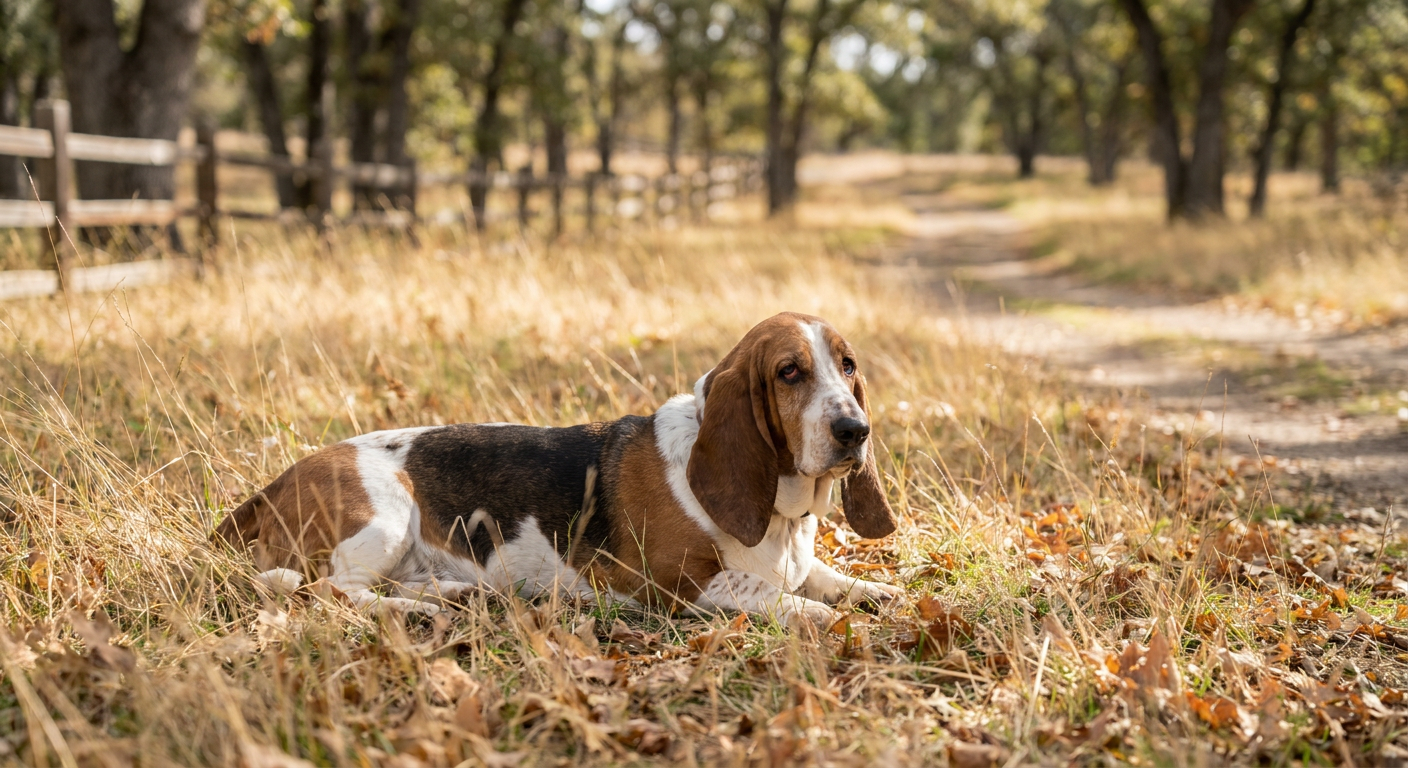
Descended from the St. Hubert Hound of 6th-century France, the Basset Hound was developed by French aristocrats for hunting rabbit and hare in dense terrain. The name "basset" derives from the French word "bas," meaning "low." Their short legs and powerful sense of smell allowed them to move slowly but surely through underbrush, with their long ears sweeping scent towards their nose. The breed was further refined in Great Britain in the late 19th century. The American Kennel Club (AKC) officially recognized the Basset Hound in 1885, not long after its first appearance in the Westminster Kennel Club show in 1884. Today, they are more often beloved family pets than active hunters.
Temperament & Personality
The Basset Hound possesses a classic dual temperament. Indoors, they are calm, gentle, and deeply affectionate companions, often described as placid and good-natured with children and other pets. Outdoors, their powerful scenting instincts take over. They become single-minded trackers, prone to ignoring commands when on a trail. While loyal, they are notoriously stubborn and independent, a trait that can make training a significant challenge. Their mournful expression belies a comical and charming personality, but their loud, melodic bay is a true hound trait.
Health Watchouts
Top conditions reported by AKC parent clubs, OFA, and the Merck Veterinary Manual. Discuss screening with your vet — especially before breeding or insuring.
Otitis Externa (Ear Infections)
Very CommonThe Basset's long, heavy, non-erect ears create a warm, moist, low-airflow environment ideal for yeast and bacteria. This anatomical structure leads to a very high incidence of chronic ear infections, causing pain, discharge, and odor. If left untreated, infections can lead to permanent hearing damage.
Screening: No genetic screen. Requires lifelong weekly ear cleaning and immediate veterinary examination at the first sign of head shaking, scratching, or redness.
Intervertebral Disc Disease (IVDD)
CommonAs an achondroplastic (dwarf) breed, their long spine and short legs place them at high risk for IVDD, where a spinal disc herniates or ruptures, compressing the spinal cord. This can cause severe pain, nerve damage, hind-limb paralysis, and may require emergency surgery.
Screening: No universal screening program. Responsible breeders avoid breeding dogs with a history of IVDD. Maintaining a lean body weight is the most critical preventative measure.
Glaucoma & Eyelid Abnormalities (Ectropion)
CommonThe breed is predisposed to primary open-angle glaucoma, a painful condition causing increased pressure within the eye that can lead to blindness. Their characteristic droopy lower eyelids (ectropion) also leave the eye exposed and prone to irritation, dryness, and conjunctivitis.
Screening: Annual eye examinations by a board-certified veterinary ophthalmologist (ACVO) are strongly recommended to screen for glaucoma and other inherited eye disorders. OFA Companion Animal Eye Registry (CAER) exams are vital.
Canine Thrombopathia
Uncommon, but significantThis is an inherited blood platelet disorder that impairs clotting, leading to excessive bleeding from minor injuries, surgery, or even spontaneously. A simple cut can become a veterinary emergency. It is a serious genetic disease specific to the breed.
Screening: A reliable DNA test is available and should be performed by any responsible breeder to identify carriers and affected dogs, preventing a potentially fatal condition.
Hip Dysplasia
22.4% (OFA)A malformation of the hip joint that leads to instability, arthritis, pain, and lameness. While their short legs can mask early signs, it is a significant cause of discomfort and reduced mobility as they age. Obesity dramatically worsens the condition.
Screening: Hip radiographs (x-rays) should be submitted to the Orthopedic Foundation for Animals (OFA) or PennHIP for evaluation before breeding.
Exercise Needs
Basset Hounds require moderate, low-impact daily exercise. They are built for endurance, not speed, and are happiest during long, leisurely walks where they can use their powerful nose. A solid 30-60 minutes of walking per day is typically sufficient to keep them physically and mentally healthy. Due to their scent drive, they should always be walked on a leash in unenclosed areas.
- Long walks on leash
- Scent work and tracking trials
- Hiking on gentle, even terrain
- Puzzle feeders
Nutrition
Daily calories: 900-1200 kcal
Bassets are highly prone to obesity, which is devastating for their joint and spinal health. Food intake must be strictly controlled with measured meals twice daily. Using a slow-feeder bowl can help prevent rapid eating and reduce the risk of bloat (GDV).
Common allergens to watch: Beef, Dairy, Chicken.
⚠ Obesity is the single greatest health threat to a Basset Hound. It dramatically increases the risk and severity of IVDD, arthritis, and other mobility issues. Owners MUST maintain a lean body condition score (BCS) of 4/9 or 5/9, where the ribs are easily felt but not seen.
Entertainment & Enrichment
This intelligent breed needs mental stimulation to prevent boredom, which can lead to undesirable behaviors like excessive baying or destructive chewing. Enrichment should focus on their greatest natural talent: their sense of smell. Engaging their nose is the best way to enrich a Basset's life.
- Nose work games (hiding smelly treats)
- Food puzzle toys and snuffle mats
- Allowing "sniffari" time on walks
- Basic obedience with scent-based rewards
Grooming & Coat Care
Despite their short coat, Bassets require significant grooming. They are moderate to high shedders; brush them weekly to manage loose hair. The most critical task is weekly, thorough ear cleaning to prevent infection. Skin folds, especially around the face and jowls, must be kept clean and dry to prevent dermatitis. Their fast-growing nails need frequent trimming to maintain proper foot structure.
Training
Training a Basset Hound requires immense patience and a good sense of humor. They are intelligent but notoriously stubborn and independent. Positive reinforcement with high-value food rewards is the only effective method. House-training can be slow. A reliable recall is nearly impossible to achieve once they are on a scent, so off-leash activities in unfenced areas are not recommended.
Cost of Ownership
Lifetime cost depends on size, lifespan, and health risks. Try our Lifetime Cost Calculator →
Cost band for Basset Hound: medium.
How insurance, vet care & grooming connect for the Basset Hound
These three costs move together. The Basset Hound’s coat, energy, and breed-specific health watchouts shape each one — here’s how they line up.
Insurance band
Common hereditary conditions raise claim odds
Vet service load
Several conditions worth annual screening
Grooming demand
Low-maintenance coat — monthly bath and brush
Estimated monthly spend (typical adult)
Insurance
$85
Routine vet
$45
Grooming
$45
Combined estimate
~$175/mo(±20%, US averages)
* Estimates derived from breed traits (coat, energy, health watchouts, lifespan). Actual costs vary by location, age, and provider.
Living Situation Fit
The ideal Basset owner is patient and understands the hound mentality. This breed fits well in apartments or large homes, provided they receive daily walks. A securely fenced yard is crucial. They are generally low-energy indoors but can be very loud, with a deep bay that will travel. Prospective owners must be prepared for the financial and emotional toll of the breed's potential health problems.
Choosing a Puppy
Choose a breeder who prioritizes health above all else. A responsible breeder will provide proof of health screenings for the parents, including OFA/PennHIP results for hips, ACVO eye exams, and a DNA test for Canine Thrombopathia. A puppy from a health-tested lineage will still be prone to the breed's conformational issues (ears, back), but you'll have a better chance of avoiding key genetic diseases.
Frequently Asked Questions
Are Basset Hounds lazy couch potatoes?
Not exactly. They are low-energy and enjoy relaxing, but they are not lazy. They were bred for endurance hunting and require 30-60 minutes of daily walking to stay healthy and mentally stimulated. Left without exercise, they will become bored and are prone to obesity.
Do Basset Hounds bark a lot?
They don't often 'bark' in a yappy way, but they do have a very loud, deep, and resonant 'bay' that they will use, especially when they catch an interesting scent, are excited, or feel lonely. This is a classic hound trait that owners must be prepared for.
Are Basset Hounds smelly?
Basset Hounds can have a distinct 'houndy' odor due to their oily coat. They are also prone to drooling and can develop skin and ear infections if not groomed meticulously, both of which can cause significant odor. Regular bathing, ear cleaning, and keeping skin folds dry are essential.
How much do Basset Hounds drool?
They drool a fair amount. Their loose jowls (lips) mean they often drip water after drinking and can slobber when excited or begging for food. Owners should be prepared to keep towels handy.