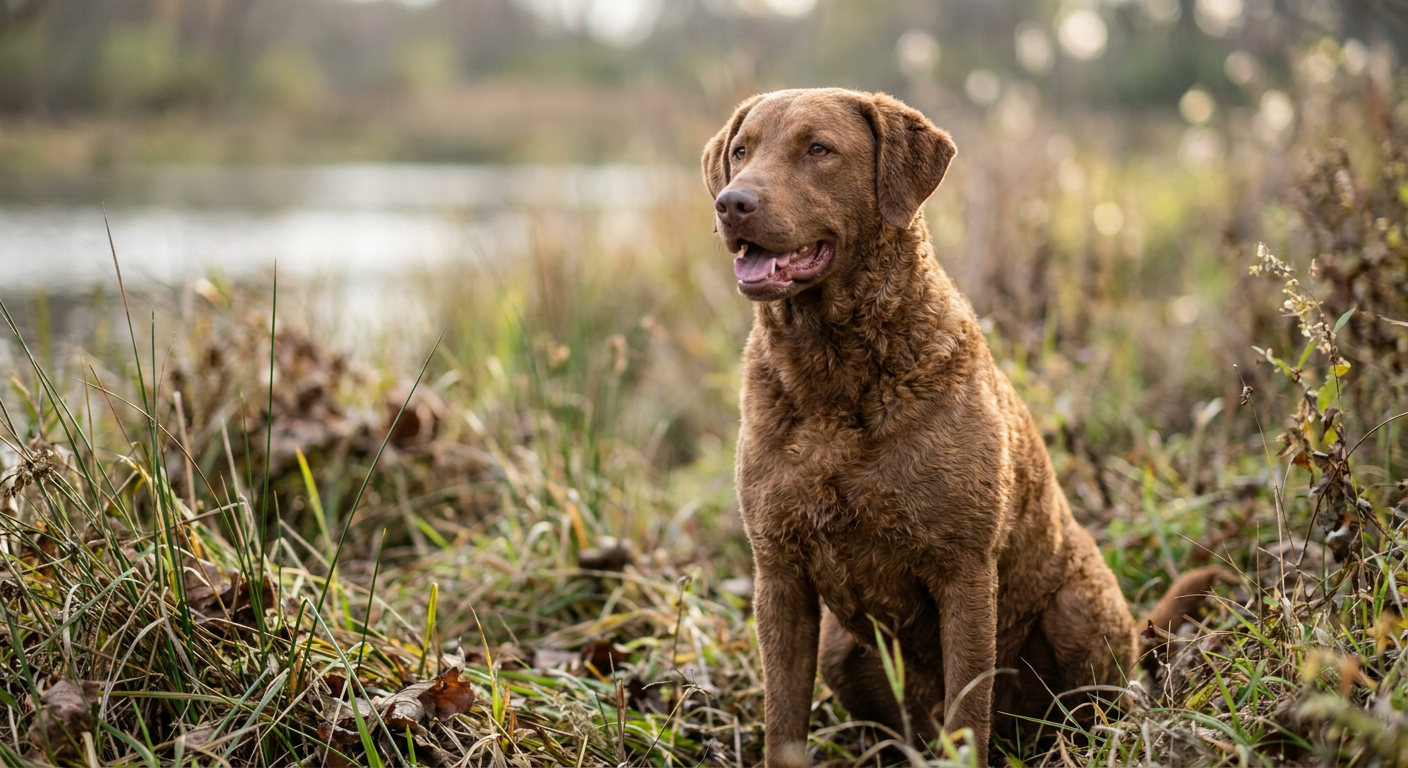
History & Origin
Developed in the 1800s from two Newfoundland-type pups rescued from a shipwreck off Maryland and crossed with local water dogs. The breed was refined to retrieve hundreds of ducks per day in freezing water. AKC recognition in 1878; Maryland's official state dog.
Temperament & Personality
Confident, protective, intensely loyal to family but reserved with strangers. More independent and stubborn than Labs or Goldens. High prey drive.
Health Watchouts
Top conditions reported by AKC parent clubs, OFA, and the Merck Veterinary Manual. Discuss screening with your vet — especially before breeding or insuring.
Hip & elbow dysplasia
~20% (OFA)Joint malformation.
Screening: OFA hips and elbows
Progressive retinal atrophy
HereditaryInherited blindness.
Screening: DNA test
Exercise-induced collapse
~3% carriersInherited muscle disorder.
Screening: DNA test
Degenerative myelopathy
Carrier rate notableLate-onset spinal cord disease.
Screening: DNA test (SOD1)
Cardiomyopathy
OccasionalEnlarged heart.
Screening: Annual cardiac exam after age 5
Exercise Needs
60–120 minutes daily — Chessies live to swim and retrieve. Land-only homes will struggle.
- Swimming and water retrieves
- Hunt tests and field trials
- Long hikes with a backpack
- Dock diving
- Tracking and scent work
Nutrition
Daily calories: Adult: 1,500–2,200 kcal depending on field work.
Two meals daily. Bloat-aware feeding — no exercise around mealtimes.
Common allergens to watch: Chicken, Wheat.
⚠ Easy keepers; obesity is common in pet homes. Monthly BCS check.
Entertainment & Enrichment
Independent thinkers — give them problems to solve daily.
- Water-retrieve sessions
- Puzzle feeders
- Hunt-test training
- Scent work
- Frozen Kongs
Grooming & Coat Care
Brush weekly with a rubber curry; do not strip the natural oils with frequent bathing. Bathe only when truly dirty (every 8–12 weeks). Dry ears thoroughly after swimming.
Training
Firm, fair, consistent. Chessies will test boundaries. Positive reinforcement with clear structure works best. Early socialization prevents reactivity.
Cost of Ownership
Lifetime cost depends on size, lifespan, and health risks. Try our Lifetime Cost Calculator →
Cost band for Chesapeake Bay Retriever: medium.
How insurance, vet care & grooming connect for the Chesapeake Bay Retriever
These three costs move together. The Chesapeake Bay Retriever’s coat, energy, and breed-specific health watchouts shape each one — here’s how they line up.
Insurance band
Common hereditary conditions raise claim odds
Vet service load
High activity raises orthopedic & injury visits
Grooming demand
Double coat sheds seasonally — frequent brushing
Estimated monthly spend (typical adult)
Insurance
$85
Routine vet
$60
Grooming
$75
Combined estimate
~$220/mo(±20%, US averages)
* Estimates derived from breed traits (coat, energy, health watchouts, lifespan). Actual costs vary by location, age, and provider.
Living Situation Fit
Rural or large-yard suburban homes with water access. Not for apartments. Best with experienced owners; not a first dog.
Choosing a Puppy
OFA hips/elbows, eye CERF, DNA tests for PRA, EIC, DM. Meet the parents — temperament should be confident, not aggressive or shy.
Frequently Asked Questions
Is a Chesapeake Bay Retriever a good first dog?
Generally no — Chessies are more independent and protective than Labs or Goldens, and they need experienced handlers comfortable with strong-willed working dogs.
Do Chessies smell?
Their oily double coat has a musky 'wet dog' scent some owners find pleasant and others don't. Frequent bathing strips needed oils, so weekly brushing and occasional baths are best.
Are Chesapeake Bay Retrievers protective?
Yes — they're naturally wary of strangers and protective of family and property. Early socialization is essential to prevent over-reactivity.