History & Origin
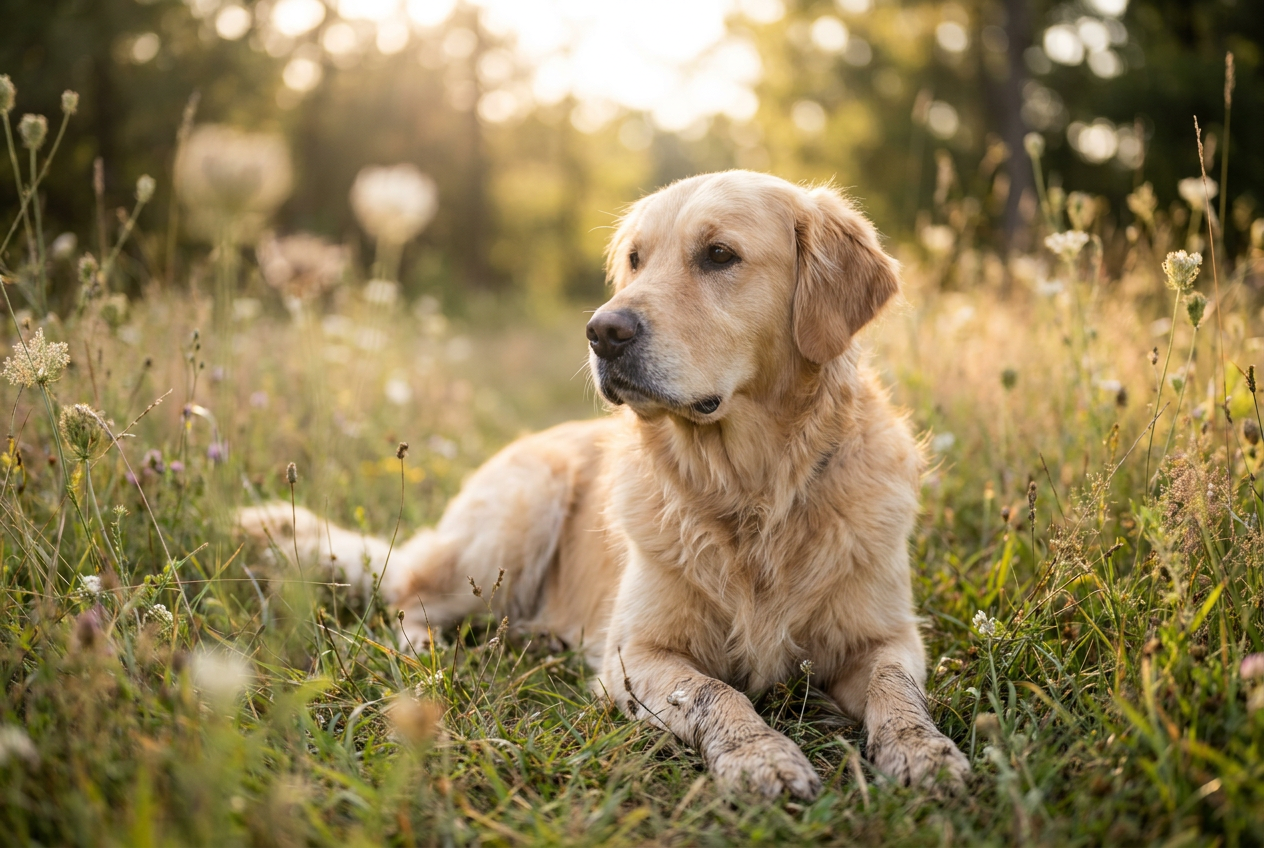
Lord Tweedmouth developed the breed at his Scottish estate in the 1860s by crossing a yellow Wavy-Coated Retriever with a now-extinct Tweed Water Spaniel, then adding Irish Setter and Bloodhound. The aim: a tireless retriever for waterfowl in cold Scottish lochs. AKC recognized the breed in 1925.
Temperament & Personality
Friendly, reliable, trustworthy. Goldens are famously gentle with children and other pets, slow to anger, and generally poor guard dogs (they greet intruders enthusiastically). They form intense bonds and can develop separation anxiety.
Health Watchouts
Top conditions reported by AKC parent clubs, OFA, and the Merck Veterinary Manual. Discuss screening with your vet — especially before breeding or insuring.
Cancer (especially hemangiosarcoma & lymphoma)
60% lifetime risk (Morris Foundation)Goldens have one of the highest cancer rates of any breed. Hemangiosarcoma alone causes ~20% of Golden deaths.
Screening: No effective early screen yet; participate in the Golden Lifetime Study; lean body condition reduces risk
Hip & elbow dysplasia
~20% (OFA)Common orthopedic disease; reduced by parent screening and lean puppy growth.
Screening: OFA or PennHIP of parents
Subaortic stenosis
Inherited cardiac conditionNarrowing of the aorta below the heart valve, causing exercise intolerance and sudden death.
Screening: Cardiac auscultation + echo of breeding stock
Hypothyroidism
~10% adultsLow thyroid hormone causing weight gain, lethargy and skin disease.
Screening: Annual senior thyroid panel
Atopic dermatitis
Very commonEnvironmental and food allergies cause chronic itching, ear infections and hot spots.
Screening: Veterinary dermatology workup if symptomatic
Exercise Needs
Goldens need 60–120 minutes of daily exercise that combines retrieval, swimming and human partnership. They thrive with a job.
- Fetch — Goldens never tire of it
- Swimming and dock diving
- Hiking with elevation
- Therapy or service work training
- Agility, rally and obedience trials
Nutrition
Daily calories: Adult: 1,200–1,700 kcal/day depending on activity. Large-breed puppy formula until 12–15 months.
Two measured meals daily. Goldens are prone to weight gain — measure precisely and limit treats. AAFCO-complete diets with named meat first.
Common allergens to watch: Chicken, Beef, Wheat, Soy.
⚠ Keep body condition at 4–5/9. Each pound of overweight increases cancer and joint disease risk.
Entertainment & Enrichment
Goldens love mental work and human partnership. They excel at therapy and service roles because they want to engage.
- Trick training daily
- Scent work and find-it games
- Puzzle feeders at every meal
- Therapy dog certification
- Canine Good Citizen and AKC Trick Dog titles
- Playdates with other gentle dogs
Grooming & Coat Care
Brush 3–4× weekly with a slicker brush and deshedding tool; daily during spring/fall coat blows. Bathe every 6–8 weeks. Check and clean ears weekly. Trim feathering on legs and tail every 6–8 weeks.
Training
Among the easiest breeds. Goldens are biddable, food-motivated and live to please. Start puppy classes at 8–10 weeks. Common challenges: jumping in greetings, mouthing as puppies, and excessive friendliness with strangers (poor watchdogs).
Cost of Ownership
Lifetime cost depends on size, lifespan, and health risks. Try our Lifetime Cost Calculator →
Cost band for Golden Retriever: medium.
How insurance, vet care & grooming connect for the Golden Retriever
These three costs move together. The Golden Retriever’s coat, energy, and breed-specific health watchouts shape each one — here’s how they line up.
Insurance band
Common hereditary conditions raise claim odds
Vet service load
High activity raises orthopedic & injury visits
Grooming demand
Double coat sheds seasonally — frequent brushing
Estimated monthly spend (typical adult)
Insurance
$85
Routine vet
$60
Grooming
$75
Combined estimate
~$220/mo(±20%, US averages)
* Estimates derived from breed traits (coat, energy, health watchouts, lifespan). Actual costs vary by location, age, and provider.
Living Situation Fit
House with yard ideal. Apartments work only with a serious daily exercise commitment. Goldens are deeply social — they need a household where someone is home most of the day, or reliable midday care.
Choosing a Puppy
Choose breeders who OFA-screen hips, elbows, eyes, and hearts; participate in the Morris Animal Foundation's Golden Retriever Lifetime Study; and breed for longevity. Consider Golden rescues — every state has one.
Frequently Asked Questions
Why do Golden Retrievers get so much cancer?
Modern Goldens carry a high genetic load for cancer — particularly hemangiosarcoma and lymphoma — likely due to a small founding population and selection pressures. About 60% will develop cancer in their lifetime. European-line Goldens have somewhat lower rates.
Are Golden Retrievers hypoallergenic?
No. Goldens shed heavily and produce significant dander. People with dog allergies typically react to Goldens. Consider Standard Poodles or Goldendoodles if allergies are a concern.
How long do Golden Retrievers live?
Average lifespan is 10–12 years, shorter than the breed used to live (12–14 years in the 1970s). The decline is largely cancer-driven. Lean body condition, parent health screening and avoiding early spay/neuter (before 12 months) all extend lifespan.
Are Goldens good for apartments?
Possible but demanding. Goldens are large (55–75 lb) and need 60+ minutes of off-leash running daily. They shed heavily on every surface. They're better suited to homes with yards, but committed apartment owners can make it work.