History & Origin
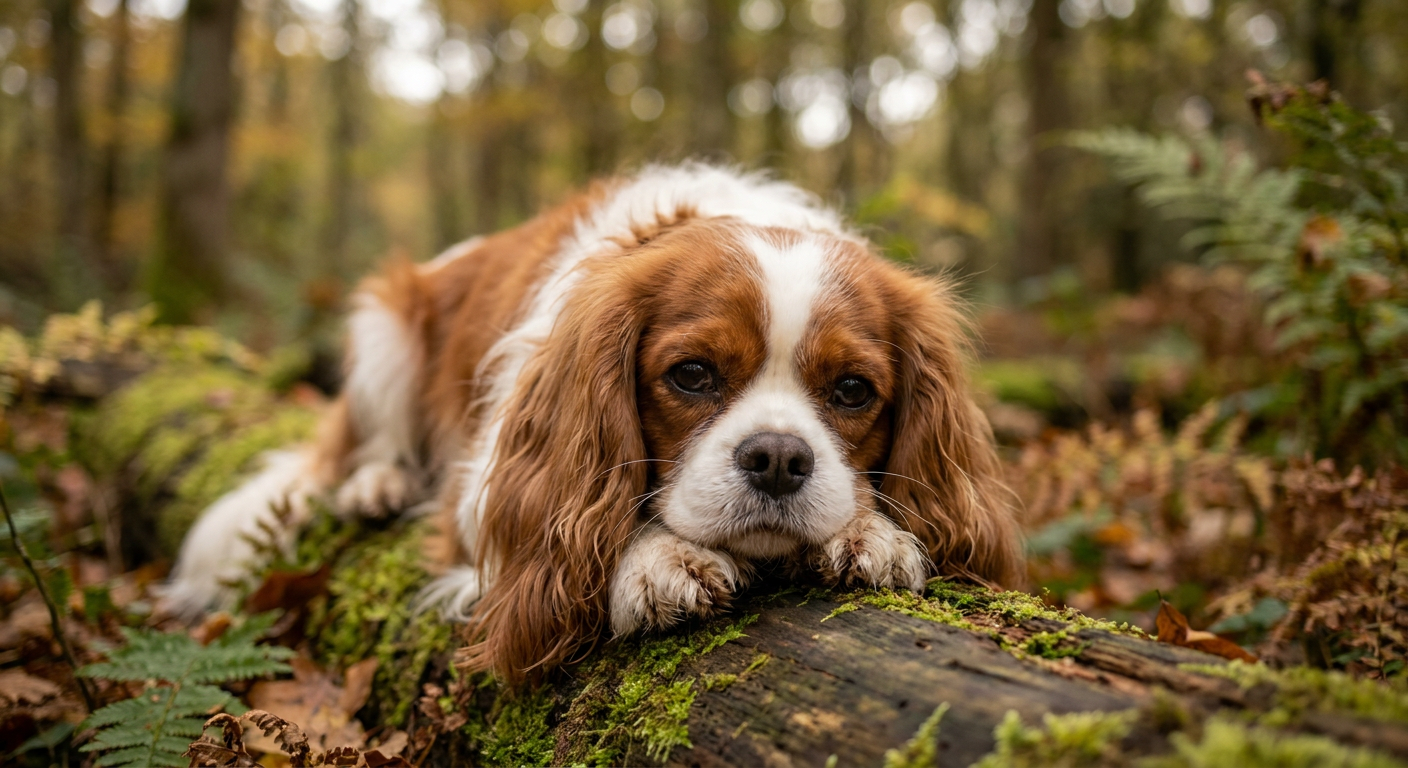
Cavaliers are the descendants of the toy spaniels that warmed the laps of King Charles II in the 17th century — he was so devoted that the breed name still bears his title. The modern Cavalier was reconstructed in the 1920s from old paintings, after the breed had nearly disappeared. AKC recognized the breed in 1995.
Temperament & Personality
Affectionate, gentle, eager to please. Cavaliers are universally friendly — with kids, strangers, other dogs, cats. They struggle deeply with being left alone and bond intensely with family.
Health Watchouts
Top conditions reported by AKC parent clubs, OFA, and the Merck Veterinary Manual. Discuss screening with your vet — especially before breeding or insuring.
Mitral valve disease
≥50% by age 5; nearly 100% by age 10The leading cause of death in the breed. Heart valve degeneration leads to murmur, then heart failure.
Screening: Annual cardiac auscultation; echo of breeding stock; only breed dogs ≥2.5 years with murmur-free echo and parents murmur-free past 5 years
Syringomyelia / Chiari malformation
~50% have syringomyelia; ~70% ChiariSkull is too small for brain; cerebrospinal fluid pockets cause neurological pain ('air scratching').
Screening: MRI of breeding stock; veterinary neurology consult if symptomatic
Episodic falling syndrome
Cavalier-specificInherited movement disorder.
Screening: DNA test of breeding stock
Patellar luxation
Common in toy breedsSlipping kneecap.
Screening: Veterinary orthopedic exam
Hip dysplasia
Higher than most toysJoint disease.
Screening: OFA evaluation of parents
Exercise Needs
Cavaliers need 30–60 minutes of moderate exercise daily.
- Two 20–30 minute walks
- Indoor fetch and play
- Short hikes in cool weather
- Therapy dog work (their natural calling)
- Avoid intense heat
Nutrition
Daily calories: Adult: 400–600 kcal/day.
Two measured meals daily. Strict portion control. Quality AAFCO diet.
Common allergens to watch: Chicken, Wheat, Beef.
⚠ Cavaliers gain weight easily. Lean body condition (4–5/9) reduces cardiac strain.
Entertainment & Enrichment
Cavaliers love training and gentle games. Mental work + cuddle time is the perfect day.
- Trick training
- Snuffle mats and puzzle feeders
- Therapy dog certification
- Gentle scent work
- Cuddle time on the couch (it counts as enrichment for Cavaliers)
Grooming & Coat Care
Brush 3–4× weekly to prevent matting in feathering. Bathe every 4–6 weeks. Trim ear feathering and feet every 6–8 weeks. Clean ears weekly (long ears trap moisture). Wipe eye area daily — tear staining is common.
Training
Easy. Cavaliers are food-motivated, gentle, and eager to please. Positive reinforcement only — they wilt under harsh corrections. Housetraining can be slow; crate training and consistent schedule help.
Cost of Ownership
Lifetime cost depends on size, lifespan, and health risks. Try our Lifetime Cost Calculator →
Cost band for Cavalier King Charles Spaniel: medium.
How insurance, vet care & grooming connect for the Cavalier King Charles Spaniel
These three costs move together. The Cavalier King Charles Spaniel’s coat, energy, and breed-specific health watchouts shape each one — here’s how they line up.
Insurance band
Brachycephalic or giant-breed risk profile
Vet service load
Several conditions worth annual screening
Grooming demand
Long coat tangles without weekly grooming
Estimated monthly spend (typical adult)
Insurance
$85
Routine vet
$45
Grooming
$60
Combined estimate
~$190/mo(±20%, US averages)
* Estimates derived from breed traits (coat, energy, health watchouts, lifespan). Actual costs vary by location, age, and provider.
Living Situation Fit
Apartment-perfect. Cavaliers adapt to any home but need household company most of the day — they develop separation anxiety severely. Excellent for seniors, families and first-time owners.
Choosing a Puppy
This is the most critical breed for breeder vetting. Choose breeders who follow the MVD breeding protocol (echo-clear adults ≥2.5 years; parents murmur-free past 5), MRI for syringomyelia, OFA hips and patellas. Avoid puppies from breeders who don't echo their dogs. Cavalier rescue often has adults available.
Frequently Asked Questions
Are Cavalier King Charles Spaniels good family dogs?
Among the best small family breeds. Cavaliers are gentle with children, friendly with other pets, and easy to train. The main considerations are cardiac health (choose breeders carefully) and separation anxiety.
How long do Cavaliers live?
Average lifespan is 9–14 years, with mitral valve disease as the limiting factor. Health-tested lines live longer; pet-store/backyard-bred Cavaliers often die of heart failure by age 8–10.
Are Cavaliers hypoallergenic?
No. Cavaliers shed moderately and produce dander. They are not recommended for allergy households.
Do Cavaliers bark a lot?
Minimal. Cavaliers are among the quietest breeds and rarely bark without cause. They alert to visitors but settle quickly.