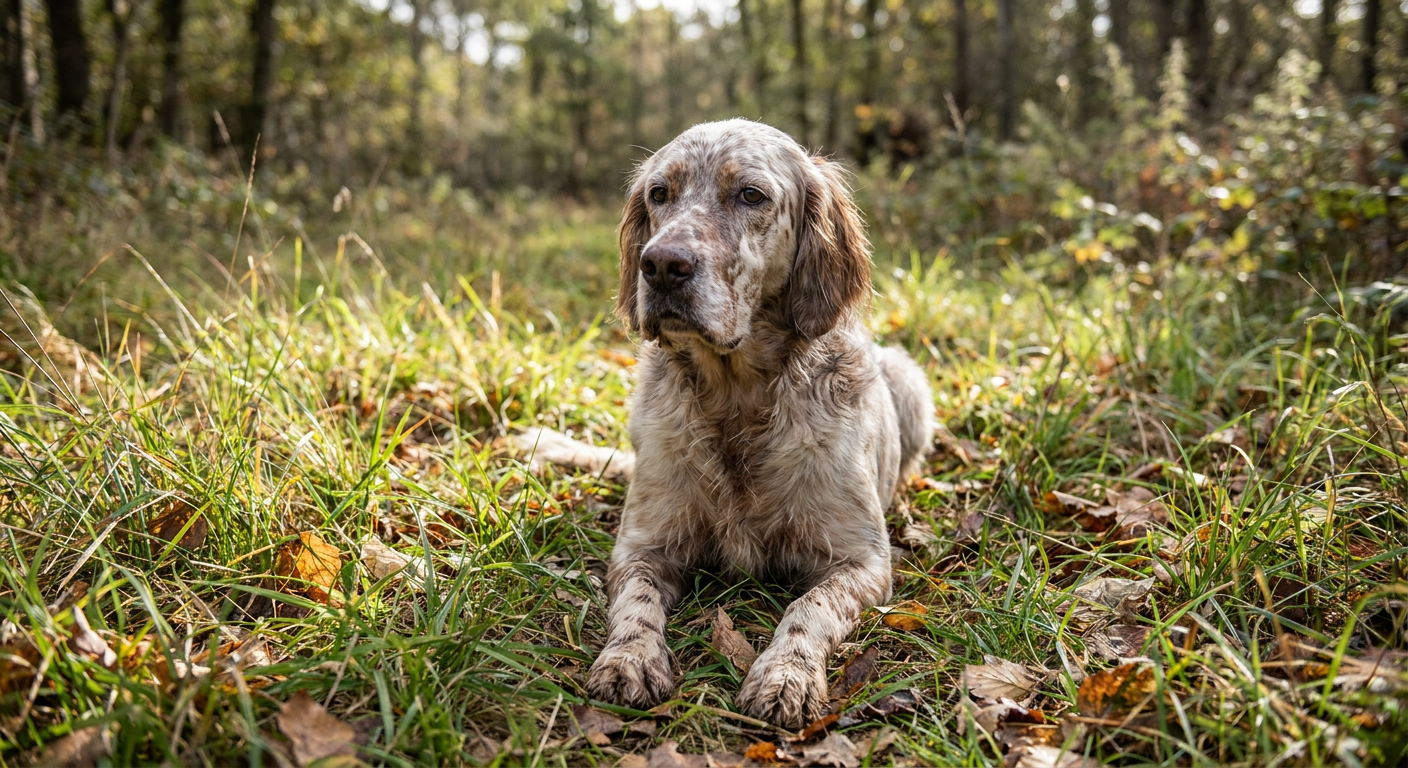
History & Origin
One of the oldest gun dogs, refined in 19th-century England by Edward Laverack and R.L. Purcell Llewellin. Setters 'set' (crouch low) on bird scent so hunters could throw a net. The AKC recognized the breed in 1884 — among the first nine breeds registered.
Temperament & Personality
Mellow, affectionate, slightly timid with strangers. Famously good with children. Needs gentle, consistent training; sensitive to harsh tones.
Health Watchouts
Top conditions reported by AKC parent clubs, OFA, and the Merck Veterinary Manual. Discuss screening with your vet — especially before breeding or insuring.
Hip dysplasia
~13% (OFA)Hereditary joint malformation.
Screening: OFA hip evaluation
Hypothyroidism
Common in middle ageLow thyroid causing weight gain, lethargy, coat changes.
Screening: Annual T4/TSH after age 5
Deafness
Linked to extensive white coatCongenital sensorineural deafness.
Screening: BAER test on puppies
Allergies (atopic dermatitis)
CommonItchy skin, ear infections.
Screening: Allergy panels if symptomatic
Cancer
Leading cause of death in older SettersHemangiosarcoma, lymphoma most common.
Screening: Twice-yearly vet exams after age 7
Exercise Needs
60–90 minutes of daily exercise — long walks, runs and free play in a safe area.
- Long off-leash hikes in fenced areas
- Swimming
- Bird-dog field training
- Agility, rally obedience
- Daily 30-minute fetch sessions
Nutrition
Daily calories: Adult: 1,400–1,900 kcal depending on activity.
Two meals/day; avoid free-feeding. Active hunters may need performance formulas.
Common allergens to watch: Chicken, Wheat, Corn.
⚠ Long coats hide weight gain — body-condition score monthly.
Entertainment & Enrichment
Mental work matters as much as physical for this thinking dog.
- Scent games hiding treats around the house
- Trick training
- Puzzle feeders
- Nose-work classes
- Quiet snuggle time — Setters love downtime
Grooming & Coat Care
Brush 2–3× weekly to prevent matting in feathering. Trim feet, ears and tail every 6–8 weeks. Bathe every 4–6 weeks. Clean long ears weekly.
Training
Use positive reinforcement only — Setters shut down with corrections. Short, varied sessions. Excellent off-leash recall is essential before any free running.
Cost of Ownership
Lifetime cost depends on size, lifespan, and health risks. Try our Lifetime Cost Calculator →
Cost band for English Setter: medium.
How insurance, vet care & grooming connect for the English Setter
These three costs move together. The English Setter’s coat, energy, and breed-specific health watchouts shape each one — here’s how they line up.
Insurance band
Common hereditary conditions raise claim odds
Vet service load
High activity raises orthopedic & injury visits
Grooming demand
Long coat tangles without weekly grooming
Estimated monthly spend (typical adult)
Insurance
$75
Routine vet
$50
Grooming
$60
Combined estimate
~$185/mo(±20%, US averages)
* Estimates derived from breed traits (coat, energy, health watchouts, lifespan). Actual costs vary by location, age, and provider.
Living Situation Fit
Suburban or rural homes with a yard. Tolerates apartments only with extensive daily exercise. Cannot be left alone for long workdays.
Choosing a Puppy
BAER hearing test, OFA hips and elbows, thyroid panel, eye CERF. Meet both parents to gauge temperament. Field-bred Setters have far more drive than show-bred.
Frequently Asked Questions
Are English Setters good family dogs?
Yes — they're considered one of the gentlest sporting breeds, patient with children and rarely aggressive. Their main downside is grooming demand and need for daily exercise.
Do English Setters bark a lot?
They're moderate barkers — they alert to visitors but aren't yappy. Bored or under-exercised Setters become more vocal.
How long do English Setters live?
12–15 years on average. Cancer is the leading cause of death; lean body weight and twice-yearly senior checks help with early detection.