History & Origin
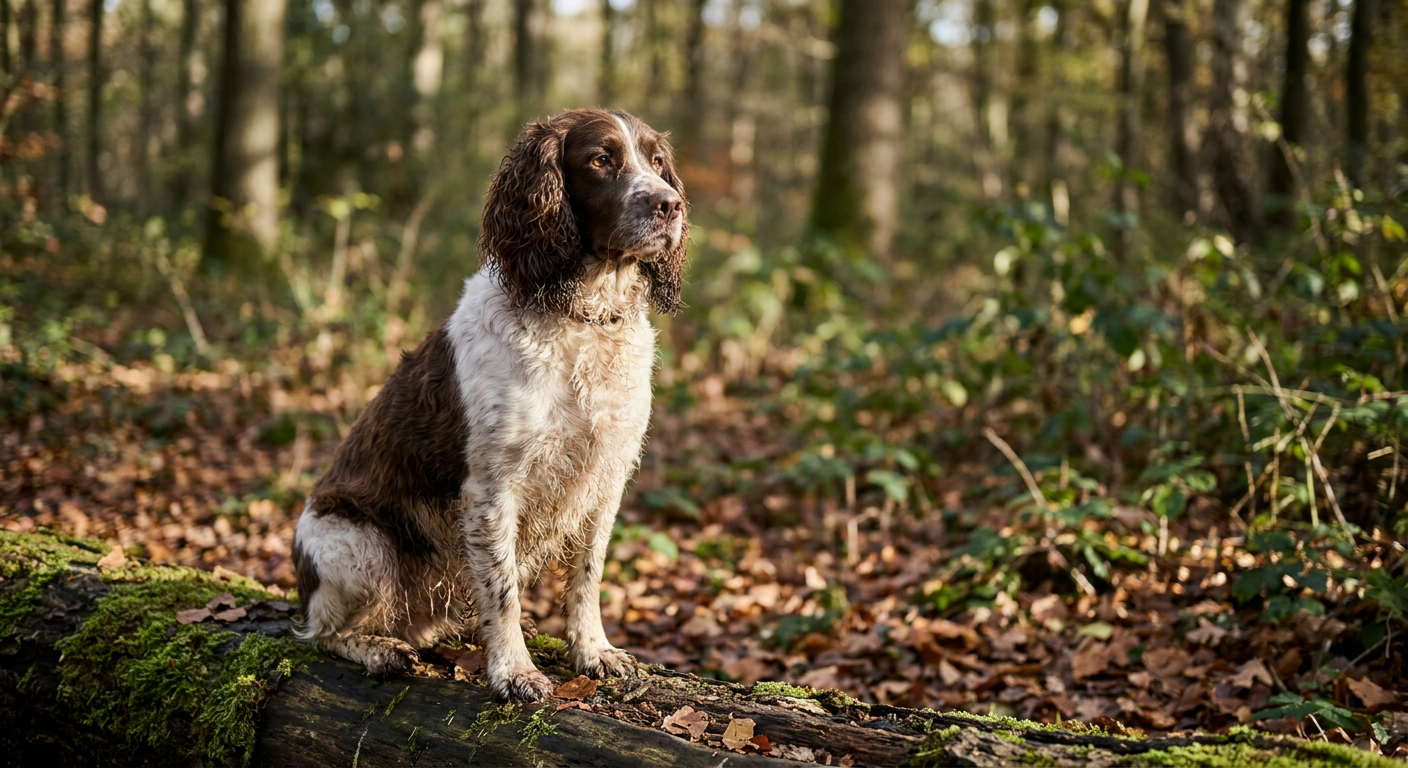
Developed in England to serve as a hunting dog, the English Springer Spaniel is one of the oldest spaniel breeds. Their name derives from their function: to "spring" game (flush birds into the air) for the hunter's net or falcon. Before the 17th century, all land spaniels were often grouped together, but over time, specific types were developed for different tasks. The Springer and the smaller Cocker Spaniel often came from the same litter, with size being the only differentiator. The English Springer Spaniel was officially recognized by the American Kennel Club (AKC) in 1910 as a distinct breed in the Sporting Group.
Temperament & Personality
English Springer Spaniels are cheerful, affectionate, and exceptionally eager to please. They are intelligent and obedient, making them highly trainable companions. Bred to work closely with humans, they form strong bonds and are often described as "velcro dogs" that thrive on being part of family life. Their high energy and natural exuberance require a consistent outlet; without it, they can become bored or anxious. While typically gentle and patient with children, their boisterous nature can be overwhelming for toddlers if not properly supervised.
Health Watchouts
Top conditions reported by AKC parent clubs, OFA, and the Merck Veterinary Manual. Discuss screening with your vet — especially before breeding or insuring.
Hip Dysplasia
11.5% are evaluated as dysplastic by the Orthopedic Foundation for Animals (OFA).A malformation of the hip joint that leads to instability, pain, and arthritis. It is a genetic condition influenced by environmental factors.
Screening: OFA or PennHIP hip radiographs performed after 2 years of age are recommended for breeding stock.
Elbow Dysplasia
5.5% are evaluated as dysplastic by the OFA.A developmental abnormality in the elbow joint that causes lameness and arthritis. Like hip dysplasia, it has a strong genetic component.
Screening: OFA elbow radiographs after 2 years of age are recommended for breeding animals.
Progressive Retinal Atrophy (PRA)
Common. DNA tests show a carrier rate that necessitates careful breeding.A group of inherited eye diseases that cause the retina to degenerate, leading to progressive vision loss and eventual blindness.
Screening: Annual eye exams by a board-certified veterinary ophthalmologist (CAER exam) and DNA tests to identify affected dogs and carriers.
Otitis Externa (Ear Infections)
Very common. The Banfield State of Pet Health Report consistently lists spaniels as high-risk.Inflammation of the outer ear canal, often recurrent. The pendulous, heavily feathered ears trap moisture and debris, creating a perfect environment for yeast and bacteria.
Screening: No screening test, but requires lifelong routine ear cleaning and prompt veterinary attention for any signs of infection (head shaking, odor, discharge).
Autoimmune Hemolytic Anemia (AIHA)
Considered common in the breed. While overall prevalence is low in dogs (~0.1%), Springers are predisposed.A serious condition where the dog's immune system attacks and destroys its own red blood cells, causing severe anemia. It can be life-threatening.
Screening: No predictive screening test. Owners should be aware of the signs: pale gums, jaundice, extreme lethargy, collapse, or dark red/brown urine.
Exercise Needs
This is a high-energy breed requiring at least 60-90 minutes of vigorous activity every day. A simple walk on a leash is not enough to satisfy their physical and mental needs. Bred for long days in the field, they have incredible stamina and thrive when given a "job" to do. A tired Springer is a well-behaved Springer.
- Swimming
- Fetch and retrieving games
- Agility or flyball
- Hiking or running with a person
- Scent work and nose games
Nutrition
Daily calories: 900-1500 kcal/day, depending on age, activity level, and spay/neuter status. A 45lb active adult needs about 1200 kcal/day.
Feed a high-quality, AAFCO-approved commercial dog food appropriate for their life stage. To reduce the risk of bloat, feed two smaller meals per day rather than one large one, and avoid exercise immediately after eating. Using a slow-feeder bowl can help if your dog eats too quickly.
Common allergens to watch: Beef, Chicken, Dairy.
⚠ Springers are prone to obesity, which significantly increases the risk and severity of hip dysplasia and arthritis. Owners must practice portion control. You should be able to easily feel their ribs under a thin layer of fat, and they should have a visible waist when viewed from above.
Entertainment & Enrichment
High intelligence combined with high energy makes mental stimulation a necessity. Enrichment prevents boredom, which can lead to destructive behaviors like chewing or nuisance barking. Integrating puzzle toys and training into their daily routine is key to a happy dog.
- Puzzle feeders and food-dispensing toys
- Scent work games, like hiding treats around the house
- Regularly practicing obedience cues and learning new tricks
- Interactive play sessions with the owner
- Durable chew toys for appropriate chewing
Grooming & Coat Care
The Springer's feathered double coat requires regular maintenance. Brush thoroughly 2-3 times per week to prevent matting, paying special attention to the ears, legs, and underbelly. The pendulous ears must be checked and cleaned weekly to prevent infections. Many owners opt for professional grooming every 6-8 weeks to trim the coat. Nails should be trimmed monthly.
Training
Springers are highly intelligent and eager to please, making them a joy to train with positive reinforcement techniques. They are sensitive and do not respond well to harsh corrections. Early and consistent socialization is vital to ensure their natural exuberance is channeled appropriately. Puppy training classes are strongly recommended to build a foundation for good manners.
Cost of Ownership
Lifetime cost depends on size, lifespan, and health risks. Try our Lifetime Cost Calculator →
Cost band for English Springer Spaniel: medium.
How insurance, vet care & grooming connect for the English Springer Spaniel
These three costs move together. The English Springer Spaniel’s coat, energy, and breed-specific health watchouts shape each one — here’s how they line up.
Insurance band
Common hereditary conditions raise claim odds
Vet service load
High activity raises orthopedic & injury visits
Grooming demand
Double coat sheds seasonally — frequent brushing
Estimated monthly spend (typical adult)
Insurance
$75
Routine vet
$50
Grooming
$60
Combined estimate
~$185/mo(±20%, US averages)
* Estimates derived from breed traits (coat, energy, health watchouts, lifespan). Actual costs vary by location, age, and provider.
Living Situation Fit
An ideal home has a securely fenced yard and an active family that will include the dog in daily activities. They are not suited for apartment living unless they have an extremely dedicated owner who can provide extensive outdoor exercise. They are "people dogs" and can develop separation anxiety if consistently left alone for long periods.
Choosing a Puppy
Look for a reputable breeder who performs all OFA-recommended health screenings on their breeding stock, including hips, elbows, and annual eye exams (CAER), as well as DNA tests for PRA. A responsible breeder will provide a clean, stimulating environment for puppies and will want to vet potential buyers thoroughly. Be prepared to discuss the difference between "field" and "bench" lines to find the right fit for your lifestyle.
Frequently Asked Questions
Are English Springer Spaniels aggressive?
No, they are renowned for their friendly and gentle disposition. However, like any breed, they need comprehensive socialization from a young age. A rare, poorly understood neurological condition called 'Rage Syndrome' has been anecdotally reported in the breed's history but is exceptionally rare and not representative of the breed's typical temperament.
What is the difference between a 'field' and a 'bench' Springer Spaniel?
They are two distinct types within the same breed. Field-bred Springers are bred for hunting, featuring a lighter bone structure, shorter coat, less feathering, and higher energy levels. Bench-bred Springers are for the show ring, with a heavier build, a fuller and more profuse coat, and a comparably calmer (though still very active) temperament.
Do English Springer Spaniels bark a lot?
They are not considered nuisance barkers, but they are vigilant and will alert bark when someone approaches the home. If their significant exercise and mental stimulation needs are not met, they may bark out of boredom or separation anxiety.
Are English Springer Spaniels good for first-time owners?
They can be, but only if the first-time owner is prepared for their high energy and grooming needs. Their trainability is a plus, but their need for consistent, vigorous exercise is not negotiable. A sedentary owner or one who works long hours would not be a good match.