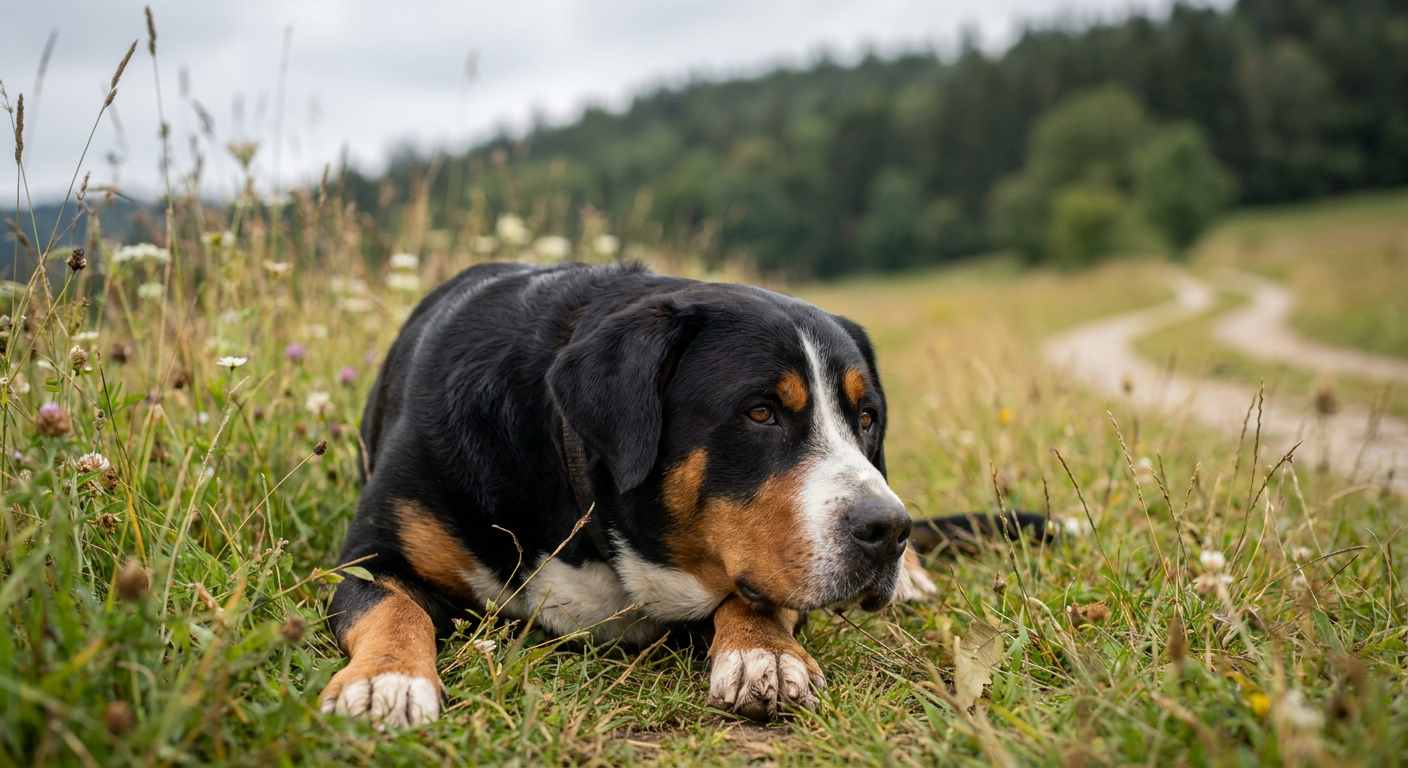
History & Origin
The Greater Swiss Mountain Dog is the oldest and largest of the four traditional Swiss Sennenhund breeds, descending from ancient Roman Mastiffs. By the late 19th century, they were nearly extinct as machines replaced them as draft animals, but the breed was rediscovered and stabilized starting in 1908. They served as versatile farm dogs, valued for herding, guarding, and pulling heavy carts.
Temperament & Personality
The Swissy is a dependable, bold, and social companion that balances a calm demeanor with a vigilant protective instinct. They are deeply devoted to their family and generally excellent with children, though their size requires supervision. While they are not overly aggressive, they are alert barkers and will sound a loud alarm when strangers approach.
Health Watchouts
Top conditions reported by AKC parent clubs, OFA, and the Merck Veterinary Manual. Discuss screening with your vet — especially before breeding or insuring.
Gastric Dilatation-Volvulus (Bloat)
High RiskOccurs when the stomach twists, trapping gas; a life-threatening emergency common in deep-chested breeds.
Screening: Prophylactic Gastropexy (discussion with vet)
Hip and Elbow Dysplasia
CommonDevelopmental abnormalities in the hip and elbow joints leading to arthritis.
Screening: OFA/PennHIP Radiographs
Osteochondritis Dissecans (OCD)
ModerateA condition where pieces of cartilage break off in the shoulder or other joints.
Screening: Radiographs
Urinary Incontinence
High (compared to other breeds)Involuntary leakage of urine, often seen in spayed females.
Screening: Clinical observation
Exercise Needs
While not high-intensity, they require steady daily activity to maintain muscle tone and emotional health.
- Moderate daily walks
- Power walking
- Drafting or pulling a cart
- Backpacking with a light load
Nutrition
Daily calories: 2400-3200 (adult)
Puppies require large-breed specific formulas to ensure steady, not rapid, growth to protect joints.
Common allergens to watch: Wheat, Chicken, Beef.
⚠ Obesity significantly increases the risk of joint failure and should be strictly avoided.
Entertainment & Enrichment
These dogs need 'jobs' to prevent boredom-induced browsing or destructive chewing.
- Drafting/cartpulling training
- Scent work games
- Slow-feeder puzzles to prevent gulping
- Hiking in cooler weather
Grooming & Coat Care
Weekly brushing is sufficient for most of the year, increasing to daily during seasonal shedding. They require regular nail trims to support their heavy weight.
Training
They are intelligent but can be stubborn and independent; positive reinforcement and early socialization are mandatory. Consistency is key, especially during their long adolescence.
Cost of Ownership
Lifetime cost depends on size, lifespan, and health risks. Try our Lifetime Cost Calculator →
Cost band for Greater Swiss Mountain Dog: high.
How insurance, vet care & grooming connect for the Greater Swiss Mountain Dog
These three costs move together. The Greater Swiss Mountain Dog’s coat, energy, and breed-specific health watchouts shape each one — here’s how they line up.
Insurance band
Brachycephalic or giant-breed risk profile
Vet service load
Several conditions worth annual screening
Grooming demand
Double coat sheds seasonally — frequent brushing
Estimated monthly spend (typical adult)
Insurance
$85
Routine vet
$50
Grooming
$60
Combined estimate
~$195/mo(±20%, US averages)
* Estimates derived from breed traits (coat, energy, health watchouts, lifespan). Actual costs vary by location, age, and provider.
Living Situation Fit
They thrive in cooler climates and require a home with a large, fenced yard and plenty of indoor space. They are unsuited for apartment living or climates with extreme heat.
Choosing a Puppy
Select breeders who provide OFA clearances for hips, elbows, and eyes. Be prepared for a long waiting list, and avoid shops or sites that do not allow home visits to see the dam.
Frequently Asked Questions
Are they hypoallergenic?
No, they are moderate shedders year-round who 'blow' their undercoat twice a year.
Are they good with strangers?
Generally yes, but they have a strong 'alarm bark' and may be wary of strangers until introduced.
Is housebreaking difficult?
They have a notoriously slow housebreaking process, sometimes taking up to a year to be fully reliable.