History & Origin
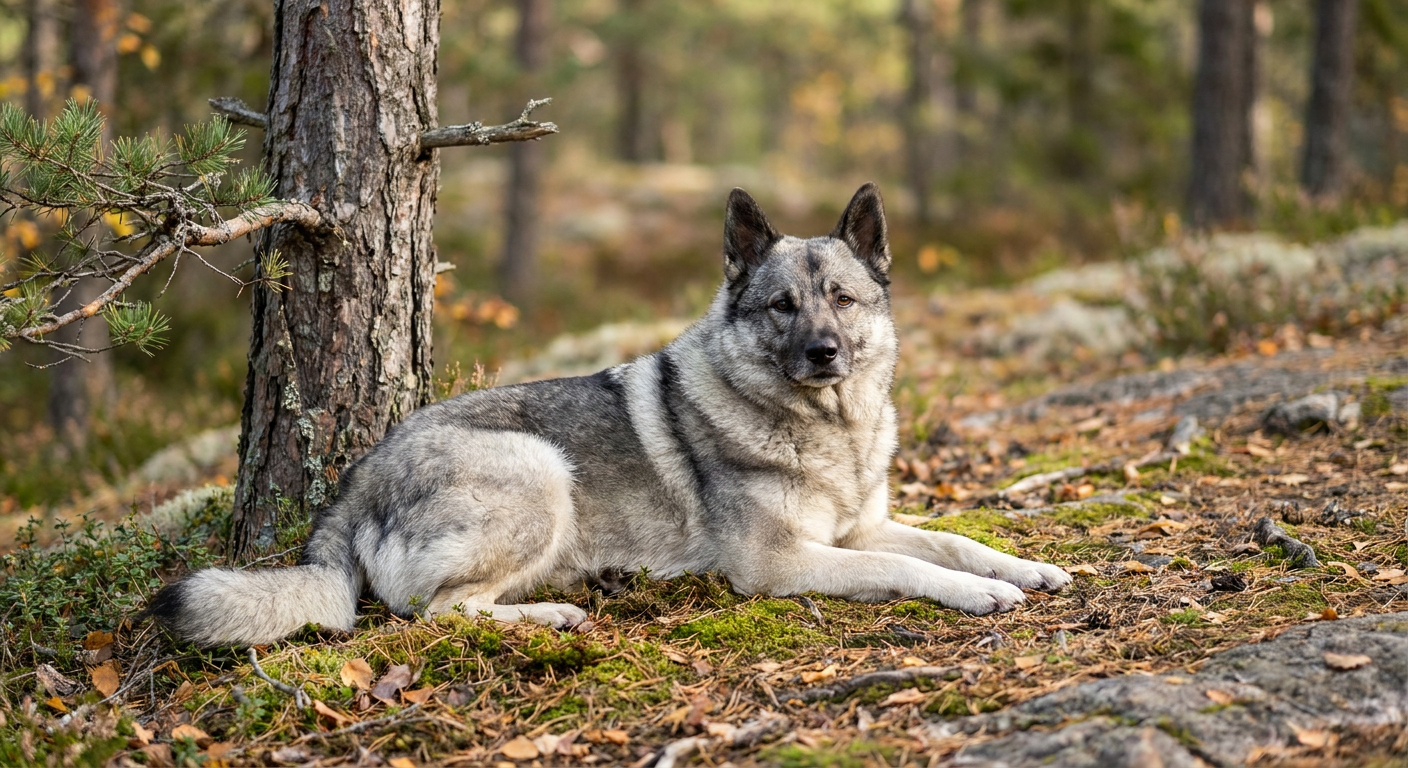
Among the oldest dog breeds — Elkhound skeletons have been found alongside Viking artifacts dating to 5000 BC. Used to hunt moose, bear and reindeer. AKC recognition in 1913.
Temperament & Personality
Bold, friendly, dignified. Independent. Vocal — loud bark used in hunting. Strong prey drive.
Health Watchouts
Top conditions reported by AKC parent clubs, OFA, and the Merck Veterinary Manual. Discuss screening with your vet — especially before breeding or insuring.
Hip dysplasia
~13% (OFA)Joint malformation.
Screening: OFA hips
Progressive retinal atrophy
HereditaryInherited blindness.
Screening: DNA test
Hypothyroidism
CommonLow thyroid.
Screening: Annual T4/TSH
Renal dysplasia
HereditaryKidney malformation.
Screening: Pedigree review; urinalysis
Cushing's disease
Notable in seniorsExcess cortisol.
Screening: Senior bloodwork
Exercise Needs
60–90 minutes daily — long walks, hikes, and cool-weather activity.
- Long hikes
- Cool-weather running
- Tracking
- Skijoring
- Yard play
Nutrition
Daily calories: Adult: 900–1,400 kcal.
Two meals daily.
Common allergens to watch: Chicken, Wheat, Beef.
⚠ Easy keepers — measure all food. Coat hides weight.
Entertainment & Enrichment
Active brain that loves a job.
- Tracking
- Skijoring
- Puzzle feeders
- Trick training
- Hiking
Grooming & Coat Care
Brush 2× weekly; daily during heavy seasonal coat blows (twice yearly). Bathe every 8–12 weeks. Never shave.
Training
Independent and stubborn — positive reinforcement with creative motivation. Channel barking and prey drive early.
Cost of Ownership
Lifetime cost depends on size, lifespan, and health risks. Try our Lifetime Cost Calculator →
Cost band for Norwegian Elkhound: medium.
How insurance, vet care & grooming connect for the Norwegian Elkhound
These three costs move together. The Norwegian Elkhound’s coat, energy, and breed-specific health watchouts shape each one — here’s how they line up.
Insurance band
Common hereditary conditions raise claim odds
Vet service load
High activity raises orthopedic & injury visits
Grooming demand
Double coat sheds seasonally — frequent brushing
Estimated monthly spend (typical adult)
Insurance
$75
Routine vet
$60
Grooming
$75
Combined estimate
~$210/mo(±20%, US averages)
* Estimates derived from breed traits (coat, energy, health watchouts, lifespan). Actual costs vary by location, age, and provider.
Living Situation Fit
Suburban or rural homes; cool climates preferred. Not for apartments due to barking. Best with active owners.
Choosing a Puppy
OFA hips, eye CERF, DNA for PRA, thyroid. Meet both parents.
Frequently Asked Questions
Do Norwegian Elkhounds bark a lot?
Yes — they're vocal alert barkers and use barking to track quarry. Training and managing boredom helps but expect a vocal dog.
How much do Norwegian Elkhounds shed?
Heavily, with two intense seasonal coat blows yearly. Daily brushing during those weeks; twice-weekly otherwise.
Are Norwegian Elkhounds good with kids?
Yes — they're friendly and tolerant with family children. Their high energy suits older active kids better than toddlers.