History & Origin
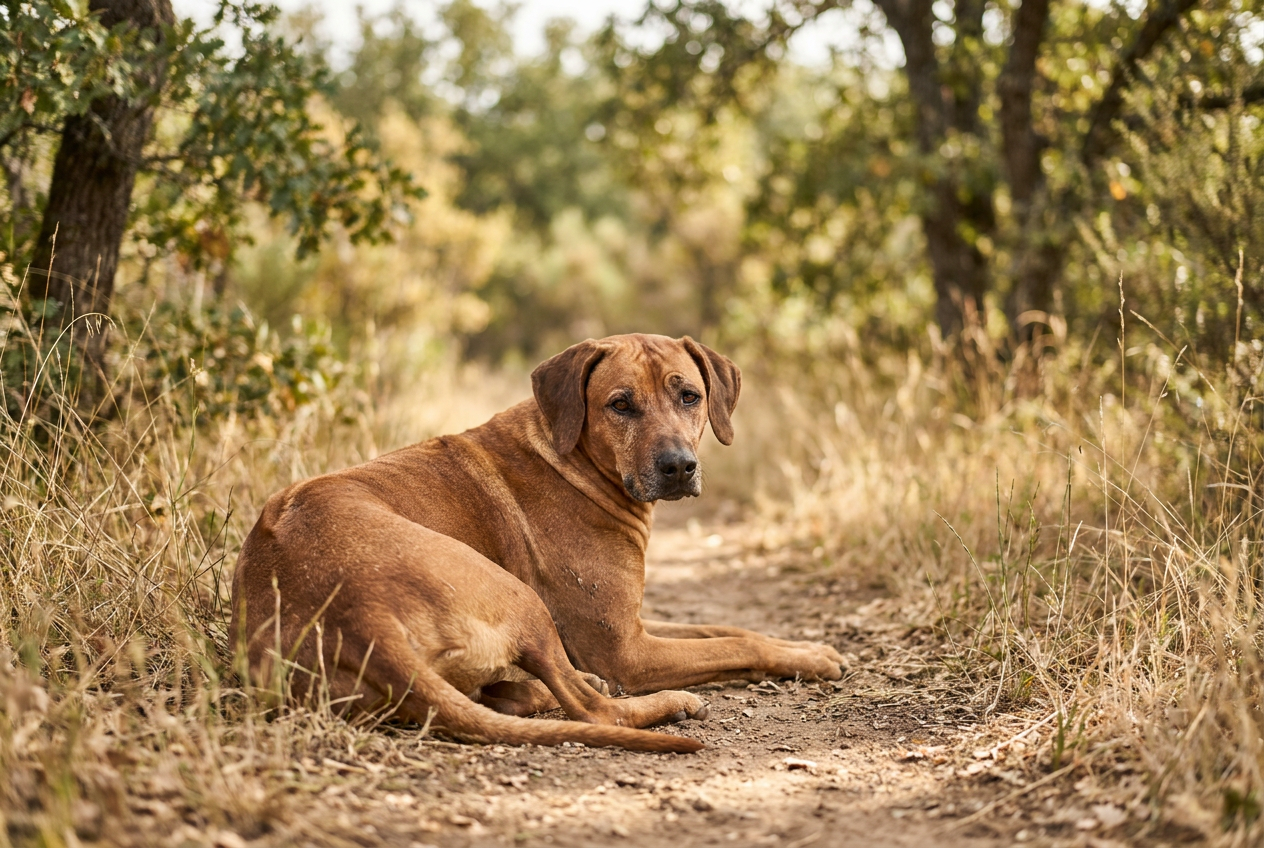
Originating in Southern Africa, the Rhodesian Ridgeback is a unique hound developed by European Boers using their mastiffs, scenthounds, and the semi-domesticated, ridge-backed hunting dogs of the local Khoikhoi people. Their original purpose was to track and bay large game, including lions, harassing the quarry until the hunter arrived. The breed standard, based on the Dalmatian standard, was written in 1922 in Rhodesia (now Zimbabwe). The American Kennel Club (AKC) officially recognized the breed in 1955.
Temperament & Personality
The Ridgeback temperament is a study in contrasts. With their family, they are gentle, affectionate, and quietly devoted. With strangers, they are typically aloof and dignified, showing little interest. This inherent reservation makes them excellent watchdogs. They are highly intelligent but independent, a trait that can be interpreted as stubbornness. A high prey drive is instinctual. While generally quiet in the home, they are not a "set it and forget it" breed and thrive on partnership with their owner.
Health Watchouts
Top conditions reported by AKC parent clubs, OFA, and the Merck Veterinary Manual. Discuss screening with your vet — especially before breeding or insuring.
Dermoid Sinus
5-10%A congenital neural tube defect where a tube-like structure extends from the skin down towards the spinal cord. It requires surgical removal. A key reason to choose a breeder who screens for this.
Screening: Careful palpation by an experienced breeder or veterinarian at birth.
Hip Dysplasia
~5-12% (OFA)A malformation of the hip joint that leads to instability, pain, and arthritis. A common issue in large, active breeds.
Screening: OFA or PennHIP radiographic evaluation of breeding stock.
Elbow Dysplasia
~4-10% (OFA)A developmental abnormality of the elbow joint, leading to lameness and arthritis.
Screening: OFA radiographic evaluation of breeding stock.
Hypothyroidism
CommonAn underactive thyroid gland, leading to weight gain, lethargy, skin problems, and hair loss. Typically managed with lifelong medication.
Screening: Routine blood tests (T4, TSH) for breeding dogs and any symptomatic animals.
Degenerative Myelopathy (DM)
At-riskA progressive, incurable disease of the spinal cord in older dogs, leading to hind limb weakness and paralysis. The breed carries the causative gene.
Screening: A DNA test (SOD1) can identify dogs that are clear, carriers, or at-risk of developing the disease.
Exercise Needs
This is a high-energy athletic breed that requires more than a casual walk around the block. A minimum of 60-90 minutes of vigorous activity per day is essential to keep a Ridgeback physically and mentally content. A bored Ridgeback is often a destructive one. Their background as a running hound makes them excellent jogging or running partners, but only once they are fully mature.
- Lure coursing
- Running/jogging
- Hiking
- Agility
- Scent work
Nutrition
Daily calories: 1500-1900 kcal/day
Feed a high-quality, AAFCO-approved large-breed dog food. Meals should be given in two measured portions per day rather than free-fed to monitor intake and reduce the risk of bloat (GDV). Fresh water should always be available.
Common allergens to watch: chicken, beef, dairy.
⚠ Maintaining a lean body condition is critical for this breed to minimize stress on their joints and reduce the risk of dysplasia-related arthritis. You should be able to feel their ribs easily under a thin layer of fat and see a distinct abdominal tuck and waist from above.
Entertainment & Enrichment
A Ridgeback's intelligence demands mental stimulation. Without sufficient enrichment, they may invent their own (often destructive) "jobs." Integrating puzzle toys and training exercises into their daily routine is key to a well-behaved companion.
- Puzzle feeders or snuffle mats for meals
- Nose work/scent games
- Regular obedience or trick training sessions
- Interactive puzzle toys
- Chewing on durable, vet-approved chews
Grooming & Coat Care
The short, smooth coat requires minimal care. A weekly brushing with a rubber curry comb or hound glove will remove loose hair and distribute skin oils. Shedding is moderate year-round. As with all breeds, regular nail trims, ear cleaning, and dental care (brushing) are essential for overall health.
Training
Ridgebacks are intelligent and capable but also independent and sensitive. They respond best to fair, consistent training using positive reinforcement. Harsh methods will backfire. Early and extensive socialization is crucial to ensure their natural aloofness with strangers does not turn into fear or reactivity. Due to their strength and wilfullness, they are not recommended for first-time dog owners.
Cost of Ownership
Lifetime cost depends on size, lifespan, and health risks. Try our Lifetime Cost Calculator →
Cost band for Rhodesian Ridgeback: medium.
How insurance, vet care & grooming connect for the Rhodesian Ridgeback
These three costs move together. The Rhodesian Ridgeback’s coat, energy, and breed-specific health watchouts shape each one — here’s how they line up.
Insurance band
Common hereditary conditions raise claim odds
Vet service load
High activity raises orthopedic & injury visits
Grooming demand
Low-maintenance coat — monthly bath and brush
Estimated monthly spend (typical adult)
Insurance
$85
Routine vet
$50
Grooming
$45
Combined estimate
~$180/mo(±20%, US averages)
* Estimates derived from breed traits (coat, energy, health watchouts, lifespan). Actual costs vary by location, age, and provider.
Living Situation Fit
The ideal home for a Rhodesian Ridgeback has a securely fenced yard and an active owner experienced with large, independent-thinking dogs. They are not suited for apartment living. Their strong prey drive means they cannot be trusted off-leash in unfenced areas. Despite their athletic needs, they are typically calm and quiet house companions once their exercise requirements are met.
Choosing a Puppy
Seek out a reputable breeder who is a member of the Rhodesian Ridgeback Club of the United States (RRCUS). A responsible breeder will screen breeding stock for hip/elbow dysplasia (OFA), thyroid issues, eye conditions (CERF), and degenerative myelopathy. Crucially, they will have their litters checked for dermoid sinus by an experienced professional before puppies go to their new homes.
Frequently Asked Questions
What is the "ridge" on a Rhodesian Ridgeback?
The ridge is a distinct feature of the breed, formed by a strip of hair along the spine that grows in the opposite direction to the rest of the coat. According to the AKC standard, the ridge must be clearly defined and taper from just behind the shoulders down to the hips, containing two identical "crowns" (whorls) directly opposite each other.
Are Rhodesian Ridgebacks good guard dogs?
They are excellent watchdogs. Their natural reservation towards strangers and deep, intimidating bark will alert owners to any unusual presence. However, they are not typically indiscriminately aggressive. They are discerning and protective of their family, but should not be trained for aggressive "guard" work.
Do all Rhodesian Ridgebacks have a ridge?
No. Some puppies are born 'ridgeless.' This is a cosmetic fault according to the breed standard, meaning they cannot be shown in conformation events, but it has no bearing on their health or ability to be a wonderful companion.
Are they good with children and other pets?
When raised with children, they can be steadfast and gentle companions. However, their large size means all interactions should be supervised. Their high prey drive can make them a potential risk for cats or other small pets unless they have been socialized with them from a very young age.