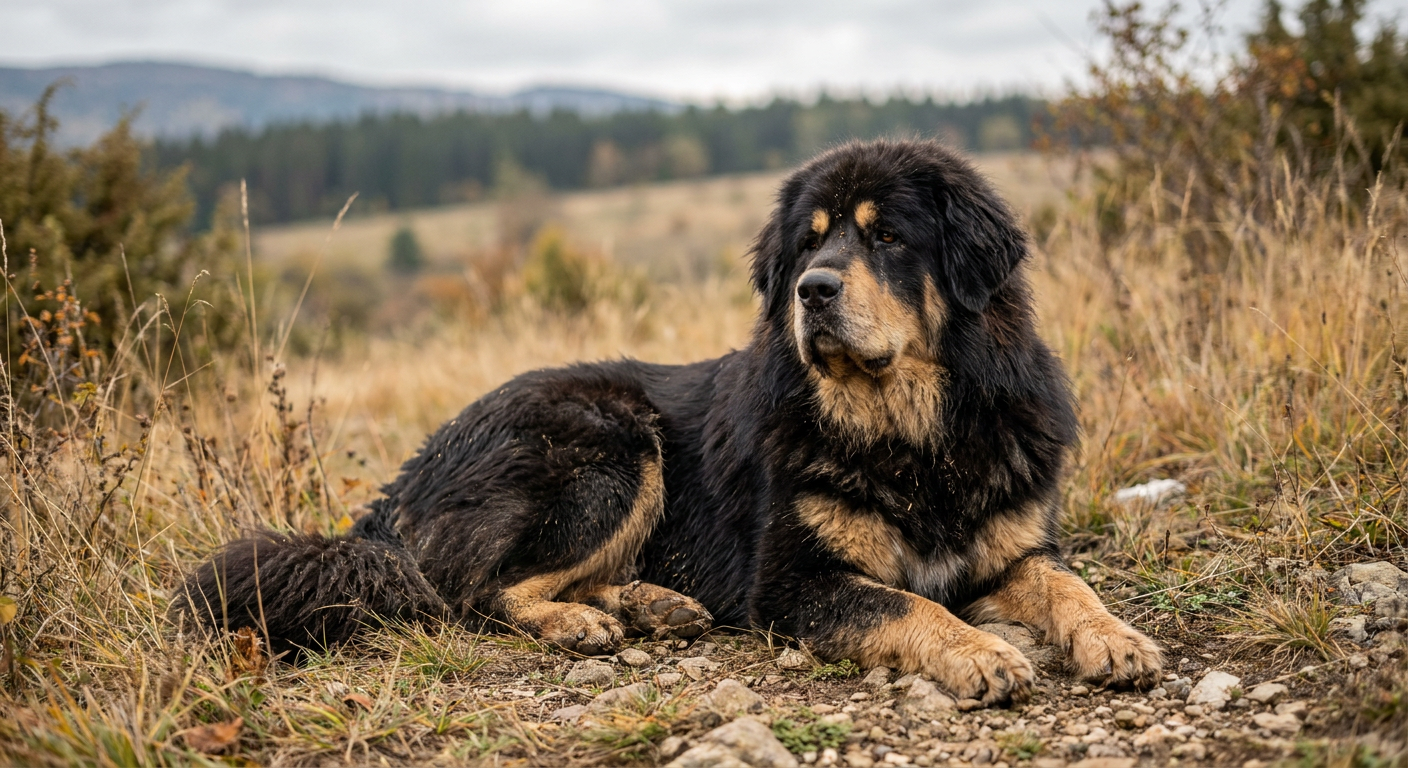
History & Origin
An ancient livestock guardian originating in the Himalayas, the Tibetan Mastiff served as a protector of monasteries and local tribes for centuries. While roots go back over 2,000 years, the breed first reached Western audiences in the mid-19th century when Queen Victoria received one as a gift. They were officially recognized by the AKC in 2006.
Temperament & Personality
Independent, aloof, and intensely protective of its family and territory. They are not 'eager to please' like many breeds and often make their own decisions regarding threats. While calm indoors, they are highly vigilant and can be wary of strangers without extensive socialization.
Health Watchouts
Top conditions reported by AKC parent clubs, OFA, and the Merck Veterinary Manual. Discuss screening with your vet — especially before breeding or insuring.
Hip Dysplasia
CommonMalformation of the hip joint leading to arthritis and lameness.
Screening: OFA or PennHIP Radiographs
Elbow Dysplasia
CommonSimilar to hip dysplasia, affecting the elbow joints and causing chronic pain.
Screening: OFA Radiographs
Hypothyroidism
ModerateA condition where the thyroid gland is underactive, impacting metabolism and coat quality.
Screening: Blood Panel (T4, TSH)
Canine Inherited Demyelinative Neuropathy (CIDN)
LowA rare, breed-specific inherited neurological condition typically appearing in young puppies.
Screening: Clinical Evaluation
Exercise Needs
They are not high-energy dogs but require moderate daily exercise to maintain muscle tone and mental health.
- Long, steady leashed walks
- Patrolling a large, securely fenced yard
- Brief hiking in cool temperatures
- Gentle tug-of-war sessions
Nutrition
Daily calories: 1,800 - 2,500 kcal depending on activity level and weight
Large-breed specific formulas are essential, particularly during the puppy growth stage to slow development.
Common allergens to watch: Chicken, Beef, Grains (variable).
⚠ Excess weight puts dangerous stress on large joints; always maintain a visible waist.
Entertainment & Enrichment
Mental stimulation should focus on their natural desire to watch and guard rather than high-intensity retrieval games.
- Licking mats or stuffed food puzzles
- Scent work in a secure perimeter
- Chewing on heavy-duty durable bones
- Observing territory from a fixed vantage point
Grooming & Coat Care
Requires thorough brushing at least twice a week to manage the thick undercoat. They undergo a massive 'blow' of the coat once a year, requiring daily grooming for several weeks.
Training
Socialization must begin in early puppyhood and continue through life to manage territorial instincts. Training should be patient and reward-based; do not expect the precise obedience seen in herding breeds.
Cost of Ownership
Lifetime cost depends on size, lifespan, and health risks. Try our Lifetime Cost Calculator →
Cost band for Tibetan Mastiff: high.
How insurance, vet care & grooming connect for the Tibetan Mastiff
These three costs move together. The Tibetan Mastiff’s coat, energy, and breed-specific health watchouts shape each one — here’s how they line up.
Insurance band
Brachycephalic or giant-breed risk profile
Vet service load
Heavy shedding correlates with skin/derm visits
Grooming demand
Double coat sheds seasonally — frequent brushing
Estimated monthly spend (typical adult)
Insurance
$85
Routine vet
$60
Grooming
$75
Combined estimate
~$220/mo(±20%, US averages)
* Estimates derived from breed traits (coat, energy, health watchouts, lifespan). Actual costs vary by location, age, and provider.
Living Situation Fit
Requires a large, securely fenced yard as they are notorious wanderers and territorial. They are best suited for rural or suburban environments rather than urban apartments due to their size and barking habits.
Choosing a Puppy
Select a breeder who performs OFA clearances for hips and elbows and screens for thyroid health. Observe the parents' reactions to strangers, as proper temperament is critical in this dominant breed.
Frequently Asked Questions
Do Tibetan Mastiffs bark a lot?
They are legendary for their vocal nocturnal guarding; unless kept indoors at night, their barking can be a significant issue for neighbors.
Are they easy to train?
No. They are highly independent and do not have a desire to please, making them one of the more difficult breeds to train.
Are they good with children?
While they can be gentle with 'their' children, they are large and powerful; they may misinterpret play with outside children as a threat to their family.