History & Origin
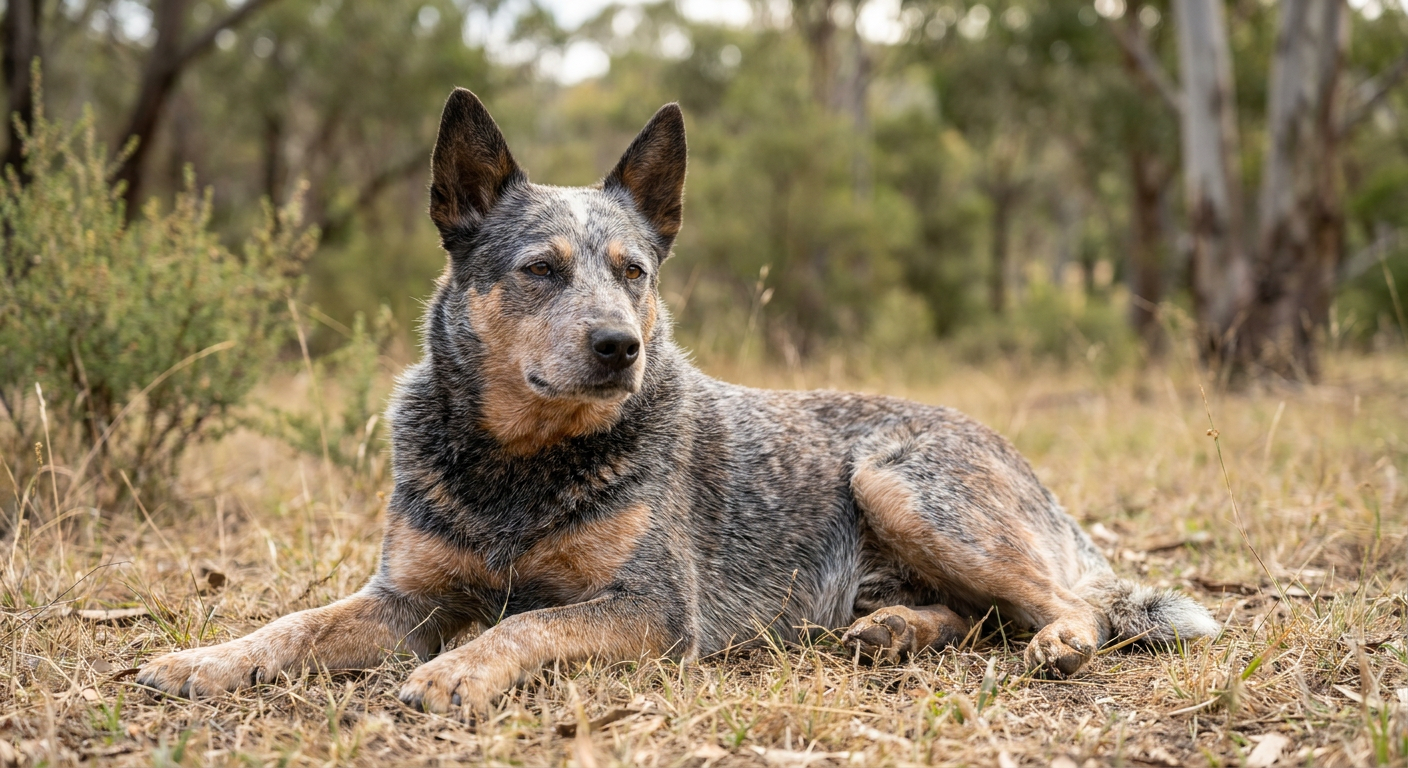
Developed in the 19th century by Australian settlers, the Australian Cattle Dog was bred to handle the harsh conditions of the outback. Ranchers needed a tenacious dog capable of herding cattle over long distances. They crossed Blue Smooth Highland Collies with the native Dingo, later adding Dalmatian and Black and Tan Kelpie to the mix. The result was a dog with immense stamina and working intelligence. Known as "Blue Heelers" or "Queensland Heelers" for their coat color and tendency to nip at the heels of cattle, they proved indispensable to the Australian beef industry. The breed was fully recognized by the American Kennel Club in 1980.
Temperament & Personality
Extremely intelligent, alert, and resourceful. The Australian Cattle Dog forms a deep, loyal bond with its owner and is naturally protective. This is a high-drive dog with a serious, focused demeanor, especially when engaged in a task. They can be wary of strangers and their herding instinct may manifest as nipping behavior toward moving objects, including children and other pets. Early, consistent socialization and training are essential to moderate these tendencies and shape a well-behaved companion. They thrive on having a purpose.
Health Watchouts
Top conditions reported by AKC parent clubs, OFA, and the Merck Veterinary Manual. Discuss screening with your vet — especially before breeding or insuring.
Progressive Retinal Atrophy (PRA)
Carrier rate up to 50% for prcd-PRA typeA group of genetic diseases that cause the retina to degenerate, leading to blindness. The prcd-PRA form is particularly common in this breed.
Screening: A DNA test can identify affected dogs and carriers. Responsible breeders should screen their breeding stock.
Hip Dysplasia
16.5% affected (OFA data)An abnormal formation of the hip socket that can lead to arthritis and lameness. It is a polygenic trait influenced by environmental factors.
Screening: Screening via hip radiographs (X-rays) submitted to the Orthopedic Foundation for Animals (OFA) is recommended for all breeding dogs.
Congenital Deafness
Common (approx. 10-14% unilaterally or bilaterally deaf)Hearing loss present at birth, often linked to the genes responsible for white markings in their coat. It can affect one or both ears.
Screening: BAER (Brainstem Auditory Evoked Response) testing is the only reliable method for diagnosing deafness in puppies and should be performed before they go to new homes.
Elbow Dysplasia
4.5% affected (OFA data)A developmental malformation of the elbow joint that causes lameness and arthritis. Like hip dysplasia, it has both genetic and environmental components.
Screening: Elbow radiographs submitted to the OFA for evaluation are the standard for screening breeding animals.
Portosystemic Shunt (PSS)
Uncommon, but noted in the breedA liver shunt where blood bypasses the liver's detoxification processes, allowing toxins to build up in the bloodstream, leading to neurological and other signs.
Screening: Blood tests (bile acids) can suggest the presence of a shunt, which is then confirmed with advanced imaging. No routine screening protocol exists, but it's a key diagnosis to consider for sick puppies.
Exercise Needs
This is a high-stamina working breed that requires significant, vigorous exercise every day. A short walk on a leash is insufficient. They need a combination of intense physical activity and mentally stimulating tasks to stay happy and well-behaved. Without a proper outlet for their energy, they are prone to developing behavioral problems such as destructiveness and excessive barking.
- Herding trials
- Agility
- Flyball
- Canine Frisbee
- Running or biking partner
- Advanced obedience
Nutrition
Daily calories: 900 to 1300 kcal/day, depending on age, activity level, and spay/neuter status.
Feed a high-quality, AAFCO-approved commercial dog food appropriate for their life stage. Because of their high drive, portion control is essential. Using puzzle feeders and food-dispensing toys can provide needed mental stimulation during meals. Active working dogs will have higher caloric needs than sedentary pets.
Common allergens to watch: Beef, Dairy, Chicken.
⚠ Despite their high energy, ACDs can become overweight if their diet isn't matched to their actual (not potential) activity level. Obesity significantly increases the risk and severity of joint problems like hip dysplasia and arthritis. Maintain a lean body condition score (4/9 or 5/9) where ribs are easily felt but not seen.
Entertainment & Enrichment
Mental stimulation is as important as physical exercise for this breed. A bored Cattle Dog is a destructive Cattle Dog. Enrichment should be part of their daily routine to challenge their intelligent minds and prevent problem behaviors stemming from a lack of purpose.
- Puzzle feeders and food toys
- Scent work and nose games
- Learning complex tricks
- Structured training sessions for obedience or dog sports
- Providing safe "chew-work" opportunities
Grooming & Coat Care
The Australian Cattle Dog has a weather-resistant double coat that is relatively low-maintenance. Brushing weekly with a firm bristle brush will remove dirt and loose hair. During seasonal shedding periods (once or twice a year), they will "blow their coat" and require more frequent brushing to manage the immense amount of hair. Regular nail trims, dental care, and ear checks are essential components of routine care.
Training
Training is not optional for an ACD. They are brilliant and learn quickly, but their intelligence can be channeled into stubbornness if they are not given clear, consistent leadership. Start socialization and puppy classes early. Positive reinforcement techniques work best. Focus on building a strong bond and making training a fun, lifelong activity. Their intelligence demands ongoing training to keep them engaged.
Cost of Ownership
Lifetime cost depends on size, lifespan, and health risks. Try our Lifetime Cost Calculator →
Cost band for Australian Cattle Dog: medium.
How insurance, vet care & grooming connect for the Australian Cattle Dog
These three costs move together. The Australian Cattle Dog’s coat, energy, and breed-specific health watchouts shape each one — here’s how they line up.
Insurance band
Common hereditary conditions raise claim odds
Vet service load
High activity raises orthopedic & injury visits
Grooming demand
Double coat sheds seasonally — frequent brushing
Estimated monthly spend (typical adult)
Insurance
$75
Routine vet
$50
Grooming
$60
Combined estimate
~$185/mo(±20%, US averages)
* Estimates derived from breed traits (coat, energy, health watchouts, lifespan). Actual costs vary by location, age, and provider.
Living Situation Fit
The ideal home for an Australian Cattle Dog has a large, securely fenced yard and an owner who is an experienced dog handler. They are not suited for apartment living or for first-time owners. This breed needs a job, whether it's formal herding, dog sports, or being an integral part of an active owner's daily life. They must be considered a full family member to thrive.
Choosing a Puppy
Choose a breeder who is transparent and provides a complete health history of the parents. A reputable breeder will perform, at minimum, OFA screenings for hips and elbows, a BAER test for hearing on all puppies, and a DNA test for prcd-PRA. A well-socialized puppy from a responsible breeder is a must. Given their intensity, consider if a rescue ACD, whose adult personality is already known, might be a better fit.
Frequently Asked Questions
Are Australian Cattle Dogs aggressive?
They are not inherently aggressive, but they are extremely protective and wary of strangers. Their herding instinct can cause them to nip at the heels of people, especially children. Early and extensive socialization is crucial to help them distinguish between a threat and a normal interaction. They require a confident owner who can manage their protective instincts.
Can Australian Cattle Dogs be left alone?
They can be, but not for excessively long periods and not without substantial exercise and mental stimulation beforehand. If left alone while bored or full of pent-up energy, they are very likely to become destructive, bark incessantly, or develop separation anxiety. This is not a breed for owners who are away from home for most of the day.
Are Australian Cattle Dogs good with other pets?
It depends. If raised with other dogs or cats from puppyhood, they can coexist peacefully. However, they have a strong prey drive and herding instinct, which can be a problem with smaller animals. They may try to "herd" other pets, leading to conflict. Proper introductions and management are always required.
Do Australian Cattle Dogs bark a lot?
Yes, they can be frequent barkers. As natural watchdogs, they will alert you to anything they deem unusual or suspicious. Their bark is sharp and loud. While training can help manage nuisance barking, owners should expect a vocal dog who will express their opinion.