History & Origin
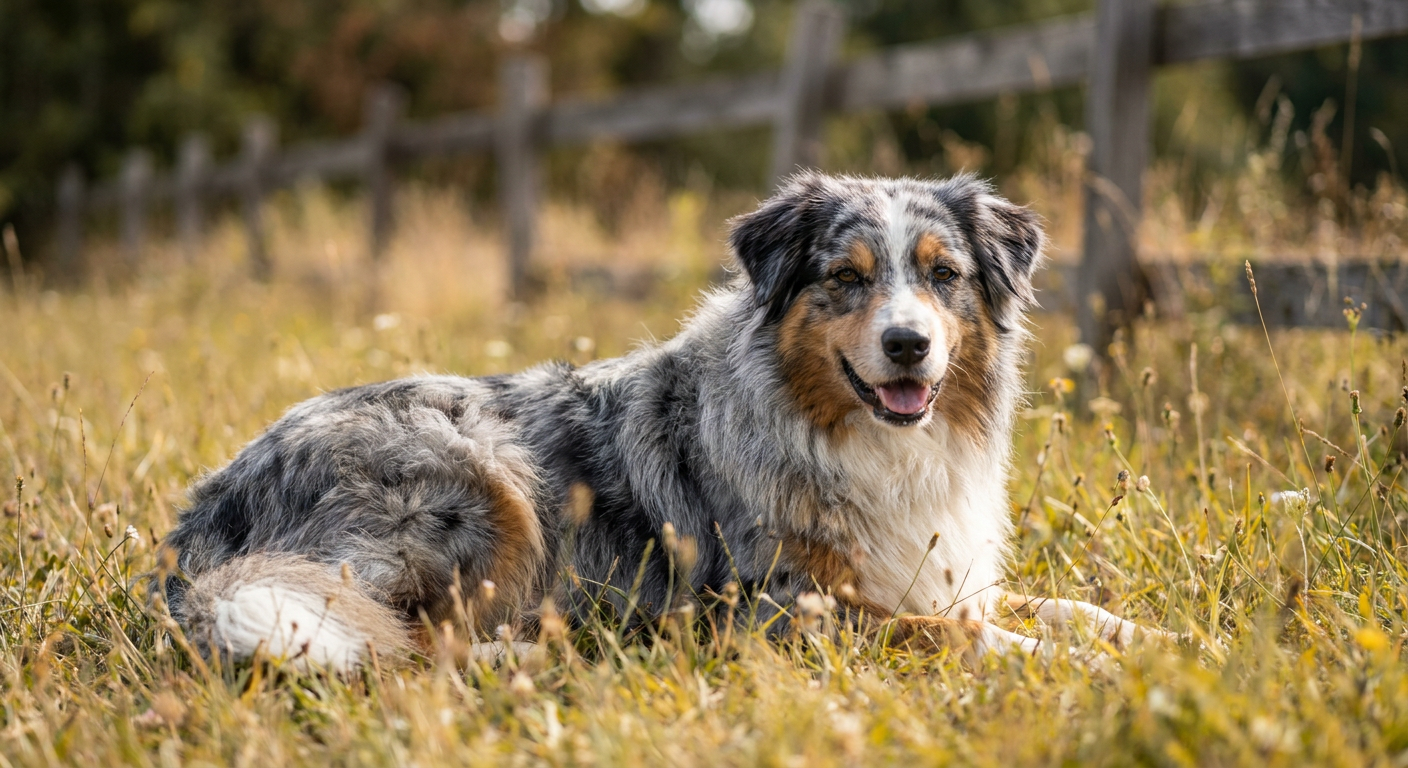
Despite their name, Australian Shepherds were developed in the western United States during the 19th century. Their ancestors were likely collie-type dogs from Australia and New Zealand, brought over with Basque shepherds and their flocks. Valued by ranchers for their intelligence, stamina, and trainability, they became fixtures of American cowboy culture, often seen at rodeos. Their versatility as herders, companions, and performers cemented their popularity. The Australian Shepherd Club of America (ASCA) was formed in 1957, but the breed was not officially recognized by the American Kennel Club (AKC) until 1993.
Temperament & Personality
Australian Shepherds are exceptionally intelligent, loyal, and driven. Bred to manage livestock, they have a strong work ethic and thrive when they have a task, whether it's agility, obedience, or advanced trick training. They are typically good-natured and form strong bonds with their families, often being protective. This intelligence means they need consistent training and socialization from a young age to prevent them from outsmarting an unsuspecting owner or developing behavioral issues born of boredom. They can be reserved with strangers.
Health Watchouts
Top conditions reported by AKC parent clubs, OFA, and the Merck Veterinary Manual. Discuss screening with your vet — especially before breeding or insuring.
Hip Dysplasia
6.5% affected (OFA)A malformation of the hip joint that leads to arthritis and pain. It is a polygenic trait influenced by environmental factors.
Screening: OFA or PennHIP radiographic evaluation after 2 years of age.
Elbow Dysplasia
4.5% affected (OFA)A developmental abnormality in the elbow joint, leading to lameness and arthritis. Like hip dysplasia, it is a complex inherited condition.
Screening: OFA radiographic evaluation after 2 years of age.
Hereditary Eye Disease (Cataracts, PRA, CEA)
CommonIncludes several inherited conditions. Hereditary Cataracts cause the lens to become opaque. Progressive Retinal Atrophy (PRA) leads to blindness. Collie Eye Anomaly (CEA) is a developmental defect.
Screening: Annual eye examination by a board-certified veterinary ophthalmologist (CAER/OFA).
MDR1 Gene Mutation (Multi-Drug Resistance)
Up to 50%A genetic mutation that causes sensitivity to certain common drugs (like ivermectin and some chemotherapy agents), which can be toxic or fatal.
Screening: A simple DNA test (cheek swab) can determine if a dog carries the mutation. All Aussies should be tested or assumed positive.
Epilepsy
Common (estimated at 4-5%)A neurological disorder characterized by recurrent seizures. Idiopathic epilepsy, with no identifiable cause, is a known hereditary issue in the breed.
Screening: No screening test exists. Diagnosis is made by ruling out other causes of seizures. Reputable breeders will track seizure activity in their lines.
Exercise Needs
This is a high-stamina breed requiring significant daily activity. A simple walk is not enough. They need 60-90 minutes of vigorous exercise combined with mental challenges daily. Without a sufficient outlet for their energy, they can become anxious, destructive, and prone to problem behaviors like excessive barking and herding family members.
- Running or jogging with a well-conditioned adult dog
- Canine sports like agility, flyball, and herding trials
- Frisbee and fetch in a securely fenced area
- Hiking
- Swimming
Nutrition
Daily calories: 1200-1800 kcal/day for a typical adult, but this must be adjusted based on activity level, age, and spay/neuter status.
Feed a high-quality, AAFCO-compliant commercial diet appropriate for their life stage. Use puzzle feeders and slow-feeder bowls to provide mental enrichment during meals. Portion control is essential for preventing obesity.
Common allergens to watch: Beef, Dairy, Chicken.
⚠ Given their predisposition for hip and elbow dysplasia, maintaining a lean body condition is paramount. You should be able to feel their ribs easily under a thin layer of fat, and they should have a visible waistline. Obesity significantly increases the risk and severity of orthopedic disease. Consult your vet for a body condition score (BCS) assessment.
Entertainment & Enrichment
Mental stimulation is as important as physical exercise. An intelligent Aussie without a job will become bored and create its own, often undesirable, work. Engaging their brain daily is key to a well-behaved companion. Rotate toys and challenges to keep them interested.
- Advanced obedience and trick training
- Puzzle toys and food-releasing toys
- Nose work games (e.g., "find the treat")
- Learning the names of toys
- Interactive play sessions with their owner
Grooming & Coat Care
The Australian Shepherd's weather-resistant double coat requires regular maintenance. Brush thoroughly 1-2 times per week (more during seasonal shedding periods) to prevent matting and remove loose hair. Never shave the coat, as it provides insulation from both heat and cold. Regular nail trims, ear cleaning, and daily tooth brushing are also essential for overall health.
Training
Start socialization and positive reinforcement-based puppy classes as early as possible. Aussies are eager to please and learn incredibly quickly, but this intelligence means they can also pick up bad habits. Consistent, firm, and engaging training is required to channel their focus. They excel in structured activities that give them a sense of purpose.
Cost of Ownership
Lifetime cost depends on size, lifespan, and health risks. Try our Lifetime Cost Calculator →
Cost band for Australian Shepherd: medium.
How insurance, vet care & grooming connect for the Australian Shepherd
These three costs move together. The Australian Shepherd’s coat, energy, and breed-specific health watchouts shape each one — here’s how they line up.
Insurance band
Common hereditary conditions raise claim odds
Vet service load
High activity raises orthopedic & injury visits
Grooming demand
Double coat sheds seasonally — frequent brushing
Estimated monthly spend (typical adult)
Insurance
$75
Routine vet
$60
Grooming
$75
Combined estimate
~$210/mo(±20%, US averages)
* Estimates derived from breed traits (coat, energy, health watchouts, lifespan). Actual costs vary by location, age, and provider.
Living Situation Fit
The ideal home for an Australian Shepherd has a securely fenced yard and an owner or family committed to an active lifestyle. They thrive with experienced dog owners who understand the need for consistent training and mental engagement. They are generally not suited for apartment living or for owners with a sedentary lifestyle due to their high exercise and stimulation needs.
Choosing a Puppy
Choose a breeder who is a member of a breed club like the Australian Shepherd Club of America (ASCA). A responsible breeder will provide proof of health clearances for the puppy's parents, including OFA or PennHIP results for hips and elbows, an annual eye exam from a veterinary ophthalmologist, and MDR1 testing. Be wary of breeders who produce an excessive number of litters or who breed "merle-to-merle," a practice that can result in puppies with severe hearing and vision defects.
Frequently Asked Questions
Are Australian Shepherds good family dogs?
Yes, they can be excellent family dogs if their needs are met. They are loyal and protective but require early socialization with children and other pets. Their herding instinct may cause them to nip at heels, so this behavior must be managed through training. Their high energy means the whole family must be on board with providing exercise.
Do Australian Shepherds shed a lot?
Yes, they are significant shedders. They have a double coat and will typically 'blow coat' seasonally in the spring and fall, during which shedding is profuse. Regular brushing is necessary to manage the loose hair.
What is a 'merle' Aussie and are there health concerns?
Merle is a color pattern (e.g., blue merle, red merle) that creates mottled patches of color. When two merle dogs are bred together ('double merle'), there is a 25% chance each puppy will inherit two copies of the merle gene. This is associated with a high risk of being born deaf, blind, or both. It is an irresponsible breeding practice.
What is the difference between an Australian Shepherd and a Miniature American Shepherd?
The Miniature American Shepherd was developed by breeding smaller Australian Shepherds. While they share a similar look and temperament, they are now recognized as a distinct, separate breed. The primary difference is size, with the Miniature American Shepherd being significantly smaller and more compact.