History & Origin
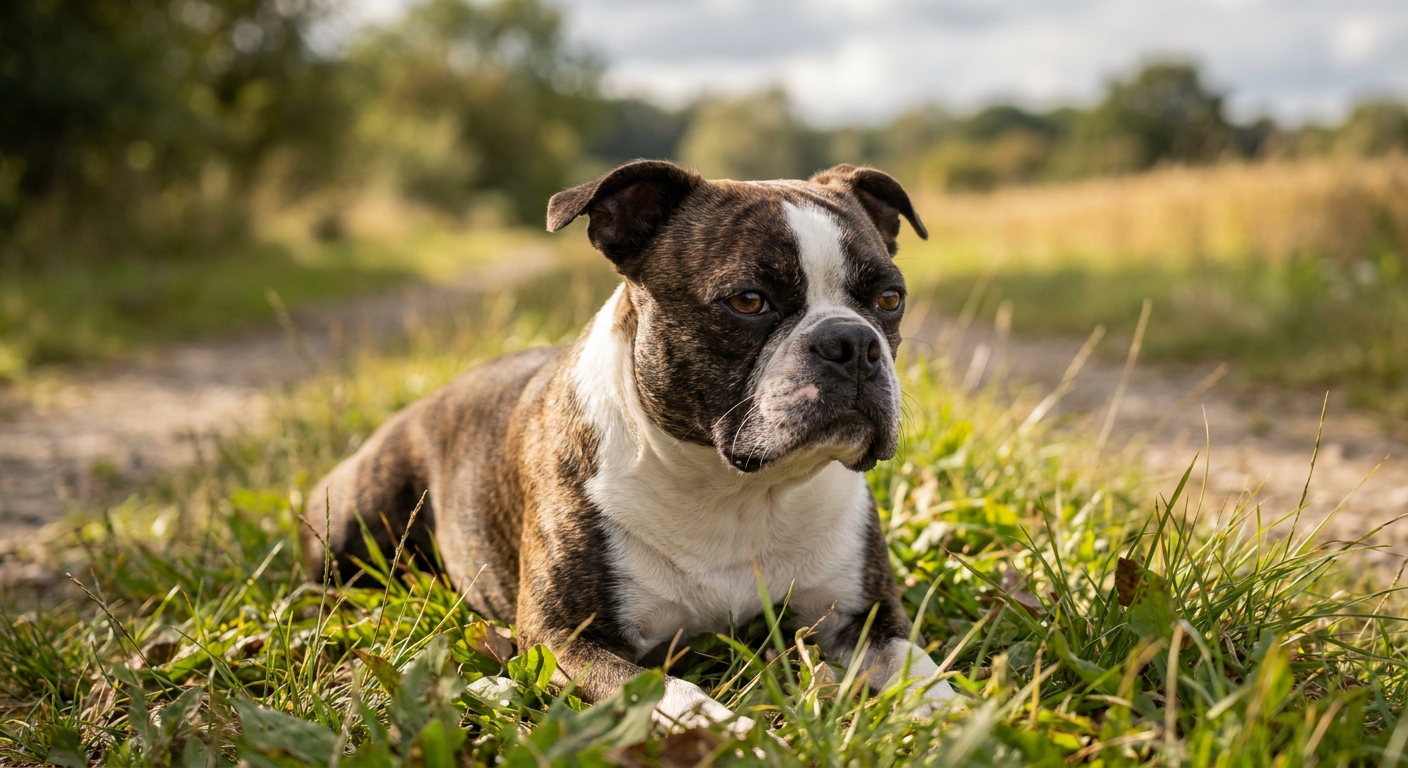
Nicknamed the "American Gentleman," the Boston Terrier originated in the late 1800s in Boston, Massachusetts. The breed was developed by crossing a Bulldog with the now-extinct English White Terrier. The foundation sire was a dog named Judge, owned by Robert C. Hooper. These early dogs were larger than today's Bostons, but breeders refined the size down to create the compact companion we know. The Boston Terrier Club of America was formed in 1891, and the American Kennel Club (AKC) officially recognized the breed in 1893, making it one of the first truly American breeds to be recognized.
Temperament & Personality
Boston Terriers are known for their lively, intelligent, and friendly disposition. They are true companion animals that thrive on human interaction and can be prone to separation anxiety if left alone for too long. While generally eager to please, which aids in training, they can possess a stubborn streak. Their comical expressions and amusing antics make them a constant source of entertainment. They are typically good-natured with children and other pets, especially when socialized from a young age.
Health Watchouts
Top conditions reported by AKC parent clubs, OFA, and the Merck Veterinary Manual. Discuss screening with your vet — especially before breeding or insuring.
Brachycephalic Obstructive Airway Syndrome (BOAS)
Common to Very CommonThis syndrome results from the breed's short-faced anatomy, causing stenotic (narrow) nostrils, an elongated soft palate, and other airway abnormalities. Signs include snorting, snoring, exercise intolerance, and heat sensitivity. Severe cases require surgical correction.
Screening: Veterinary assessment of nostril size and respiratory function before purchase. Functional grading (e.g., RFG Scheme) can formally assess severity.
Corneal Ulcers
CommonTheir large, prominent eyes are susceptible to injury, scratches, and spontaneous non-healing ulcers (SCCEDs). These can be very painful and may lead to vision loss if not treated aggressively.
Screening: No formal screening. Owners must be vigilant for signs of eye pain, such as squinting, redness, or discharge. Any eye-related symptom warrants an immediate vet visit.
Patellar Luxation
~7% (OFA)The kneecap (patella) dislocates from its normal position, causing a skipping gait, lameness, and predisposing the dog to arthritis. Surgical correction is often recommended for moderate to severe cases.
Screening: Orthopedic Foundation for Animals (OFA) evaluation by a veterinarian after 1 year of age.
Hereditary Cataracts (HSF4)
Genetic prevalence ~5%, though carriers are more common.An inherited condition that causes the lens of the eye to become cloudy, progressing to blindness, often by early middle age. It is distinct from age-related cataracts.
Screening: DNA test for the HSF4 mutation. An annual eye exam by a board-certified veterinary ophthalmologist (CAER/OFA) is also recommended.
Hemivertebrae
CommonThis is a congenital malformation of the vertebrae, common in "screw tail" breeds. The wedge-shaped vertebrae can cause spinal cord compression, leading to pain, weakness in the hind limbs, and incontinence. Many dogs are asymptomatic, but severe cases may require complex surgery.
Screening: X-rays of the spine. Not typically performed unless the dog shows clinical signs.
Exercise Needs
Boston Terriers have moderate energy needs, typically satisfied with 30 to 60 minutes of exercise per day. Daily walks combined with indoor or backyard play are usually sufficient. It is critically important to avoid over-exertion due to their brachycephalic nature. Exercise in hot or humid weather should be strictly limited or avoided to prevent life-threatening heatstroke.
- Brisk (but not strenuous) leashed walks
- Interactive puzzle toys
- Short games of fetch
- Supervised play with other small dogs
Nutrition
Daily calories: 400-800 kcal/day, depending on weight, age, and activity level. A 15lb typical adult might need ~500 kcal/day.
Feed in two measured meals per day to monitor intake and prevent bloating. Using a slow-feeder bowl is highly recommended to reduce air gulping (aerophagia), which is common in brachycephalic breeds and can lead to gastrointestinal discomfort.
Common allergens to watch: Beef, Dairy, Chicken.
⚠ Obesity is rampant in this breed and severely worsens BOAS, joint stress, and heat intolerance. A lean body condition (BCS 4-5/9, where ribs are easily felt with minimal fat cover) is arguably the most important health goal for a Boston Terrier.
Entertainment & Enrichment
These are intelligent dogs that require mental stimulation to prevent boredom and destructive behaviors. Their eagerness to please and clever nature make them excellent candidates for various enrichment activities that focus on problem-solving and interaction.
- Puzzle feeders and food-dispensing toys
- Snuffle mats
- Learning new tricks and commands
- Nose work games
- Short, positive reinforcement-based training sessions
Grooming & Coat Care
The Boston's smooth, short coat is low-maintenance, requiring only a weekly brushing with a soft-bristle brush or grooming mitt to remove loose hair. However, daily cleaning of facial wrinkles is essential to prevent skin fold dermatitis. Regular nail trims and dental care are also crucial.
Training
Boston Terriers are intelligent and generally eager to please, but they can have a stubborn side. Training should begin early with positive reinforcement techniques (treats, praise). Consistency is key. Early and ongoing socialization is vital to ensure they grow into well-mannered adults.
Cost of Ownership
Lifetime cost depends on size, lifespan, and health risks. Try our Lifetime Cost Calculator →
Cost band for Boston Terrier: medium.
How insurance, vet care & grooming connect for the Boston Terrier
These three costs move together. The Boston Terrier’s coat, energy, and breed-specific health watchouts shape each one — here’s how they line up.
Insurance band
Brachycephalic or giant-breed risk profile
Vet service load
Several conditions worth annual screening
Grooming demand
Low-maintenance coat — monthly bath and brush
Estimated monthly spend (typical adult)
Insurance
$85
Routine vet
$45
Grooming
$30
Combined estimate
~$160/mo(±20%, US averages)
* Estimates derived from breed traits (coat, energy, health watchouts, lifespan). Actual costs vary by location, age, and provider.
Living Situation Fit
The Boston Terrier is an ideal indoor dog, well-suited for apartment living as long as their exercise needs are met. They are deeply attached to their families and should not be kept as outside dogs. Their short coat and flat face make them extremely sensitive to both hot and cold weather.
Choosing a Puppy
Responsible breeders are critical for this breed. Seek out breeders who perform health screenings for Patellar Luxation (OFA), eyes (CAER), and offer proof that breeding pairs have been assessed for BOAS by a veterinarian. Ask to see the parents and observe their breathing. A puppy that snores loudly or has very narrow nostrils is a red flag for future health problems.
Frequently Asked Questions
Are Boston Terriers good for first-time owners?
Yes, with a significant caveat. Their grooming and exercise needs are manageable, but owners must be educated about the health and financial commitments of owning a brachycephalic breed. The potential for breathing problems and eye issues is high and requires vigilant care.
Do Boston Terriers bark a lot?
They are not considered excessive or "yappy" barkers. They will typically bark to alert their owners to a visitor or an unusual noise, but are not prone to barking without reason.
Can Boston Terriers swim?
Most cannot swim well or at all. Their body structure (short legs, barrel chest) and brachycephalic face make it difficult for them to stay afloat and keep their head above water. Always use a well-fitting canine life jacket and provide constant supervision near any body of water.
Are Boston Terriers good with children?
Generally, yes. Their playful and affectionate nature makes them a good companion for respectful children. As with any dog, interactions should always be supervised, and children should be taught how to interact gently with the dog.