History & Origin
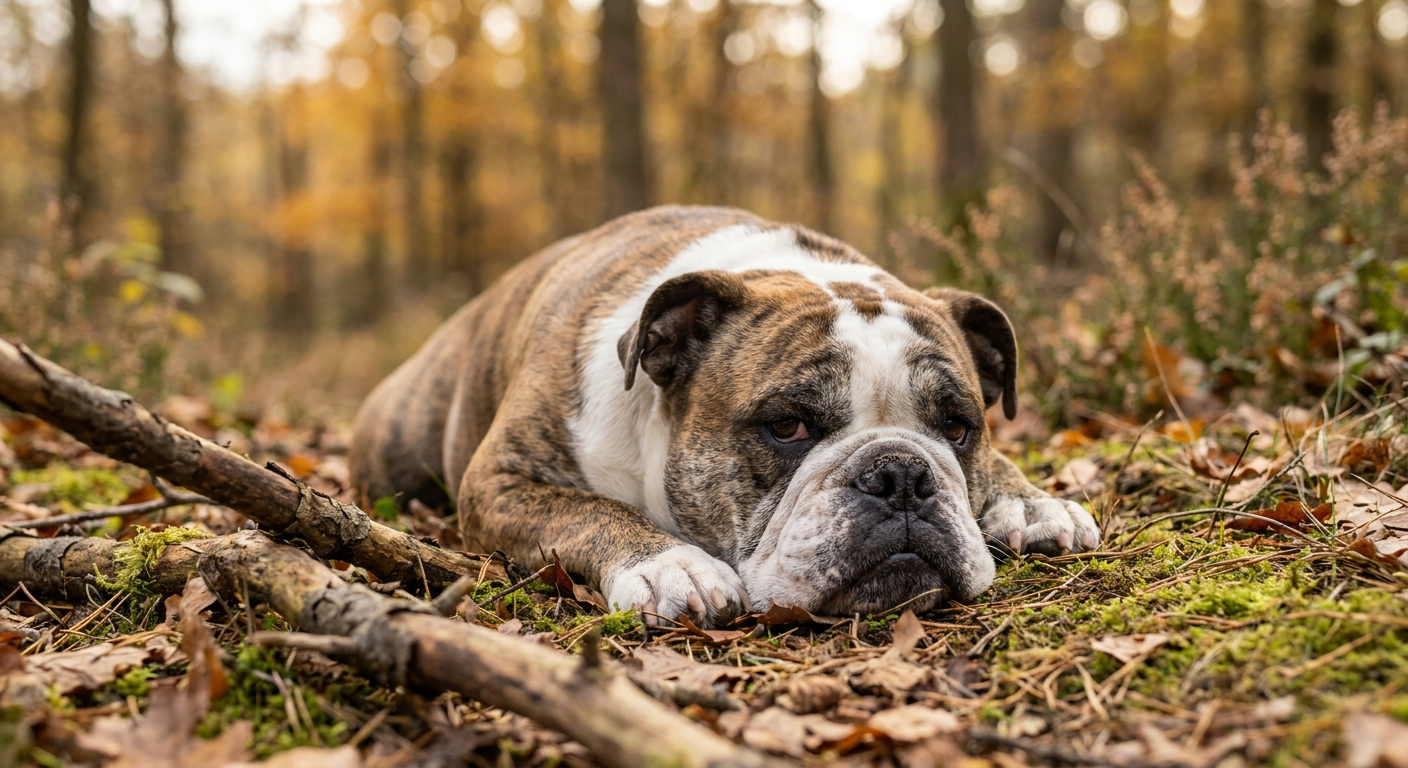
Bulldogs were originally bred for the brutal sport of bull-baiting in 13th-century England. After the sport was banned in 1835, breeders softened temperament dramatically while exaggerating the flat face and stocky build. The modern Bulldog is a fundamentally different animal from its ancestors — gentler, but with significant health costs.
Temperament & Personality
Calm, courageous, friendly. Bulldogs are famously patient with children, dignified with strangers, and stubborn in training. They form strong bonds and tend to follow their human room to room.
Health Watchouts
Top conditions reported by AKC parent clubs, OFA, and the Merck Veterinary Manual. Discuss screening with your vet — especially before breeding or insuring.
Brachycephalic obstructive airway syndrome
Nearly universalMost Bulldogs have stenotic nares and elongated soft palate. Surgical correction often needed.
Screening: BOAS exam scoring; surgical consult by age 1
Hip dysplasia
~70% (highest of any breed per OFA)Bulldog conformation predisposes to severe joint disease.
Screening: OFA hip evaluation of parents
Skin fold dermatitis
CommonFacial, body and tail-pocket folds trap moisture and bacteria.
Screening: Daily fold cleaning
Heat stroke
Constant riskCannot cool themselves efficiently. Even mild heat can kill.
Screening: Owner education; AC and cool surfaces in summer
Cherry eye, entropion, dry eye
CommonMultiple eye conditions due to facial conformation.
Screening: Annual veterinary eye exam
Exercise Needs
Bulldogs need 20–40 minutes of low-intensity exercise daily — and only in cool weather. Two short walks plus indoor play.
- Two 10–15 min walks in cool weather
- Gentle play indoors
- Sniff walks
- Short swimming sessions in shallow water with life vest
- Avoid: heat, stairs, jumping, intense exercise
Nutrition
Daily calories: Adult: 800–1,100 kcal/day.
Two measured meals daily. Slow-feeder bowls reduce gulping and gas. Avoid free feeding — Bulldogs gain weight rapidly.
Common allergens to watch: Chicken, Beef, Dairy, Grain.
⚠ Even 2–3 lb overweight worsens BOAS dramatically. Body condition 4–5/9 is essential.
Entertainment & Enrichment
Bulldogs are smart but get bored fast. Short, food-motivated sessions work.
- Snuffle mats
- Puzzle feeders
- Frozen Kongs
- Short trick training
- Cool-weather sniff walks
Grooming & Coat Care
Brush weekly. Clean facial and tail-pocket folds daily with veterinary wipes — bacterial infection develops in days. Bathe monthly. Trim nails every 3 weeks. Check eyes daily for discharge.
Training
Moderate difficulty. Bulldogs are smart but stubborn. Short, high-value reward sessions; patience is essential. Housetraining can take months. Crate training helps.
Cost of Ownership
Lifetime cost depends on size, lifespan, and health risks. Try our Lifetime Cost Calculator →
Cost band for Bulldog (English Bulldog): high.
How insurance, vet care & grooming connect for the Bulldog (English Bulldog)
These three costs move together. The Bulldog (English Bulldog)’s coat, energy, and breed-specific health watchouts shape each one — here’s how they line up.
Insurance band
Brachycephalic or giant-breed risk profile
Vet service load
Several conditions worth annual screening
Grooming demand
Low-maintenance coat — monthly bath and brush
Estimated monthly spend (typical adult)
Insurance
$85
Routine vet
$50
Grooming
$45
Combined estimate
~$180/mo(±20%, US averages)
* Estimates derived from breed traits (coat, energy, health watchouts, lifespan). Actual costs vary by location, age, and provider.
Living Situation Fit
Apartment-perfect — quiet, low-energy, content indoors. Climate control is non-negotiable; Bulldogs need AC year-round. Avoid stairs (joint damage) and never leave outside in heat.
Choosing a Puppy
Choose breeders who BOAS-test, OFA-screen hips and elbows, breed for slightly longer muzzles, and provide health guarantees. Most Bulldog litters are C-section deliveries; ethical breeding costs $3,000–6,000. Consider Bulldog Club of America Rescue.
Frequently Asked Questions
How long do English Bulldogs live?
Average lifespan is 8–10 years. A 2024 RVC study found median Bulldog lifespan in the UK is just 7.4 years — among the shortest of any breed, driven by airway, cardiac and orthopedic disease.
Are English Bulldogs good apartment dogs?
Yes — they're quiet, low-exercise and content indoors. Climate control is essential and stairs should be avoided. They're often a top recommendation for apartment-dwelling families.
Do Bulldogs need special vet care?
Often, yes. Most Bulldogs need at least one major surgery in their lifetime (BOAS correction, cherry eye, hip surgery, or C-section if breeding). Pet insurance from puppyhood — before pre-existing conditions develop — saves thousands.
Can Bulldogs swim?
Most cannot. Their dense, top-heavy build sinks. If introduced to water, always use a life vest and supervise constantly. Many Bulldogs prefer to wade in shallow pools to cool off.