History & Origin
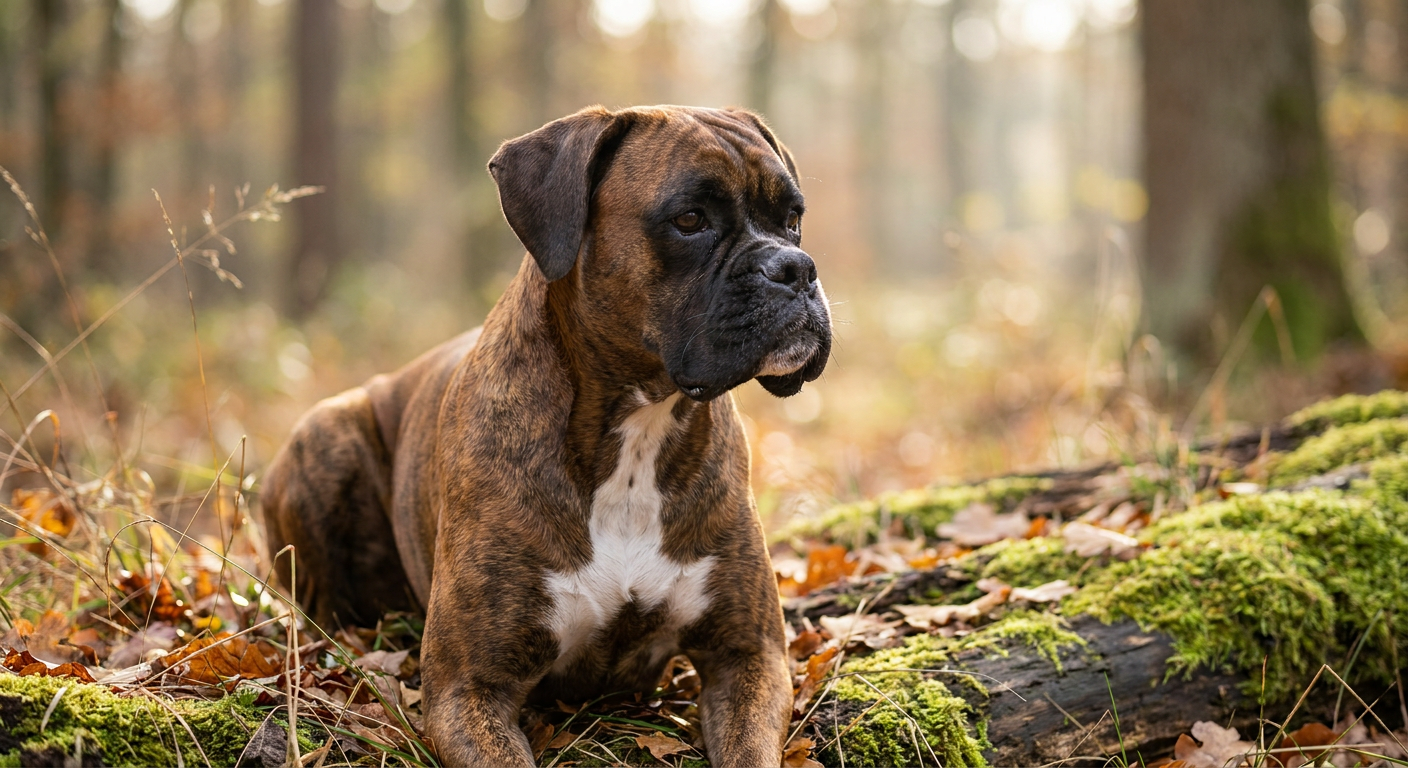
Boxers descend from the now-extinct Bullenbeisser, German hunting dogs that gripped large game. Late-1800s breeders refined the modern Boxer for guard and police work. They served extensively as message and pack dogs in both World Wars. AKC recognized the breed in 1904.
Temperament & Personality
Energetic, playful, bright, devoted. Boxers stay puppy-like until age 4–5 and bond intensely with family. They are patient with children, often suspicious of strange dogs, and famously expressive (the 'Boxer kidney bean' wiggle).
Health Watchouts
Top conditions reported by AKC parent clubs, OFA, and the Merck Veterinary Manual. Discuss screening with your vet — especially before breeding or insuring.
Cancer (especially mast cell, lymphoma, brain)
~38% lifetime riskBoxers have one of the highest cancer rates of any breed.
Screening: No effective early screen; lean body condition reduces risk
Boxer cardiomyopathy (ARVC)
Boxer-specificInherited heart disease causing arrhythmia and sudden death.
Screening: DNA test (PDP1 gene); annual Holter monitor in adults
Aortic stenosis
Inherited cardiac defectNarrowing of the aorta; varies from mild to fatal.
Screening: Cardiac auscultation + echo of breeding stock
Hip dysplasia
~12%Common large-breed orthopedic disease.
Screening: OFA evaluation of parents
Bloat (GDV)
Deep-chested breed at riskStomach twist — emergency.
Screening: Discuss prophylactic gastropexy
Exercise Needs
Boxers need 60–120 minutes of daily exercise — they're athletes who get destructive without it.
- Daily long walks or jogs
- Fetch and tug
- Agility, flyball, dock diving
- Hiking
- Structured dog park play with familiar dogs
- Avoid heat — Boxers are mildly brachycephalic
Nutrition
Daily calories: Adult: 1,300–1,800 kcal/day. Large-breed puppy formula until 15 months.
Two measured meals daily. Slow-feeders. Avoid exercise within an hour of eating.
Common allergens to watch: Chicken, Beef, Wheat.
⚠ Lean body condition reduces cancer and cardiac strain. Body condition 4–5/9.
Entertainment & Enrichment
Boxers need a job. Mental work tires them as effectively as physical exercise.
- Daily training (advanced obedience, tricks)
- Agility, flyball, rally
- Puzzle feeders
- Tug and structured play
- Dog sport classes
Grooming & Coat Care
Brush weekly with a rubber curry. Bathe every 6–8 weeks. Wipe facial folds weekly. Trim nails every 3–4 weeks. Boxers shed moderately but uniformly year-round.
Training
Trainable but exuberant. Boxers are smart and food-motivated; the challenge is harnessing their energy. Start puppy class at 8–10 weeks and continue intermediate obedience. Jumping greetings are the #1 issue — train an alternate behavior early.
Cost of Ownership
Lifetime cost depends on size, lifespan, and health risks. Try our Lifetime Cost Calculator →
Cost band for Boxer: high.
How insurance, vet care & grooming connect for the Boxer
These three costs move together. The Boxer’s coat, energy, and breed-specific health watchouts shape each one — here’s how they line up.
Insurance band
Brachycephalic or giant-breed risk profile
Vet service load
High activity raises orthopedic & injury visits
Grooming demand
Low-maintenance coat — monthly bath and brush
Estimated monthly spend (typical adult)
Insurance
$85
Routine vet
$60
Grooming
$45
Combined estimate
~$190/mo(±20%, US averages)
* Estimates derived from breed traits (coat, energy, health watchouts, lifespan). Actual costs vary by location, age, and provider.
Living Situation Fit
House with yard ideal. Apartments work only with serious daily exercise commitment. Boxers are heat-intolerant (mildly brachycephalic) and need climate control in summer. They are velcro dogs.
Choosing a Puppy
Choose breeders who DNA-test for ARVC, OFA-screen hips and hearts, and provide Holter monitor results on parents. Avoid 'white' Boxers from non-screening breeders (associated deafness). American Boxer Rescue and Boxer Rebound have many adults available.
Frequently Asked Questions
Are Boxers good family dogs?
Yes — Boxers are famously patient with children and devoted to family. They need committed daily exercise (60+ minutes) and don't tolerate being left alone for long periods.
How long do Boxers live?
Average lifespan is 10–12 years. Cancer and cardiomyopathy are the leading causes of death. Lean body condition, parent health screening (especially DNA testing for ARVC) and annual cardiac monitoring extend lifespan.
Do Boxers drool?
Mildly — much less than Saint Bernards or Mastiffs. Boxers drool when excited, hot or near food, but day-to-day are relatively dry-mouthed.
Are Boxers hypoallergenic?
No. Boxers shed moderately year-round and produce dander like most breeds. Allergy sufferers should consider Standard Poodles or Bichon Frises.