History & Origin
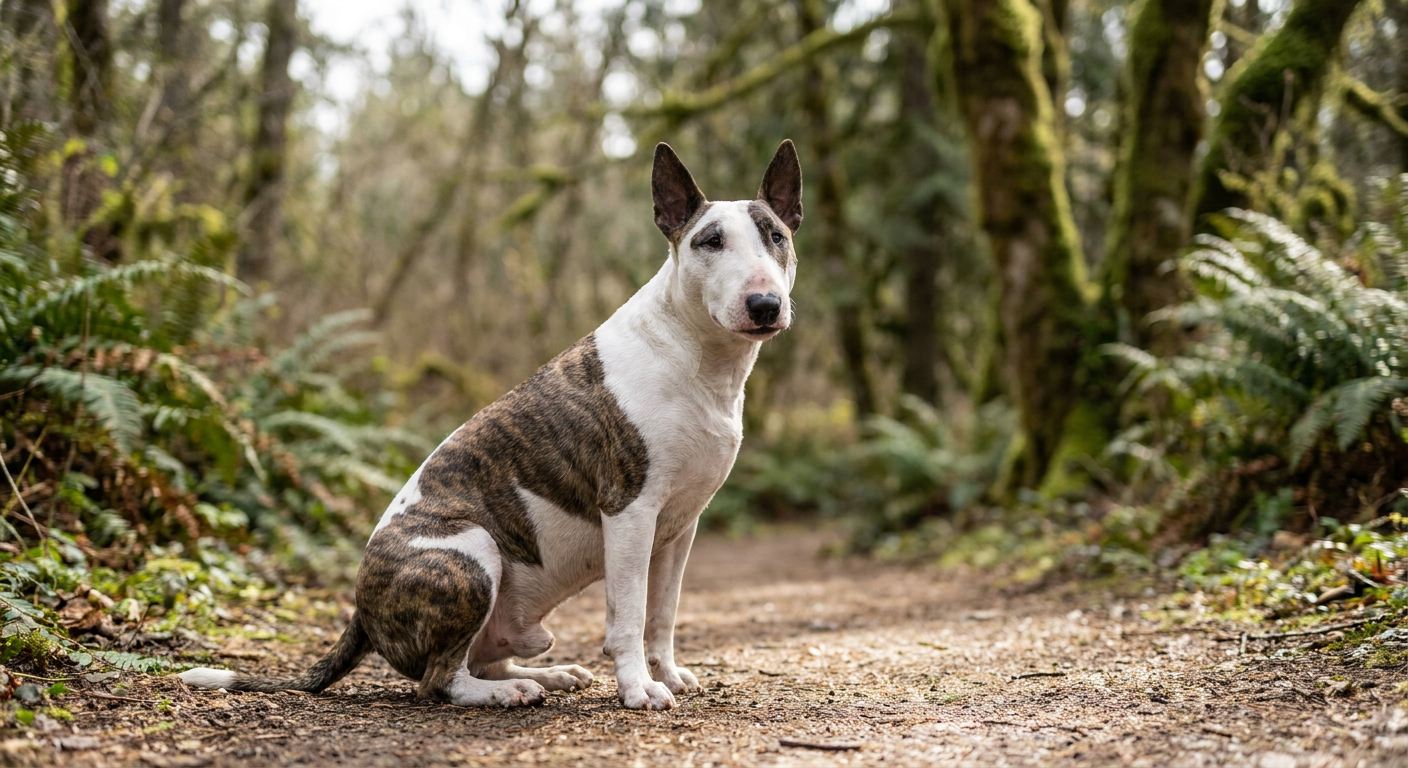
Originating in 19th-century England, the Bull Terrier was crafted from the Bulldog and old English Terrier by breeders seeking to create a tenacious but gentlemanly competitor for the show ring, rather than the fighting pits of its ancestors. James Hinks of Birmingham is credited with developing the modern, refined "White Cavalier" type in the 1860s, distinguished by its striking white coat and unique head shape. The breed was later developed in colored varieties as well. The American Kennel Club first recognized the Bull Terrier in 1885, where it has since been celebrated for its one-of-a-kind appearance and spirited character.
Temperament & Personality
Bull Terriers are a study in contrasts. They are playful, charming, and deeply affectionate with their families, often with a mischievous and clownish streak. However, they are also quintessential terriers: independent, stubborn, and fearless. This bravery can manifest as a high prey drive and potential for conflict with other dogs, particularly of the same sex. Their power and determination mean they require an owner who can provide firm, fair leadership and consistent boundaries. They are not recommended for timid or first-time dog owners.
Health Watchouts
Top conditions reported by AKC parent clubs, OFA, and the Merck Veterinary Manual. Discuss screening with your vet — especially before breeding or insuring.
Hereditary Nephritis (Kidney Disease)
CommonAn inherited, progressive and fatal kidney disease that typically appears in early adulthood. It leads to kidney failure.
Screening: Annual urinalysis to check UPC (urine protein:creatinine ratio). A DNA test for a linked PKD1 mutation can identify carriers. Responsible breeders screen all breeding stock.
Congenital Deafness
Common (10.2% unilateral or bilateral in the UK per RVC)Bull Terriers, particularly all-white individuals, are prone to inherited deafness, which can affect one or both ears. It is present from birth.
Screening: The Brainstem Auditory Evoked Response (BAER) test should be performed on all puppies before they go to new homes. This is the only reliable method for diagnosing deafness.
Cardiac Disease (Subaortic Stenosis and Mitral Valve Dysplasia)
CommonThese conditions involve either a narrowing of the outflow from the heart (SAS) or a malformation of a key heart valve (MVD), leading to murmurs, exercise intolerance, and potential heart failure.
Screening: An OFA cardiac evaluation, ideally via an echocardiogram performed by a board-certified veterinary cardiologist, is recommended for all breeding animals.
Patellar Luxation
Moderately Common (~3% abnormal per OFA)The kneecap (patella) dislocates from its normal position, causing limping, pain, and predisposing the dog to arthritis. Severe cases require surgical correction.
Screening: A veterinary orthopedic examination of the knees. OFA certification is recommended for breeding stock.
Lethal Acrodermatitis (LAD)
RareA severe, inherited immunodeficiency disorder causing severe skin lesions on the feet and face, poor growth, and recurrent infections. It is ultimately fatal.
Screening: A mandatory DNA test for all breeding animals. Reputable breeders will be able to provide proof that their dogs are clear of this recessive gene.
Exercise Needs
Bull Terriers have a robust energy level that requires a structured outlet. Aim for 45-60 minutes of varied activity per day. Due to their potential for dog-selectiveness, exercise should be closely supervised. On-leash walks, running in a securely fenced yard, and structured games are safer than dog parks. Their intelligence demands mental exercise just as much as physical.
- Briskwalking/jogging on leash
- Flirt pole sessions
- Agility courses
- Supervised play in a securely fenced yard
- Scent work
Nutrition
Daily calories: 1100-1800
Feed a high-quality, AAFCO-approved commercial diet twice daily rather than free-feeding. Using puzzle feeders or slow-feed bowls can help satisfy their active minds and prevent bloat. Always measure meals. Water should be available at all times.
Common allergens to watch: Skin allergies are common. While any ingredient can be a trigger, the most frequent culprits in dogs are proteins like chicken and beef. A formal food elimination trial guided by your veterinarian is the only way to diagnose a true food allergy., environmental allergens.
⚠ This breed is prone to obesity, which puts severe stress on their joints and cardiovascular system. Monitor their body condition score regularly—you should be able to feel their ribs easily under a thin layer of fat, and they should have a visible waist.
Entertainment & Enrichment
A bored Bull Terrier is a destructive Bull Terrier. Mental stimulation is non-negotiable to prevent chewing, digging, and other problem behaviors. Their powerful jaws require durable, size-appropriate toys. Rotate toys to maintain interest and engage them daily in structured activities.
- Durable chew toys (e.g., Kong, GoughNuts)
- Puzzle feeders and snuffle mats
- Hide-and-seek with toys or treats
- Learning new cues and tricks
- "Find it" scent games
Grooming & Coat Care
The short, flat coat is low-maintenance, requiring only a weekly brushing with a rubber curry brush or hound glove to remove dead hair and distribute skin oils. Shedding is moderate year-round, with heavier sheds seasonally. Nails should be trimmed every 3-4 weeks. Regular dental brushing and professional cleanings are vital for oral health. Check ears weekly for signs of irritation or infection.
Training
Training a Bull Terrier is an exercise in patience and consistency. They are intelligent but incredibly stubborn and independent. Start socialization and obedience training the day your puppy comes home. Use positive reinforcement techniques, but be firm and unwavering with rules. Due to their strength and potential for dog-to-dog conflict, enrolling in puppy and adult obedience classes is strongly recommended to ensure a well-mannered canine citizen.
Cost of Ownership
Lifetime cost depends on size, lifespan, and health risks. Try our Lifetime Cost Calculator →
Cost band for Bull Terrier: medium.
How insurance, vet care & grooming connect for the Bull Terrier
These three costs move together. The Bull Terrier’s coat, energy, and breed-specific health watchouts shape each one — here’s how they line up.
Insurance band
Common hereditary conditions raise claim odds
Vet service load
High activity raises orthopedic & injury visits
Grooming demand
Low-maintenance coat — monthly bath and brush
Estimated monthly spend (typical adult)
Insurance
$85
Routine vet
$50
Grooming
$45
Combined estimate
~$180/mo(±20%, US averages)
* Estimates derived from breed traits (coat, energy, health watchouts, lifespan). Actual costs vary by location, age, and provider.
Living Situation Fit
The ideal Bull Terrier owner is patient, active, and has a great sense of humor balanced by a deep understanding of dog behavior. This breed thrives in a home where boundaries are clear and training is a part of daily life. They need a securely fenced yard and an owner who is prepared to manage their interactions with other animals carefully. They are not a good fit for passive owners or multi-dog households with existing conflicts.
Choosing a Puppy
Choosing a Bull Terrier puppy requires rigorous due diligence. The number one priority is finding a breeder who performs ALL recommended health screenings and is transparent with the results. This includes BAER testing for hearing, OFA/PennHIP for joints, and cardiac and kidney evaluations. Ask to see proof of DNA testing for Lethal Acrodermatitis (LAD). A responsible breeder will also socialize their puppies from birth and ask you just as many questions as you ask them.
Frequently Asked Questions
Are Bull Terriers good with children?
A well-socialized Bull Terrier can be a loyal and playful companion for children. However, due to their strength and rambunctious nature, all interactions must be supervised. They are best suited for homes with older, dog-savvy children who understand how to interact respectfully with a powerful animal.
Do Bull Terriers have a 'locking jaw'?
No, this is a pervasive and dangerous myth. The jaw structure of a Bull Terrier is anatomically the same as any other dog. They do not have a special 'locking' mechanism. What they do possess is tremendous jaw strength and a tenacious, terrier-like determination when they bite onto something.
Why is the Bull Terrier's head shaped like that?
The iconic 'egg-shaped' head, known as a 'downface,' is the breed's most unique feature. It was selectively bred for this trait, starting in the late 19th century, for a distinct look in the show ring. The head should be smooth and full, without hollows or indentations.
What is the difference between a Bull Terrier and a Miniature Bull Terrier?
The only official difference is size. The Bull Terrier has no height or weight restrictions, while the Miniature Bull Terrier has a height limit of 10 to 14 inches and a weight proportional to their height. They are considered separate breeds by the AKC, but share the same history, temperament, and health concerns.