History & Origin
The breed likely descended from large African hairless dogs that were downsized by the Chinese and used as shipboard ratters. Sailors traded them globally, which is how they arrived in South and Central America. They were officially recognized by the AKC in 1991.
Temperament & Personality
Affectionate, alert, and intensely devoted to their family. They are known for being exceptionally gentle and cat-like in their movements. While social with their owners, they can be wary of strangers and require early socialization to build confidence.
Health Watchouts
Top conditions reported by AKC parent clubs, OFA, and the Merck Veterinary Manual. Discuss screening with your vet — especially before breeding or insuring.
Primary Lens Luxation (PLL)
High in the breed typeA painful condition where the lens of the eye shifts, potentially causing glaucoma and blindness.
Screening: DNA Test
Progressive Retinal Atrophy (PRA-prcd)
CommonA degenerative eye disease that leads to permanent blindness.
Screening: DNA Test, CAER exam
Patellar Luxation
ModerateThe kneecap slips out of its groove, causing lameness or a 'hopping' gait.
Screening: Physical Exam (OFA)
Legg-Calve-Perthes Disease
Low/ModerateLegg-Calve-Perthes occurs when the blood supply to the head of the femur is interrupted, causing hip joint disintegration.
Screening: Radiographs (OFA)
Exercise Needs
Moderate daily exercise is required to maintain a healthy weight and mental well-being, though they are largely indoor dogs.
- Daily walks on soft surfaces
- Short bursts of indoor play
- Basic agility or rally training
- Supervised outdoor sunbathing with protection
Nutrition
Daily calories: 250-400 kcal/day depending on activity level
Frequent small meals are better for their metabolism. Monitor for dental issues that may make hard kibble difficult.
Common allergens to watch: Chicken, Beef, Dairy.
⚠ Even one pound of excess weight puts significant strain on their small joints.
Entertainment & Enrichment
Mental stimulation is vital for this intelligent breed; they enjoy problem-solving and activities that involve close interaction with their owners.
- Heated indoor scent work games
- Squeaky soft toy fetch
- Obstacle courses using household furniture
- Teaching complex trick sequences
Grooming & Coat Care
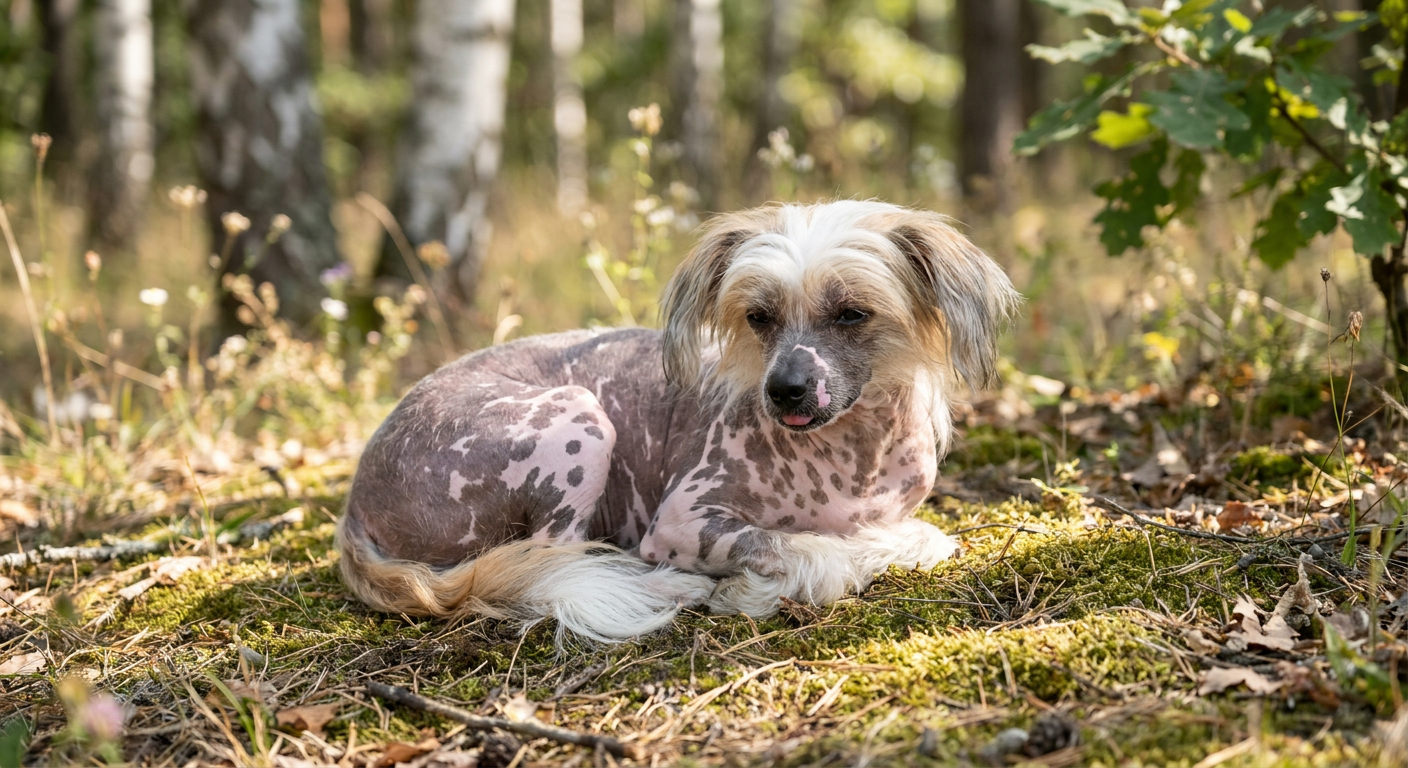
Hairless: Body requires weekly bathing and daily moisturizing. Powderpuff: Daily brushing of the long double coat to prevent matting.
Training
Respond best to positive reinforcement and gentle handling; they are sensitive to harsh corrections. They excel in competitive obedience and agility due to their desire to please.
Cost of Ownership
Lifetime cost depends on size, lifespan, and health risks. Try our Lifetime Cost Calculator →
Cost band for Chinese Crested: medium.
How insurance, vet care & grooming connect for the Chinese Crested
These three costs move together. The Chinese Crested’s coat, energy, and breed-specific health watchouts shape each one — here’s how they line up.
Insurance band
Common hereditary conditions raise claim odds
Vet service load
Several conditions worth annual screening
Grooming demand
Professional clipping every 6–8 weeks
Estimated monthly spend (typical adult)
Insurance
$75
Routine vet
$45
Grooming
$60
Combined estimate
~$180/mo(±20%, US averages)
* Estimates derived from breed traits (coat, energy, health watchouts, lifespan). Actual costs vary by location, age, and provider.
Living Situation Fit
Ideally suited for apartments, provided they are kept warm with sweaters in winter. They require constant companionship and should not be left outdoors unattended due to skin sensitivity.
Choosing a Puppy
Ensure the breeder screens for PLL and PRA. Hairless varieties are prone to skin issues and missing teeth, while the Powderpuff has a full set of teeth and a double coat; choose the variety that best fits your grooming capacity.
Frequently Asked Questions
Do they need special skin care?
Yes, the hairless variety requires sunscreen for outdoor time and regular bathing with high-quality cleansers and moisturizers to prevent blackheads and acne.
Why does my hairless dog have missing teeth?
The hairless gene is physically linked to missing or abnormally shaped teeth (primitive mouth); this is a known trait for the variety. Powderpuffs have normal dentition.
Are they fragile lap dogs?
While very sensitive to cold, they are active and athletic. They are known 'Velcro dogs' who prefer to be with their humans at all times.