History & Origin
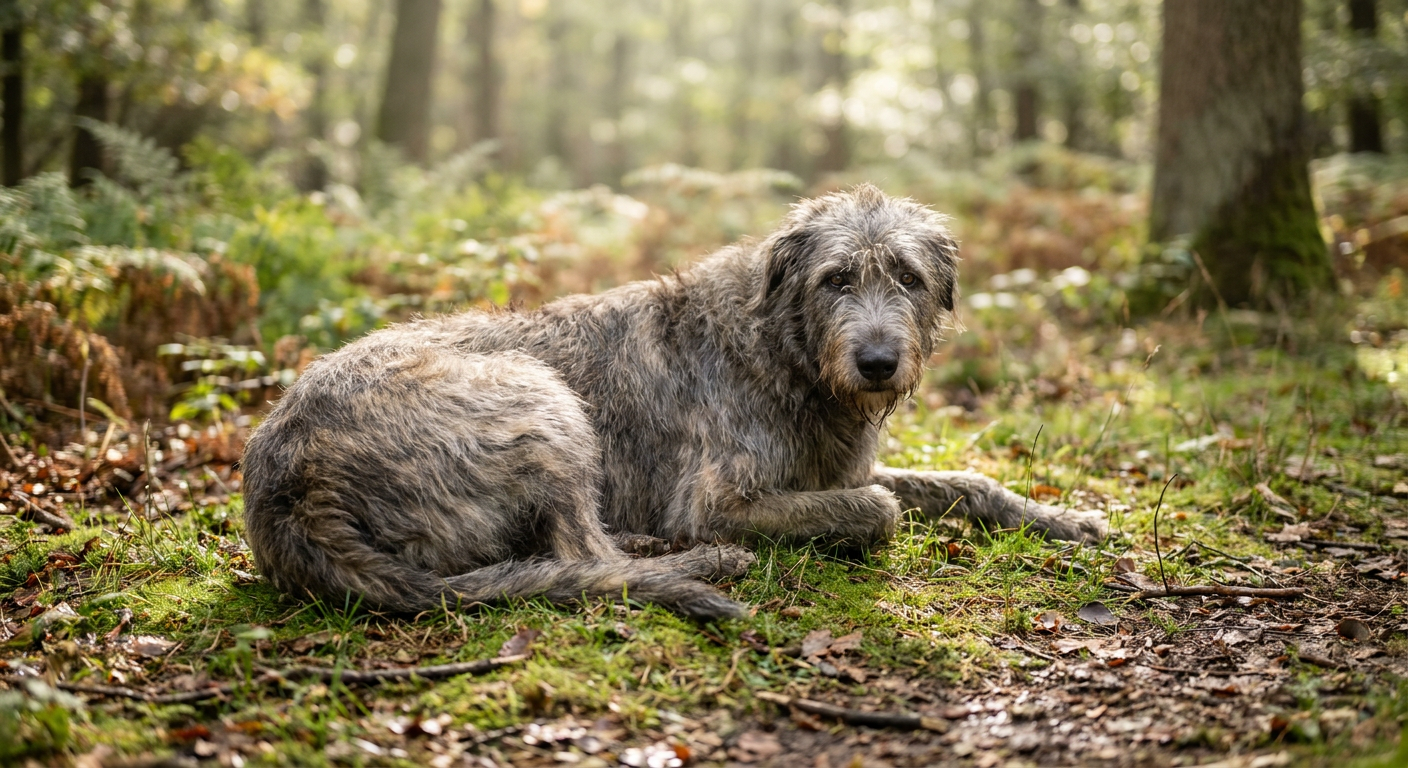
Originating in antiquity, these hounds were used by the Celts to hunt wolves and Irish elk. By the 1800s, the breed nearly became extinct following the disappearance of wolves in Ireland but was revived by Captain George Augustus Graham in the 1860s. They were historically esteemed as gifts to Roman consuls and European royalty.
Temperament & Personality
Characterized as 'gentle giants,' they are remarkably calm, sensitive, and easygoing indoors. While they possess a strong prey drive outdoors, they are patient and thoughtful companions who form deep bonds with their families. They are generally courageous but lack aggression, often described as 'lambs at home, lions in the chase.'
Health Watchouts
Top conditions reported by AKC parent clubs, OFA, and the Merck Veterinary Manual. Discuss screening with your vet — especially before breeding or insuring.
Gastric Dilatation-Volvulus (Bloat)
HighA life-threatening twisting of the stomach common in deep-chested breeds.
Screening: Emergency clinical diagnosis; preventive gastropexy recommended.
Dilated Cardiomyopathy (DCM)
CommonA weakening of the heart muscle that leads to heart failure.
Screening: Annual EKG and Echocardiogram.
Hip Dysplasia
ModerateMalformation of the hip joints leading to arthritis.
Screening: OFA or PennHIP X-rays.
Portosystemic Shunt (Liver Shunt)
ModerateAn abnormal blood vessel that bypasses the liver, preventing toxin filtration.
Screening: Bile acid testing in puppies.
Exercise Needs
They require moderate daily exercise to maintain muscle tone but are prone to overexertion as puppies.
- Long walks on soft turf
- Fenced-in free roaming
- Low-impact hiking
- Confidence-building scent games
Nutrition
Daily calories: 2500 - 3500 (highly variable by size and activity)
Use a large-breed specific formula; split daily intake into two or three smaller meals to reduce bloat risk.
Common allergens to watch: Chicken, Beef, Grains (occasional).
⚠ Excess weight is extremely hard on their joints; a lean body condition is critical for longevity.
Entertainment & Enrichment
Mental stimulation should focus on their sight-hound heritage without overtaxing their joints.
- Scent work games
- Low-impact lure coursing
- Gentle off-leash exploration in fenced areas
- Large-scale puzzle feeders
Grooming & Coat Care
Weekly brushing with a slicker brush and occasional hand-stripping to remove dead hair and maintain coat texture.
Training
Responds best to positive reinforcement and consistency; harsh corrections can crush their sensitive spirit. Early socialization is vital to manage their size and inherent prey drive effectively.
Cost of Ownership
Lifetime cost depends on size, lifespan, and health risks. Try our Lifetime Cost Calculator →
Cost band for Irish Wolfhound: high.
How insurance, vet care & grooming connect for the Irish Wolfhound
These three costs move together. The Irish Wolfhound’s coat, energy, and breed-specific health watchouts shape each one — here’s how they line up.
Insurance band
Common hereditary conditions raise claim odds
Vet service load
Several conditions worth annual screening
Grooming demand
Long coat tangles without weekly grooming
Estimated monthly spend (typical adult)
Insurance
$85
Routine vet
$50
Grooming
$60
Combined estimate
~$195/mo(±20%, US averages)
* Estimates derived from breed traits (coat, energy, health watchouts, lifespan). Actual costs vary by location, age, and provider.
Living Situation Fit
Requires a large home with a securely fenced yard; they are not suited for apartment living or tie-outs. They prefer soft surfaces for resting to prevent pressure sores on their joints.
Choosing a Puppy
Prioritize breeders who screen for heart health and liver shunt. Avoid puppies from 'giant' specialty breeders who do not provide OFA certifications for parents.
Frequently Asked Questions
Are Irish Wolfhounds good guard dogs?
No. While their size is intimidating, they are generally too friendly and docile to be effective guard dogs.
Do Irish Wolfhounds live a long time?
No, their lifespan is unfortunately short, typically ranging from 6 to 10 years.
Are they good with small children?
While calm, their massive size makes them prone to accidentally knocking over toddlers, and their high prey drive may be an issue with very small pets.