History & Origin
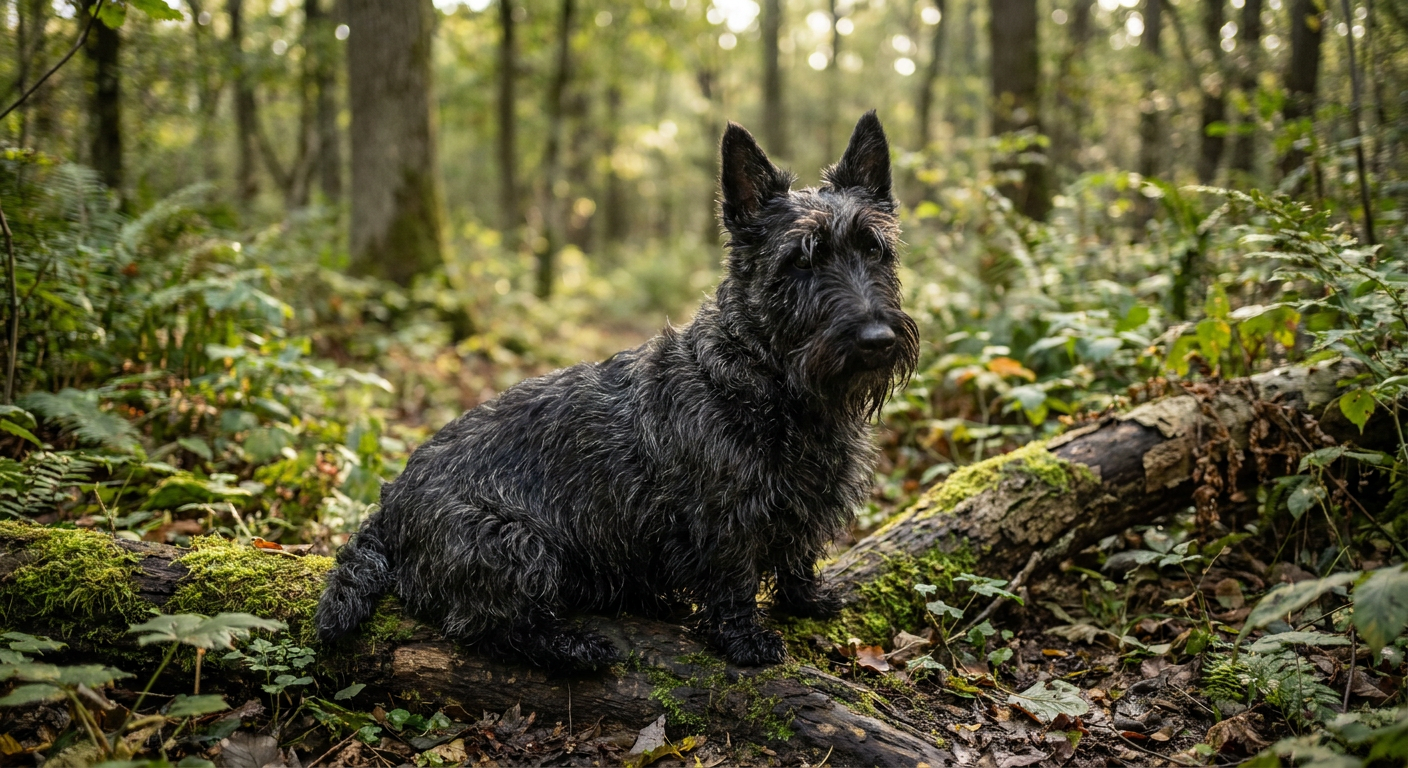
Originating from the Scottish Highlands, the Scottish Terrier was one of several terriers bred to hunt vermin like badgers and foxes on the rugged terrain. Initially grouped under the name "Skye Terriers," the Scottie was developed as a distinct breed in the late 19th century, first exhibited under its own class in 1860. The breed standard was established in the 1880s, and the American Kennel Club (AKC) officially recognized the breed in 1885. The Scottie's dignified and iconic silhouette made it a popular companion, most famously embodied by President Franklin D. Roosevelt's dog, Fala.
Temperament & Personality
The quintessential terrier: feisty, independent, and confident, with a "diehard" spirit. Scotties are profoundly loyal to their families but can be aloof and cautious around strangers, making them excellent natural watchdogs. Their intelligence is often paired with a stubborn streak, requiring a patient but firm hand in training. A strong prey drive is instinctual, so a secure leash and fence are mandatory. They are sensitive dogs that bond deeply with their people.
Health Watchouts
Top conditions reported by AKC parent clubs, OFA, and the Merck Veterinary Manual. Discuss screening with your vet — especially before breeding or insuring.
Transitional Cell Carcinoma (Bladder Cancer)
18-20x higher risk than other breeds.An aggressive cancer of the urinary bladder. Clinical signs include straining to urinate, bloody urine, and increased frequency of urination.
Screening: Veterinarians may recommend periodic urinalysis or the BRAF urine test for early detection in at-risk dogs.
Craniomandibular Osteopathy (CMO)
CommonA painful, non-cancerous proliferation of bone in the skull and jaw of growing puppies (typically 3-8 months old), making it difficult to eat.
Screening: DNA tests are available and should be used by breeders to avoid producing affected puppies. Diagnosis is confirmed with radiographs.
Von Willebrand's Disease (vWD)
CommonAn inherited bleeding disorder caused by a deficiency in a specific clotting protein. Scotties are particularly susceptible to the severe Type III form.
Screening: A DNA test is available to screen breeding stock. A buccal mucosal bleeding time (BMBT) test may be recommended before any surgery.
Patellar Luxation
Common in small breeds.The kneecap dislocates or slips out of its normal position, causing lameness. It can range from mild to severe and may require surgery.
Screening: Orthopedic foundation for Animals (OFA) evaluation. A veterinarian can diagnose it with a physical exam.
Cushing's Disease (Hyperadrenocorticism)
Commonly reported predisposition.A condition where the adrenal glands produce excessive cortisol, leading to symptoms like increased thirst and urination, hair loss, and a 'pot-bellied' appearance.
Screening: Diagnosis is based on clinical signs and confirmed with blood tests like the ACTH stimulation test or low-dose dexamethasone suppression test.
Exercise Needs
Scotties have moderate energy levels and require daily exercise to stay healthy and mentally stimulated. Their short legs are not built for long-distance running, but they thrive on brisk walks and vigorous play sessions. A securely fenced yard is crucial for off-leash play due to their strong prey drive.
- Brisk daily walks
- Fetch in a fenced yard
- Puzzle toys
- Earthdog trials
Nutrition
Daily calories: 450-600
Feed a high-quality, AAFCO-compliant commercial dog food. Portion control is critical, as obesity puts significant strain on their short-legged frame. Meals should be given twice daily, not free-fed, to monitor intake.
Common allergens to watch: Beef, Dairy, Wheat.
⚠ Scotties are prone to obesity. A lean body condition is vital for long-term health, especially for protecting their joints and spine. An owner should be able to feel the ribs under a light layer of fat but not see them.
Entertainment & Enrichment
Their sharp intelligence requires daily mental exercise to prevent boredom, which can lead to barking and digging. Engaging their mind is as important as exercising their body. Rotational puzzle toys and scent-based games are highly effective.
- Food puzzle toys
- Scent work games ("find the treat")
- A designated digging pit in the yard
- Obedience or trick training sessions
- Safe exploration of new neighborhood routes
Grooming & Coat Care
The Scottie has a high-maintenance double coat. The hard, wiry topcoat must be brushed several times a week to prevent matting and hand-stripped a few times a year to maintain its texture and health. Clipping is an alternative for pet trims but will soften the coat. Regular nail trims and ear cleaning are essential.
Training
Training a Scottie requires patience, consistency, and a good sense of humor. They are intelligent but independent and stubborn. Positive reinforcement techniques work best. Early and extensive socialization is crucial to ensure they are well-behaved around strangers and other animals. Crate training is highly recommended for housebreaking and safety.
Cost of Ownership
Lifetime cost depends on size, lifespan, and health risks. Try our Lifetime Cost Calculator →
Cost band for Scottish Terrier: medium.
How insurance, vet care & grooming connect for the Scottish Terrier
These three costs move together. The Scottish Terrier’s coat, energy, and breed-specific health watchouts shape each one — here’s how they line up.
Insurance band
Common hereditary conditions raise claim odds
Vet service load
Several conditions worth annual screening
Grooming demand
Professional clipping every 6–8 weeks
Estimated monthly spend (typical adult)
Insurance
$75
Routine vet
$45
Grooming
$45
Combined estimate
~$165/mo(±20%, US averages)
* Estimates derived from breed traits (coat, energy, health watchouts, lifespan). Actual costs vary by location, age, and provider.
Living Situation Fit
A Scottish Terrier is best suited for an individual or family who appreciates their unique, self-assured personality and is prepared for the grooming commitment. A home with a securely fenced yard is ideal. While they can adapt to apartment living with sufficient daily exercise, their tendency to bark might be an issue. They are best with older children.
Choosing a Puppy
Select a breeder who performs and provides documentation for genetic health screenings, including DNA tests for von Willebrand’s Disease (vWD) and Craniomandibular Osteopathy (CMO), and OFA certifications for patellas. A responsible breeder will raise puppies in a clean, stimulating home environment and will be able to speak at length about the breed’s health and temperament.
Frequently Asked Questions
Are Scottish Terriers good for first-time owners?
Generally, no. Their intelligence combined with a stubborn, independent nature can be challenging for a novice owner. They require consistent training and a confident leader who understands the terrier personality.
Do Scotties bark excessively?
They can be very vocal. Bred as watchdogs, they are quick to alert their family to anything they deem suspicious with a surprisingly deep and loud bark. Training can help manage this tendency.
How are they with other pets?
Due to their strong prey drive, they may not be suitable for homes with cats or other small animals unless raised with them from puppyhood. They can also be scrappy with other dogs, so careful, supervised introductions are necessary.
Are Scottish Terrier's hypoallergenic?
They are considered a hypoallergenic breed because they shed very little. However, they still produce dander, saliva, and urine, which are the true sources of pet allergens. They may be suitable for people with mild allergies, but are not 100% allergen-free.