History & Origin
Ancient Chinese breed used for hunting, herding and guarding. Nearly extinct after the Communist Revolution; revived from a handful of Hong Kong dogs in the 1970s. AKC recognition in 1992.
Temperament & Personality
Calm, dignified, devoted to family. Reserved with strangers. Strong-willed; not for first-time owners.
Health Watchouts
Top conditions reported by AKC parent clubs, OFA, and the Merck Veterinary Manual. Discuss screening with your vet — especially before breeding or insuring.
Familial Shar-Pei fever
CommonInherited inflammatory disorder causing fevers and joint swelling, can lead to amyloidosis.
Screening: Watch for unexplained fevers; vet evaluation
Entropion
UniversalEyelid rolling inward causing corneal damage.
Screening: Surgical correction often needed in puppies
Skin fold infections
CommonWrinkles trap moisture and bacteria.
Screening: Daily wrinkle wiping; antiseptic if infected
Hip dysplasia
~20% (OFA)Joint malformation.
Screening: OFA hips
Hypothyroidism
CommonLow thyroid.
Screening: Annual T4/TSH
Exercise Needs
45–60 minutes daily — walks and gentle play.
- Daily walks
- Trick training
- Yard play
- Puzzle feeders
- Quiet companionship
Nutrition
Daily calories: Adult: 800–1,200 kcal.
Two meals daily. Many Shar-Pei have food allergies — single-protein, limited-ingredient diets often help.
Common allergens to watch: Chicken, Beef, Wheat, Corn.
⚠ Lean BCS critical to reduce skin and joint stress.
Entertainment & Enrichment
Calm, watchful companions.
- Trick training
- Puzzle feeders
- Tracking
- Quiet companionship
- Therapy work
Grooming & Coat Care
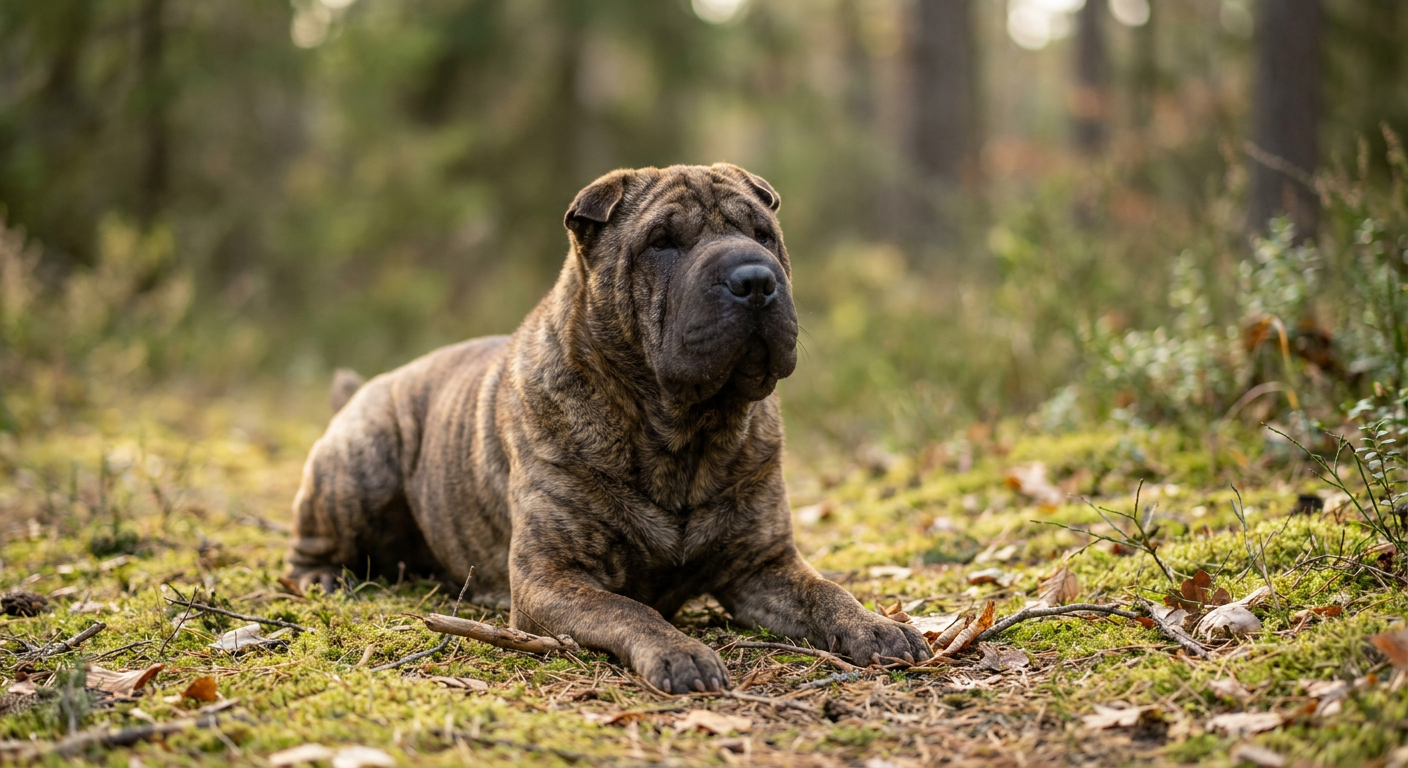
Brush weekly. Wipe wrinkles daily with damp cloth and dry thoroughly. Bathe every 4–6 weeks. Inspect ears weekly.
Training
Independent — positive reinforcement with patience. Early socialization is essential. Not for first-time owners.
Cost of Ownership
Lifetime cost depends on size, lifespan, and health risks. Try our Lifetime Cost Calculator →
Cost band for Chinese Shar-Pei: high.
How insurance, vet care & grooming connect for the Chinese Shar-Pei
These three costs move together. The Chinese Shar-Pei’s coat, energy, and breed-specific health watchouts shape each one — here’s how they line up.
Insurance band
Common hereditary conditions raise claim odds
Vet service load
Several conditions worth annual screening
Grooming demand
Low-maintenance coat — monthly bath and brush
Estimated monthly spend (typical adult)
Insurance
$85
Routine vet
$50
Grooming
$45
Combined estimate
~$180/mo(±20%, US averages)
* Estimates derived from breed traits (coat, energy, health watchouts, lifespan). Actual costs vary by location, age, and provider.
Living Situation Fit
House or apartment with daily walks. Best with experienced owners committed to ongoing health monitoring.
Choosing a Puppy
OFA hips, eye CERF (entropion exam), thyroid. Buy only from breeders who screen for Shar-Pei fever and prioritize traditional 'meatmouth' or 'bonemouth' conformation with manageable wrinkling.
Frequently Asked Questions
Do Shar-Pei have a lot of health problems?
Yes — they're predisposed to skin fold infections, eye issues (entropion), Shar-Pei fever syndrome, and allergies. Budget for higher vet costs and choose breeders who screen extensively.
How do you care for Shar-Pei wrinkles?
Wipe daily with a damp cloth and dry thoroughly to prevent yeast and bacterial infections. Severe folds may need vet-prescribed antiseptic wipes.
Are Shar-Pei aggressive?
Not inherently — they're naturally reserved with strangers and protective of family. Early socialization is essential to prevent fear-based reactivity.