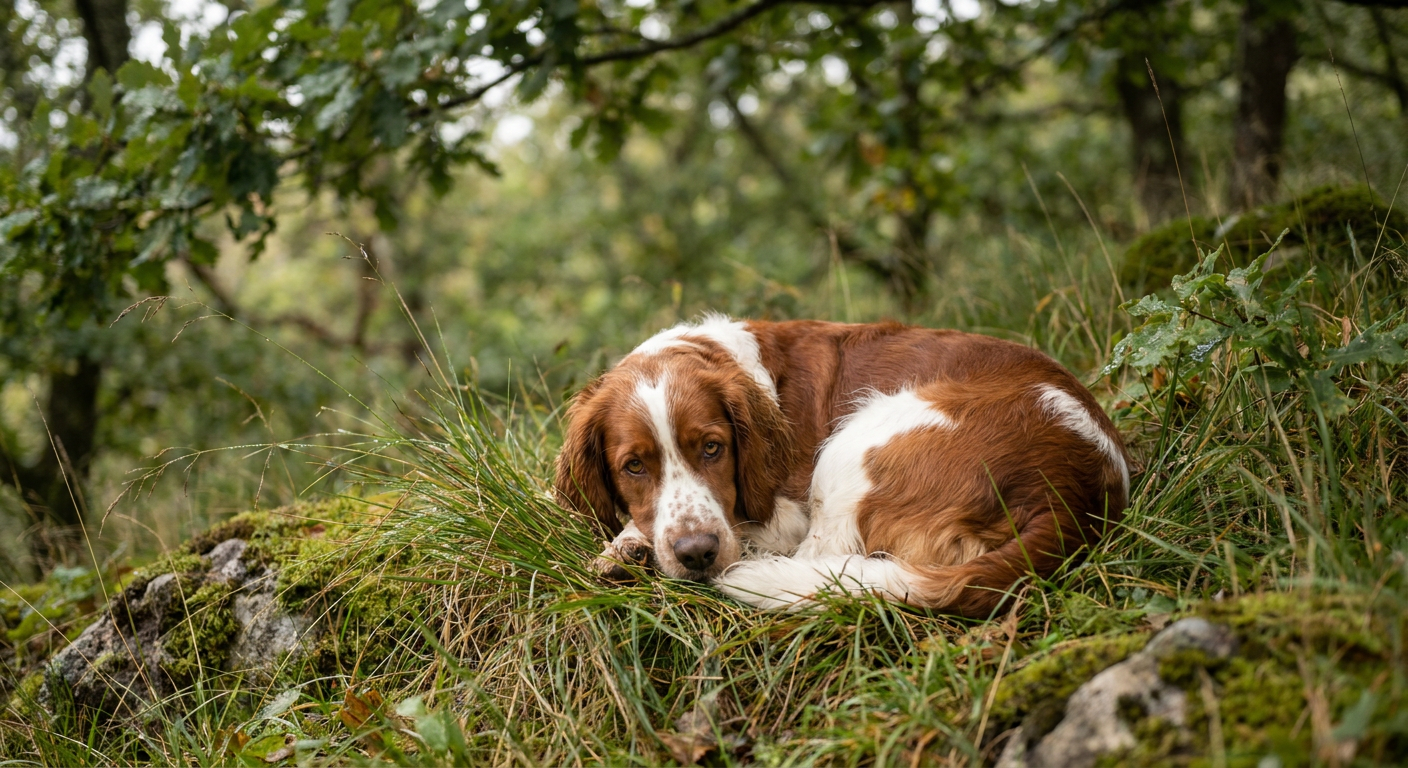
History & Origin
A distinct breed for centuries in Wales, they were originally used as versatile 'starting' dogs to spring game for hawks or nets. By the 1800s, they became popular upland gundogs, eventually gaining AKC recognition in 1906. Despite their antiquity, they remain less common than their English cousins.
Temperament & Personality
The Welsh Springer is loyal, affectionate, and famously devoted to its family, often following owners from room to room. They are generally more reserved with strangers than other spaniels but should remain steady and sensible. In the field, they are tireless, hard-driving workers with significant stamina and a strong desire to please.
Health Watchouts
Top conditions reported by AKC parent clubs, OFA, and the Merck Veterinary Manual. Discuss screening with your vet — especially before breeding or insuring.
Hip Dysplasia
CommonA genetic malformation of the hip joint that can lead to arthritis and mobility issues.
Screening: OFA or PennHip Radiographs
Hereditary Cataracts
ModerateAn inherited eye condition where the lens becomes opaque, potentially leading to blindness.
Screening: Annual CAER/OFA Eye Examination
Elbow Dysplasia
OccasionalAbnormal development of the elbow joint causing lameness and pain.
Screening: OFA Radiographs
Atopic Dermatitis (Allergies)
ModerateSensitivity to the environment or diet that can manifest as chronic ear infections or itchy skin.
Screening: Clinical dermatological assessment
Exercise Needs
A high-stamina sporting breed that requires significant daily physical activity to remain stable and calm indoors.
- Brisk daily hikes or jogs
- Swimming in safe bodies of water
- Off-leash play in secure areas
- Field trials or upland hunting practice
Nutrition
Daily calories: 1000-1300 kcal/day for active adults
Split meals into twice-daily feedings to prevent gastric upset; monitor intake closely as they are prone to obesity.
Common allergens to watch: Beef, Dairy, Wheat.
⚠ Moderate to High; their dense coat can hide weight gain, so use the finger test to feel for ribs.
Entertainment & Enrichment
This breed requires mental engagement to prevent destructive behaviors, specifically tasks that utilize their natural scenting and retrieving instincts.
- Scent work or nose-led foraging games
- Long-line decompression walks in nature
- Retrieve-based water activities
- Advanced trick training or rally obedience
Grooming & Coat Care
Weekly brushing is necessary to prevent mats in the feathering, with occasional trimming of the hair around the feet and ears.
Training
Highly trainable but sensitive; they respond best to positive reinforcement and clear, consistent boundaries rather than harsh corrections.
Cost of Ownership
Lifetime cost depends on size, lifespan, and health risks. Try our Lifetime Cost Calculator →
Cost band for Welsh Springer Spaniel: medium.
How insurance, vet care & grooming connect for the Welsh Springer Spaniel
These three costs move together. The Welsh Springer Spaniel’s coat, energy, and breed-specific health watchouts shape each one — here’s how they line up.
Insurance band
Common hereditary conditions raise claim odds
Vet service load
High activity raises orthopedic & injury visits
Grooming demand
Long coat tangles without weekly grooming
Estimated monthly spend (typical adult)
Insurance
$75
Routine vet
$50
Grooming
$60
Combined estimate
~$185/mo(±20%, US averages)
* Estimates derived from breed traits (coat, energy, health watchouts, lifespan). Actual costs vary by location, age, and provider.
Living Situation Fit
They thrive in homes with large, securely fenced yards and active owners who enjoy outdoor hobbies. This breed is not suited for sedentary lifestyles or long periods of isolation.
Choosing a Puppy
Prioritize breeders who provide OFA-documented hip, elbow, and eye clearances (CERF). Observation of the dam's temperament is crucial, as this breed should be reserved but never fearful or aggressive.
Frequently Asked Questions
How do they differ from English Springer Spaniels?
Welsh Springers are slightly smaller and come only in a distinctive red-and-white pattern, whereas English Springers are usually black-white or liver-white and are generally more outgoing with strangers.
Are they prone to separation anxiety?
They are famous for their 'Velcro' nature and may suffer from separation anxiety if left alone for extended periods without proper training.
Are they good with children?
While they are excellent family dogs, they are 'handier' than Labradors and are often more reserved with strangers, requiring early and frequent socialization.