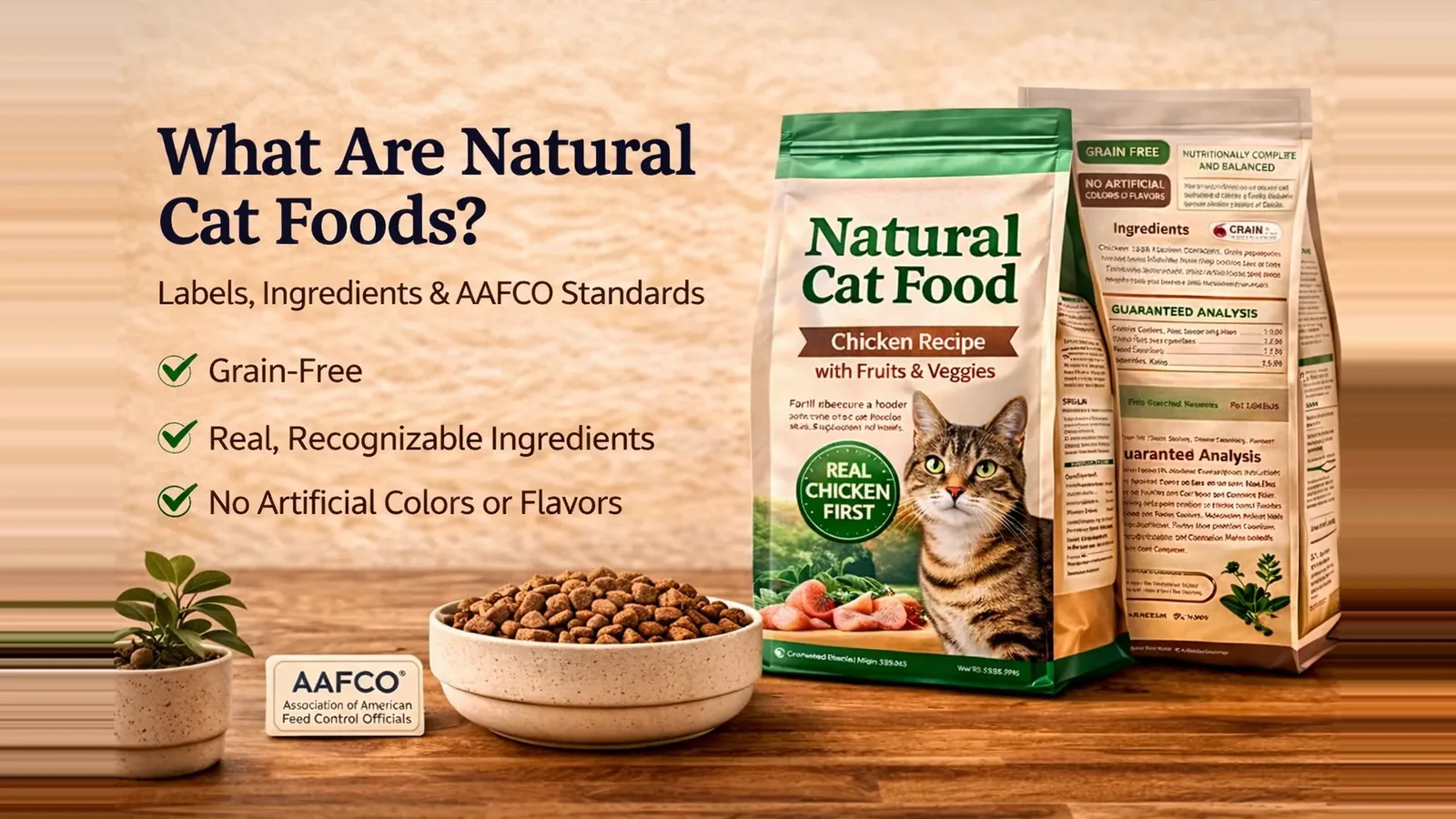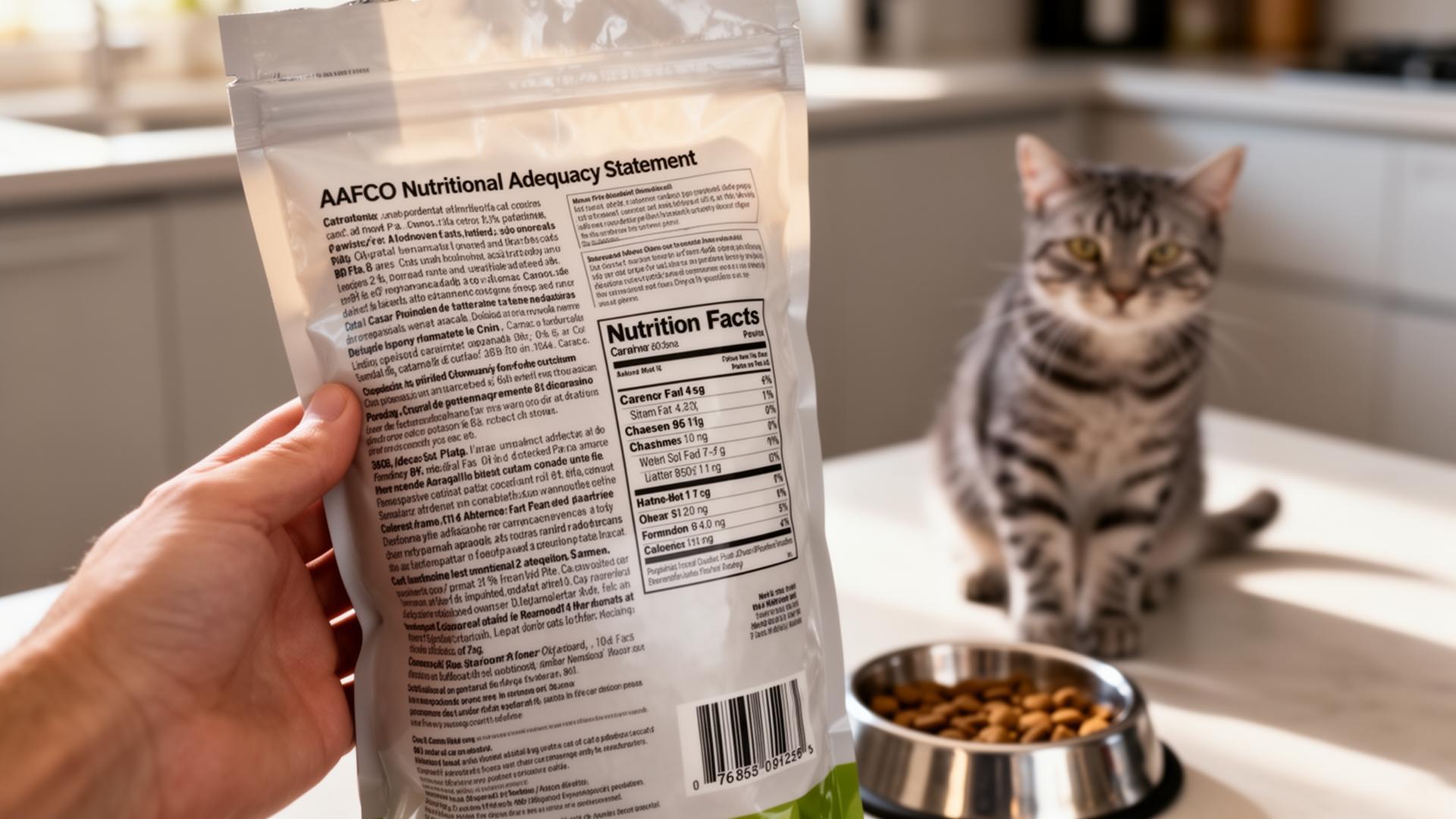
AAFCO is a non-regulatory body that defines minimum nutrient profiles for pet food and the wording manufacturers use to prove a recipe is "complete and balanced." To read a label correctly, find the AAFCO statement on the back panel, confirm it lists the right life stage, and check whether nutrient adequacy was proven by formulation or by an actual feeding trial.
What Is AAFCO and What Does It Actually Do?
The Association of American Feed Control Officials (AAFCO) is a non-profit organization made up of state, federal, and international feed regulators. It does not test, approve, certify, or inspect pet food. Instead, it publishes the model regulations, nutrient profiles, and ingredient definitions that the U.S. FDA Center for Veterinary Medicine and individual states then adopt and enforce.
In practice, that means AAFCO defines the rules and the FDA and state feed-control agencies do the policing. When a label says "formulated to meet the nutritional levels established by the AAFCO Cat Food Nutrient Profiles," it's telling you the recipe complies with those rules — but no one from AAFCO came to inspect the factory.
The Two AAFCO Statements You'll See on a Label
Every AAFCO-compliant pet food substantiates its "complete and balanced" claim in one of two ways. The wording matters:
| Statement Type | Typical Wording | What It Proves | Strength |
|---|---|---|---|
| Formulation | "…is formulated to meet the nutritional levels established by the AAFCO Cat Food Nutrient Profiles for [life stage]." | Recipe was calculated on paper to hit minimum nutrients | Baseline |
| Feeding trial | "Animal feeding tests using AAFCO procedures substantiate that [product] provides complete and balanced nutrition for [life stage]." | Real cats were fed the food for 26+ weeks and stayed healthy | Stronger |
| Family product | "…is comparable in nutritional adequacy to a product that has been substantiated using AAFCO feeding tests." | A nutritionally similar product in the same line passed a feeding trial | Moderate |
Feeding-trial substantiation is the gold standard because it tests real-world digestibility and bioavailability — things you can't capture by adding up nutrients in a spreadsheet.
AAFCO Life-Stage Profiles for Cats
AAFCO defines three feline life-stage profiles. There is no AAFCO "senior" profile — that's a marketing term used by individual brands.
- Growth and Reproduction — Kittens, pregnant queens, lactating queens. Highest protein, fat, calcium, and phosphorus minimums.
- Adult Maintenance — Healthy adult cats. Lower minimums than Growth.
- All Life Stages — Must meet the higher Growth/Reproduction standard so it's safe for kittens, pregnant queens, and adults alike. Often higher in calories than Adult Maintenance.
The "Intermittent or Supplemental Feeding" Warning
If a label says "This product is intended for intermittent or supplemental feeding only," it has not met any AAFCO complete-and-balanced standard. These foods (most plain meat toppers, broths, freeze-dried treats) cause nutrient deficiencies if fed as a sole diet for more than a few weeks. Use them as toppers, not meals.
How to Read the AAFCO Statement on a Real Label
Pick up any cat food bag and walk through this sequence:
- 1. Locate the statement — Back or side panel, near the feeding guidelines or guaranteed analysis. Usually small print.
- 2. Confirm it exists — No AAFCO statement at all? Don't feed as a sole diet.
- 3. Check the life stage — Match it to your cat (kitten = Growth; adult = Adult Maintenance or All Life Stages).
- 4. Check substantiation method — "Animal feeding tests" wording is stronger than "formulated to meet."
- 5. Watch for "intermittent or supplemental" — Treat-only product, not a meal.
Cat-Specific Nutrients AAFCO Requires
Because cats are obligate carnivores, AAFCO's feline nutrient profile includes several requirements that don't appear in dog food. This is the biological reason cats cannot live on dog food, even if the dog food is itself AAFCO-compliant.
| Nutrient | Why Cats Need It | Deficiency Risk |
|---|---|---|
| Taurine | Cats can't synthesize it from precursors | Dilated cardiomyopathy, retinal degeneration, blindness |
| Arachidonic acid | Required dietary fatty acid for cats | Skin and reproductive issues |
| Arginine | Critical for ammonia clearance after meals | Acute neurological symptoms within hours |
| Vitamin A (preformed) | Cats can't convert beta-carotene | Vision and skin disorders |
| Higher protein minimum | 26% min adult / 30% growth (vs 18%/22% for dogs) | Muscle wasting and immune dysfunction |
What AAFCO Does NOT Guarantee
This is where most pet owners are misled. The AAFCO statement is a nutritional adequacy floor — nothing more. It says nothing about:
- Ingredient quality — A food can technically hit AAFCO minimums using by-product meals, plant proteins, and synthetic vitamins.
- Sourcing or country of origin — AAFCO does not regulate where ingredients come from.
- Digestibility — Two foods with identical nutrient profiles can have very different real-world digestibility.
- Freshness or shelf life — Not part of nutrient adequacy testing.
- Processing safety — Recall history is a separate FDA matter.
The practical takeaway: treat the AAFCO statement as a non-negotiable starting filter, then use ingredient quality, manufacturer transparency, and your cat's response to the food to choose between AAFCO-compliant options. For a deeper look at what "high quality" actually means in practice, see our guide to the best diet for indoor cats.
AAFCO vs Human-Grade vs Organic vs Natural
These four label terms get conflated constantly. They mean very different things:
| Term | What It Actually Means | Who Defines/Enforces It |
|---|---|---|
| AAFCO complete & balanced | Meets minimum nutrient profile for the listed life stage | AAFCO defines / FDA + states enforce |
| Natural | No chemically synthesized ingredients except added vitamins/minerals | AAFCO-defined; FDA-enforced |
| Organic | Ingredients grown per USDA National Organic Program standards | USDA-certified |
| Human-grade | Every ingredient + the finished product made in a human-food-grade facility | FDA + AAFCO; very few products legally qualify |
For more on these distinctions in everyday products, see our guide to natural cat foods.
Red Flags on a Cat Food Label
Walk Away If You See…
- No AAFCO statement at all — The product hasn't substantiated nutritional adequacy.
- "For intermittent or supplemental feeding only" on a product marketed as a meal.
- Vague proteins — "Meat by-product," "animal digest," or "poultry meal" without species named.
- Wrong life stage — "Adult Maintenance" food fed to a kitten, or vice versa for extended periods.
- No manufacturer contact info — Reputable brands list a phone number or address you can use to ask about sourcing and recalls.
- Marketing terms substituting for AAFCO compliance — "Premium," "gourmet," "holistic," and "human-grade" mean nothing nutritionally without the AAFCO statement.
If you suspect your cat is reacting to a specific ingredient, see our guide on cat food sensitivities for elimination-diet protocols.
Related Guides
- Best Diet for Indoor Cats: Calories, Hydration & Weight Control
- Wet vs. Dry Cat Food: Which Is Better?
- Natural Cat Foods: AAFCO Labels & Brand Guide
- Cat Food Sensitivities: Signs, Testing & Diets
- How to Transition Cat Food Safely
References
- Official Publication 2024 — Cat Food Nutrient Profiles & Model Regulations — AAFCO
- Pet Food Labels — General — FDA Center for Veterinary Medicine
- 2021 AAHA/AAFP Nutritional Assessment Guidelines — AAHA / AAFP
- Feeding Your Cat — Cornell Feline Health Center
- WSAVA Global Nutrition Committee Guidelines (2021) — WSAVA