
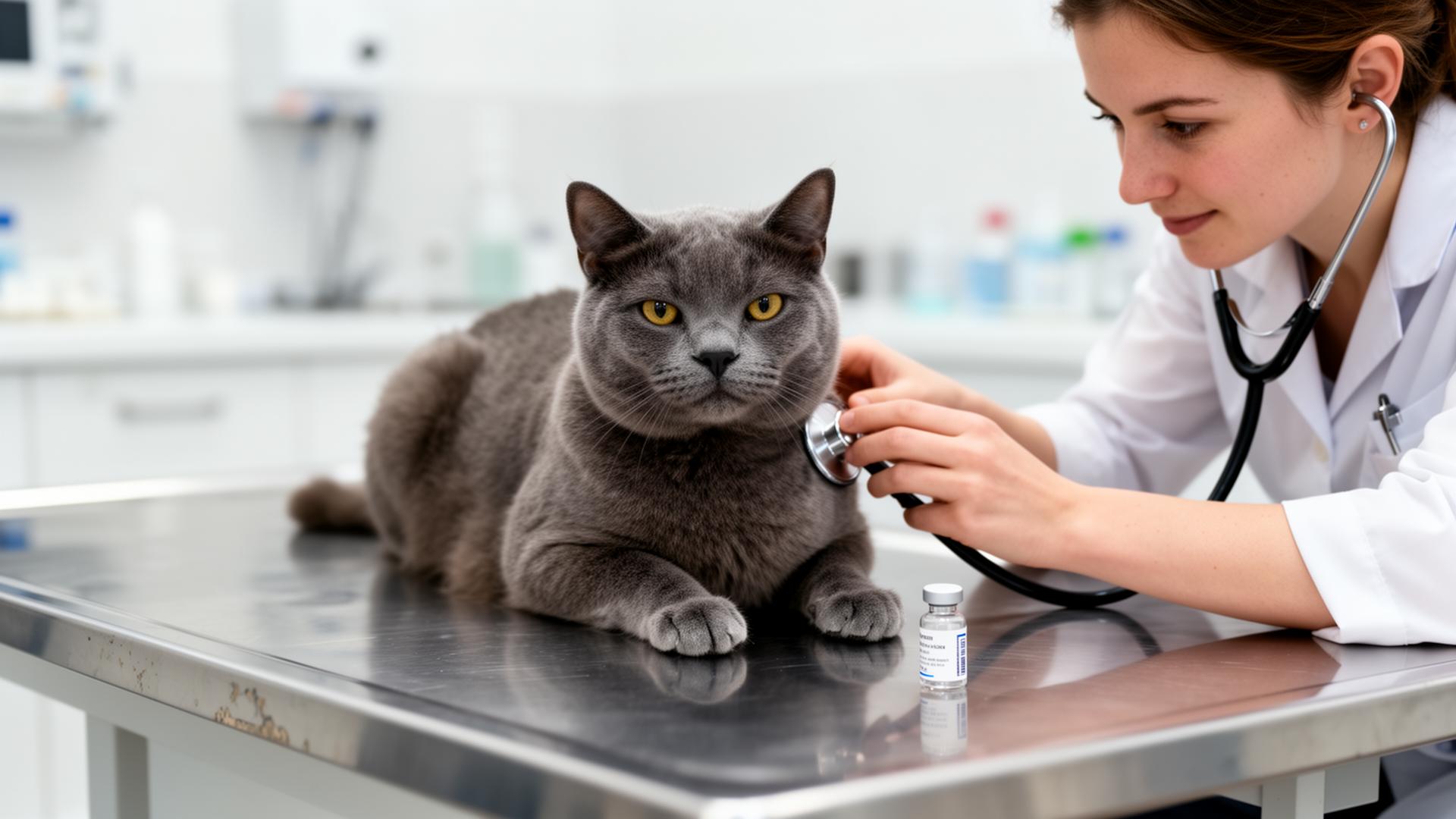
For most owned cats, the biggest preventive-health wins in 2026 are routine veterinary exams (yearly for healthy adults, every six months once over 10), life-stage-appropriate vaccines, year-round parasite prevention tailored by risk, and proactive dental and senior screening — not buying more products. The AAHA/AAFP, AAFP, CAPC, AHS, and AVDC guidelines all converge on the same message: vaccinate the right cat at the right interval after a real risk assessment.
How Often Should a Cat See the Vet?
The 2021 AAHA/AAFP life-stage guideline defines kitten as birth to 1 year, young adult as 1 to 6 years, mature adult as 7 to 10 years, and senior as 10 years and older. The 2021 senior-care update is more specific: examine cats aged 10 to 15 at least every six months, and healthy cats over 15 every four months. CAPC also advises preventive physical exams at least every 6 to 12 months across the lifespan.
| Life stage | Recommended cadence | What to focus on |
|---|---|---|
| Kitten (0–1 yr) | Repeated visits every 3–4 weeks for vaccine series | FVRCP series, rabies, FeLV, deworming, spay/neuter plan |
| Young adult (1–6 yr) | Annual wellness visit | Risk-based vaccines, weight, dental, year-round parasites |
| Mature adult (7–10 yr) | Annual visit; baseline labs become more useful | Weight trend, oral exam, blood-pressure awareness |
| Senior (10–15 yr) | At least every 6 months | CBC/chem/urinalysis, T4, blood pressure |
| Geriatric (15+ yr) | Every 4 months when healthy | Quality-of-life check, caregiver planning |
The 2026 Cat Vaccination Schedule
The 2020 AAHA/AAFP guideline still serves as the U.S. reference in 2026. It treats FHV-1, FCV, FPV, rabies, and FeLV in cats younger than 1 year as core for pet cats. The owner-facing summary: core protection matters, but exact timing depends on age, vaccine type, local rabies law, and exposure risk.
| Vaccine | Who should get it | Simplified schedule | Practical note |
|---|---|---|---|
| FVRCP (FHV-1, FCV, FPV) | All kittens; adult catch-up | Start ≥6 wks, repeat every 3–4 wks until 16–20 wks; booster at ~6 mo or 1 yr; then injectable products generally every 3 yrs | Intranasal products often revaccinate annually |
| Rabies | Required or strongly advised by state/local law | First dose at 8–12 wks (per label), revaccinate 1 yr later, then per law and label | Where law permits, the task force recommends a 3-yr interval with a 3-yr labeled vaccine |
| FeLV | Core for kittens and cats <1 yr; risk-based after | Two doses 3–4 wks apart starting ≥8 wks, then booster at 1 yr; outdoor/exposed cats continue annually | Test before vaccinating cats with unknown status |
How to read this table
The guideline's key message is not "vaccinate everything every year." It is "vaccinate the right cat at the right interval after a lifestyle-based risk assessment." Rabies law overrides general preference. Adult indoor-only cats with no realistic exposure often do not need ongoing FeLV.
Year-Round Parasite Prevention
For U.S. cats, the direction of travel in the evidence is firmly toward year-round prevention rather than seasonal or "only if I see fleas" approaches. CAPC's current general guidance calls for monthly year-round flea/tick, intestinal-parasite, and heartworm prevention in all pets, with adult intestinal deworming at least quarterly and fecal diagnostics 2–4 times yearly. The 2024 AHS feline guidance recommends annual heartworm testing and year-round prevention, and CAPC notes that cats can be infected with heartworm in all 50 states.
| Target | What current guidance emphasizes | Why it matters |
|---|---|---|
| Fleas | Year-round control in all pets | Cause discomfort and allergy; transmit Bartonella and other pathogens |
| Ticks | Year-round where exposure is possible | Tick ecology is shifting; indoor-outdoor lifestyles raise risk |
| Intestinal worms | Deworm kittens from 2 wks every 2 wks until 2 mo, monthly until 6 mo, then ongoing broad-spectrum control; fecal testing 2–4×/yr | Roundworms and hookworms have zoonotic implications |
| Heartworm | Year-round prevention; AHS now emphasizes annual testing | Cats can be severely ill from even one or two worms |
For deeper coverage, see our flea & tick prevention guide and cat vaccinations 101.
Dental Care: The 2025 Oral-Health Guideline
The 2025 feline oral-health guideline made a point most owners underestimate: oral disease is among the most common feline health problems and is often missed. A current FelineVMA brochure says up to 85% of cats may show periodontal-disease signs by age 2. AVDC materials emphasize that proper dental assessment requires anesthesia, probing, and radiographs — visible tartar and "bad breath" alone don't tell the full story, and "anesthesia-free dental cleaning" is not an equivalent substitute. AVDC owner guidance recommends annual professional dental cleaning starting around age 2, or sooner if disease is found earlier.
Practical takeaways: brush daily with a feline-safe enzymatic toothpaste if your cat tolerates it, choose VOHC-accepted dental products when brushing isn't possible, and don't skip the anesthetized cleaning your vet recommends. See our at-home cat dental care guide for the full protocol.
Senior Screening: What to Run, and When
Screening should become more proactive with age. The 2023 AAHA senior-care guideline recommends a senior minimum database including a detailed blood profile, thyroid panel, and urinalysis, with CBC, chemistry, and urinalysis every 6 to 12 months in senior pets. It also recommends annual T4 and annual blood pressure, with blood pressure every 6 to 12 months in healthy geriatric cats.
The diseases worth expecting and screening for are chronic kidney disease, hyperthyroidism, hypertension, dental disease, osteoarthritis/pain, cognitive dysfunction, and weight/muscle loss. Cornell notes that CKD affects up to 40% of cats over 10 and up to 80% of cats over 15, and hyperthyroidism in older cats can contribute to secondary heart disease and high blood pressure. These prevalence figures are clinical context — not a reason to order the same tests for every cat regardless of age and symptoms.
For FeLV/FIV, the retrovirus toolkit recommends knowing every cat's status: test as soon as cats are acquired, after exposure, before FeLV or FIV vaccination, and whenever illness occurs.
Three Common Misunderstandings
- "Indoor cats don't need vaccines or parasite prevention." False. Kittens still need core vaccines, rabies is often required by law, and CAPC recommends year-round parasite prevention regardless of lifestyle.
- "Dry food cleans teeth enough." False. AVDC requires anesthetized assessment with radiographs; kibble doesn't substitute.
- "Yearly vaccines for everything is safest." Also false. Modern guidelines reduce vaccine load through risk assessment, 3-year FVRCP intervals, and titer testing where appropriate.
Frequently Asked Questions
Sources
AAHA/AAFP 2020 Vaccination Guideline · AAHA/AAFP 2021 Life-Stage Guideline · AAFP 2021 Senior-Care Guideline · AAHA 2023 Senior-Care Guideline · 2025 AAFP/AAHA Feline Oral-Health Guideline · CAPC parasite guidance (2025–2026) · 2024 American Heartworm Society feline update · AVDC owner guidance · FelineVMA Retrovirus Management Guidelines · Cornell Feline Health Center.