
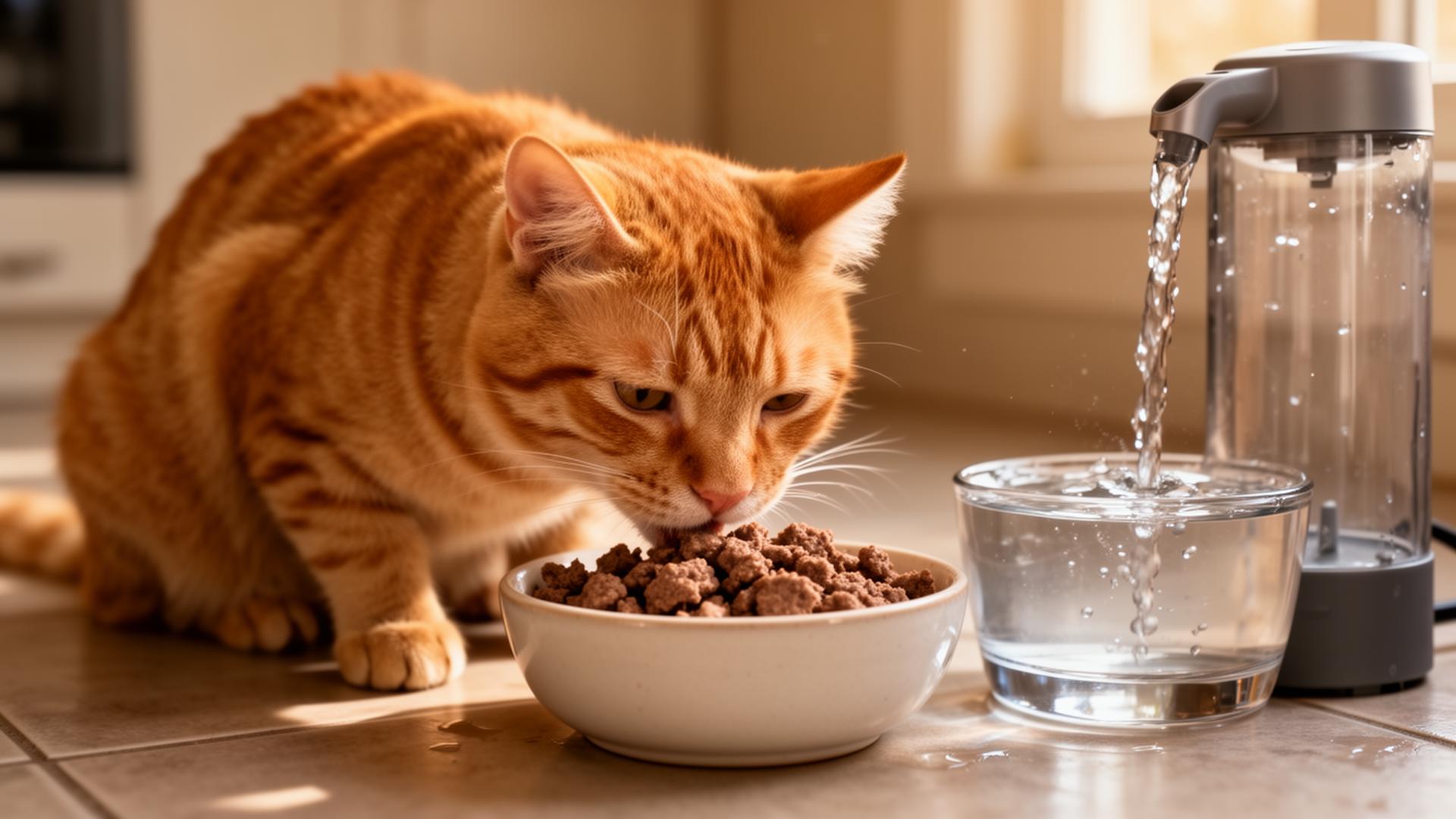
Cats are obligate carnivores, and the first filter for any food is whether it is complete and balanced for the life stage. There is no single "best" format for every cat — wet food reliably more than doubles water intake and urine output (2024 controlled study), but well-portioned dry food can still be appropriate for many healthy cats. The biggest nutrition mistakes in 2026 are free-feeding without measurement, casual supplement use, and raw or unpasteurized diets.
The "Complete and Balanced" First Filter
Cornell explains that AAFCO-style nutritional adequacy statements are the key label signal that a commercial diet is nutritionally complete and balanced for a specific life stage. The same resource notes that supplements are usually unnecessary when a cat eats a balanced diet and can even be harmful if added casually. WSAVA's nutrition framework recommends nutritional screening at every visit, with extended assessment when risk factors are present.
Read the label for: (1) an AAFCO statement matching your cat's life stage, (2) the manufacturer's name and contact info, and (3) ideally a manufacturer that employs a board-certified veterinary nutritionist (DACVN) and runs feeding trials, not just nutrient profile calculations.
Diet Choice by Life Stage and Use Case
| Diet category | Best fit | Advantages | Drawbacks / cautions |
|---|---|---|---|
| Complete-and-balanced kitten diet | Kittens, growth | Supports growth and the frequent vaccine/visit period | Easy to overfeed after sterilization if portions aren't adjusted |
| Adult maintenance diet | Healthy adults | Flexible — wet, dry, or mixed | "Adult" is broad; portion control beats marketing claims |
| Wet food or wet-heavy mix | Hydration-sensitive cats, urinary-prone households, finicky eaters | Significant water source; the 2024 study found >2× water intake and urine output vs dry | More expensive, more perishable |
| Dry food + portion control | Healthy adults who do well on it | Convenient; works well with puzzle feeders | Easy to overfeed; lower moisture; risky if free-fed without monitoring |
| Veterinary therapeutic diets | Diagnosed kidney, urinary, allergy, GI, diabetes, or weight issues | Evidence-based for specific conditions | Choose with a vet; not a casual "upgrade" |
| Home-prepared diet | Specific medical needs, vet-formulated | Useful in select medical cases | Cornell warns homemade cat diets are difficult to balance correctly without a veterinary nutritionist |
Wet vs Dry: What the 2024 Evidence Actually Says
The honest answer is nuanced. Cornell notes dry foods are convenient and inexpensive, while canned foods are more water-rich and often highly palatable. A 2024 controlled study found cats fed wet foods had more than double the water intake and urine output of cats fed dry foods, and dry diets produced more concentrated urine. That's strong support for using wet food (or adding moisture) when hydration or urinary dilution matters. It is not proof that every healthy cat must eat only canned food.
Practical defaults that work for many households:
- Wet-heavy or mixed feeding for cats with any urinary history, CKD, or low water intake.
- Dry food is fine for healthy adults if portions are measured and a water fountain is available.
- Always measure with a kitchen scale (grams) — volumetric scoops routinely overshoot.
For the deep dive, see our dedicated wet vs dry guide.
Portions, Body Condition & Healthy Weight
Most U.S. cats are over their ideal weight, and a 1 lb gain is roughly 10% of body weight in a typical cat. WSAVA's nutritional assessment framework treats body-condition scoring (BCS) and muscle-condition scoring (MCS) as a routine part of every visit, alongside ideal-weight estimation and a daily caloric target.
| BCS (9-point) | What you'd feel | Action |
|---|---|---|
| 1–3 / 9 | Ribs, spine, hip bones easily visible; no fat | Vet visit — rule out disease, increase intake under guidance |
| 4–5 / 9 | Ribs felt easily; visible waist; slight abdominal tuck | Ideal — maintain current intake |
| 6–7 / 9 | Ribs hard to feel; minimal waist; rounded abdomen | Reduce calories ~10–20%; recheck monthly |
| 8–9 / 9 | Ribs not palpable; heavy fat pad; no waist | Vet-supervised weight-loss plan; therapeutic diet often appropriate |
Safe weight-loss rule
Cats should lose no more than ~0.5–2% of body weight per week. Faster loss risks hepatic lipidosis (fatty liver), a life-threatening condition. Always do feline weight loss with veterinary guidance — see our cat weight management guide.
Supplements: What the Evidence Supports
Cornell's plain-language take: most cats on a complete-and-balanced diet do not need supplements, and casual supplementation can be harmful (vitamin A and D toxicities, calcium-phosphorus imbalance). Where supplements can have evidence-based roles:
- Omega-3 (EPA/DHA): reasonable evidence for joint and CKD support at vet-directed doses.
- Probiotics: useful in specific GI conditions; broad preventive use is less supported.
- SAMe / antioxidants: sometimes used for liver disease.
- Glucosamine/chondroitin: evidence in cats is weaker than in dogs.
If your cat eats a balanced diet and has no diagnosed condition, the default answer is "you probably don't need this."
Two Diet Risks to Take Seriously in 2026
Raw and unpasteurized. AVMA, FDA, and current H5N1 guidance warn that raw or undercooked animal products and unpasteurized dairy can transmit pathogens, with recent severe illness and death reported in cats exposed to raw meat or raw milk. The 2026 default for owned cats is cooked, complete-and-balanced food.
Milk as a treat. Cornell and WSAVA both note many cats are lactose intolerant. Milk is not a recommended routine treat — water is.
Go Deeper on Indoor-Cat Nutrition
For a focused breakdown of calorie targets, AAFCO label reading, and portion control specifically for indoor cats — including a weight-by-calorie table and the 2026 raw-feeding warnings in plain English — see our companion guide: Best Diet for Indoor Cats: Calories, Hydration & Weight Control.
Want to actually decode what's printed on the back of the bag? Our companion explainer walks through every line of an AAFCO statement: AAFCO Guidelines Explained: How to Read a Pet Food Label.
Frequently Asked Questions
Sources
Cornell Feline Health Center · WSAVA Global Nutrition Committee tools · 2024 controlled study on wet vs dry feeding and water intake/urine output · AVMA and FDA H5N1 guidance for raw-meat and raw-milk exposures · AAHA/AAFP 2021 Life-Stage Guideline (nutritional assessment recommendations).