
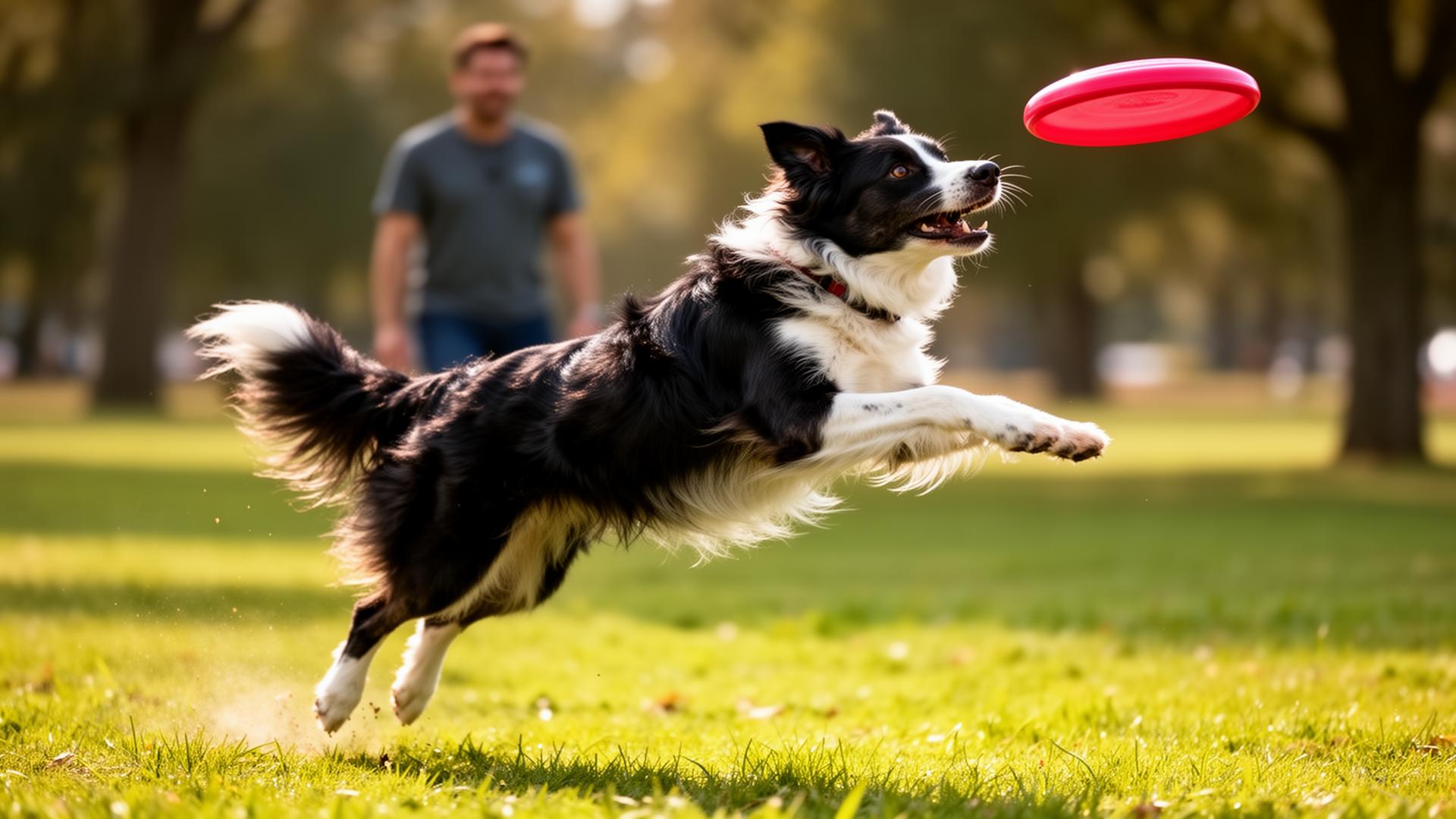
Most behavior problems in U.S. dogs aren't bad temperament — they're the predictable result of under-exercise, under-enrichment, and aversive training. The current AVSAB position is unambiguous: reward-based training is the standard of care, and aversive tools are associated with measurable welfare harm. Exercise needs vary by age and breed; enrichment is non-negotiable; and learning to read low-level stress signals (whale eye, lip licks, yawns) prevents bites.
Exercise by Life Stage and Breed
| Life stage / type | Daily target | What to focus on |
|---|---|---|
| Puppy (under growth-plate closure) | ~5 min per month of age, 2× daily, free play | Soft surfaces, no forced repetition, lots of socialization |
| Adolescent (6–18 mo) | 45–90 min mixed | Build cardio gradually; reinforce training under distraction |
| Adult low-energy breed | 30–60 min | Walking, sniffing, light play |
| Adult working / sporting breed | 90+ min, often two sessions | Running, fetch, scent work, structured jobs |
| Brachycephalic breeds (Bulldog, Pug, etc.) | Short, frequent, cool conditions | Heat-stroke risk is high — see our summer safety guide |
| Senior dog | Multiple short low-impact walks | Joint-friendly surfaces; swimming if available |
See our exercise needs by breed guide for breed-specific minimums and our indoor activity ideas for bad-weather days.
Enrichment: The Forgotten Half
Physical exercise alone often doesn't tire a dog out — and certainly doesn't satisfy a working-breed brain. Enrichment delivers the cognitive workload dogs evolved to seek. Five categories worth rotating through every week:
- Sensory: Sniff walks where the dog leads (the dog's nose has 100–300× more receptors than yours).
- Food-based: Puzzle feeders, snuffle mats, scattered kibble, frozen filled toys.
- Cognitive: Trick training, name-learning games, "find it" cued searches.
- Social: Calm play with appropriate dog friends or bonding training time with you.
- Chewing & shredding: Safe long-lasting chews (sized to the dog) and supervised cardboard "destruction."
Reward-Based Training: The 2026 Standard of Care
The American Veterinary Society of Animal Behavior (AVSAB) Position Statement on Humane Dog Training recommends that trainers and owners use only reward-based methods. The summary of the evidence: aversive techniques (prong collars, shock/e-collars, alpha rolls, leash pops, "dominance" corrections) are associated with increased fear, anxiety, stress, aggression, and a damaged human-animal bond compared with reward-based training, with no evidence of better long-term obedience.
Practically, that means: mark the behavior you want, pay it generously (food, play, praise, access), and ignore or interrupt-and-redirect what you don't want. For active behavior problems, work with a credentialed positive-reinforcement trainer (CPDT-KA, KPA-CTP) or a board-certified veterinary behaviorist (DACVB) — not a TV "alpha" trainer.
See our training essentials, new-puppy training plan, and how to address excessive barking.
Reading Canine Body Language
Most dog bites are predictable if you know the early signals. The escalation usually follows: subtle stress cues → distance-increasing signals → growl → snap → bite. Punishing the growl removes the warning, not the problem.
| Signal | What it usually means |
|---|---|
| Whale eye (whites visible) | "I am uncomfortable but trying to stay polite." |
| Lip licking outside meals | Mild stress / appeasement |
| Yawning when not tired | Stress release |
| Paw lift, head turn, body curve away | "Please give me space." |
| Stiff body, hard stare, closed mouth | High arousal — back off now |
| Growl | Honest warning. Thank the dog by adding distance — never punish. |
Three Common Mistakes
- Treating "exercise" as only physical. A 30-minute sniff walk often calms a dog more than a hard run.
- Using shock or prong collars to "fix" reactivity. AVSAB and the major behavior bodies advise against; the evidence is consistent.
- Punishing growls. The next bite will arrive without warning.
Frequently Asked Questions
Sources
AVSAB Position Statement on Humane Dog Training · AVSAB Position Statement on the Use of Punishment · American College of Veterinary Behaviorists (ACVB) resources · AVMA welfare and bite-prevention guidance · Cornell Riney Canine Health Center exercise guidance · published systematic reviews on aversive training methods (2017–2024).